If you’ve ever visited a metal fabrication shop, a recycling yard, or a textile processing plant, you’ve probably seen a shear blade in action. That sharp, heavy-duty tool isn’t just a generic piece of metal—it’s the quiet workhorse that determines whether a cut is clean, fast, and cost-effective, or whether you’re facing downtime, wasted materials, and unexpected repair bills. As a shear blade supplier who’s worked closely with metalworkers, fabricators, and recycling operators for over a decade, I’ve lost count of how many times I’ve heard, “We just grabbed the cheapest blade we could find, and now we’re dealing with bent metal, uneven cuts, and replacements every two weeks.” Choosing the right shear blade isn’t a guess; it’s a combination of understanding your application, material, and the details that turn a good blade into a long-term investment. Shear Blade
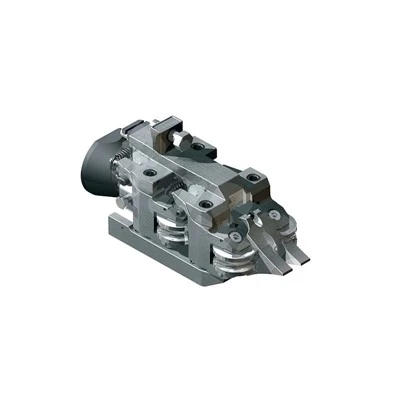
Let’s start with the basics: not all shear blades are created equal. Many people assume a blade is a blade, but the truth is, blades are engineered for specific tasks, and mismatching a blade to your work is one of the most common mistakes we see here at our shop. The first step in narrowing down your options is to identify exactly what you’ll be cutting. Are you shearing thin-gauge aluminum for automotive body panels, thick carbon steel plates for structural beams, or recycled ferrous scrap that includes mixed metals, rust, and occasional hard debris? Each of these materials demands a different blade composition, edge type, and design.
Take, for example, thin-gauge sheet metal, which is typically 1/8 of an inch or less. For this job, a high-speed steel (HSS) blade is often the go-to choice. HSS blades retain their sharp edge at high cutting speeds, which is perfect for consistent, repeated cuts on thin materials without leaving burrs that require extra finishing work. I worked with a small fabricator last year who was using a generic carbon steel blade on their 16-gauge stainless steel parts. They were replacing blades every week, and their parts had constant burrs that were adding 20 hours a week to their finishing process. Switching to an HSS shear blade tailored for thin stainless steel cut their blade costs by 75% and eliminated the burrs entirely. For thicker materials, like carbon steel plates over 1/4 inch, high-chrome or alloy steel blades are better. These blades have higher tensile strength, which means they can withstand the force of cutting through dense, hard metal without bending or chipping.
Edge design is another critical factor that’s often overlooked. Shear blades come in two main edge types: flat (or smooth) edges and beveled edges. Flat edges are ideal for thin, clean cuts on materials that require a smooth finish, like aluminum foil or precision metal parts. They create a scissor-like cut that minimizes distortion, so your parts stay dimensionally accurate. Beveled edges, on the other hand, have a angled ground edge that creates a wedge effect, making them perfect for cutting thick or hard materials. The angle of the bevel matters too: a 15-degree bevel is standard for most general-purpose cutting, while a 10-degree bevel works for ultra-thin materials, and a 20-degree or higher bevel is needed for extremely hard, dense metals. One of our regular recycling clients used to use a 15-degree blade on their heavy scrap steel, and they were experiencing frequent blade chipping and uneven cuts. Switching to a 22-degree beveled blade made from high-chrome steel resolved both issues, even when they were cutting through rusted, mixed scrap.
Next, you need to consider your shear machine’s specifications. A blade that works on a 10-foot shear for industrial fabrication won’t work on a small bench shear used in a hobbyist workshop. The blade’s length, width, thickness, and mounting holes have to match exactly with your machine’s design. If the blade is too short, it won’t span the entire cut, leading to uneven edges. If it’s too thick, it can put unnecessary stress on the machine’s ram and gears, causing premature wear on the entire shear. We always recommend that customers bring a sample of their old blade when they reach out, or share the machine’s model number and dimensions. That’s how we avoid costly mistakes like a customer who ordered a blade that was 1/8 inch too long, only to find out it wouldn’t fit their machine’s cutting table. It’s a small detail, but it makes all the difference.
Another key element is blade surface treatment. Many shear blades are left with a raw finish, but some get coatings or treatments that extend their life. For example, nitriding is a process where nitrogen is infused into the blade’s surface, creating a hard, wear-resistant layer that reduces friction and prevents corrosion. This is especially useful for operators who work in humid environments or handle materials with moisture, like wet scrap metal. Another common treatment is polishing, which removes small imperfections from the blade’s edge, reducing the chance of material sticking to the blade during cutting. We recently supplied a set of nitrided blades to a textile mill that shears synthetic fabrics. Before that, fabric fibers were sticking to their blades, causing inconsistent cuts and frequent jams. The nitrided finish eliminated the fiber buildup, and their blades lasted three times longer.
Don’t forget about maintenance and resharpening. Even the best shear blade will eventually dull, but some blade materials hold their edge much better than others. Carbon steel blades are cheaper upfront, but they dull quickly and need resharpening every few weeks. They’re a good choice for low-volume, light-duty applications where cost is the top priority. HSS blades, by contrast, hold their edge 5 to 10 times longer than carbon steel, and can be resharpened multiple times without losing their structural integrity. High-chrome blades fall somewhere in between, with excellent wear resistance for medium-duty applications. When choosing a blade, you should think about not just the initial cost, but the total cost over time: how often will you need to replace or resharpen it, how much downtime does that cause, and how does it affect your material waste and labor costs. A $100 blade that lasts 6 months is a better investment than a $50 blade that lasts 2 weeks, especially if your business relies on consistent production.
We also see a lot of customers making the mistake of using a universal blade for all their jobs. It’s tempting to buy one blade that works for thin aluminum, thick steel, and scrap, but that leads to poor results and higher costs. For example, a blade designed for thin sheet metal won’t have the strength to cut through a 1-inch steel plate, and it will bend or chip. A blade designed for heavy scrap will cut through thin metal too aggressively, causing distortion and burrs. The most successful operations we work with have a set of blades tailored for each of their common tasks: one for thin gauge, one for medium steel, one for recycled scrap, etc. It’s a small investment in multiple blades that pays off in less downtime, less waste, and better quality parts.
Another consideration is environmental factors. If you’re working in a dusty factory, a yard with outdoor storage, or a coastal facility with salt air, corrosion resistance becomes important. Blades treated with nitriding or coated with a polymer finish will hold up better in these conditions, preventing rust from eating away at the blade edge. For operators who work with abrasive materials, like concrete-embedded scrap metal or metal with heavy rust, blades with a higher hardness rating (like HRC 58-62) are essential. These blades can resist the abrasive wear from hard materials, keeping their edge sharp longer than softer blades.
I want to share a recent story that drives all this home. A construction company reached out to us a few months ago, frustrated with their current shear blades. They were cutting 1-inch steel rebar for concrete foundations, and their blades were chipping every few days, costing them $800 per replacement and 2 hours of downtime each time. They’d tried two different generic blades from other suppliers, and none worked. We asked for details: they were cutting rebar that had rust and occasional small rocks embedded in the ends, their shear was a 15-foot mechanical shear, and they were cutting 10 hours a day, six days a week. We recommended a high-chrome alloy shear blade with a 22-degree bevel, custom sized to fit their machine. Since switching, their blade replacements have dropped to once every 6 weeks, and they’ve had no chipping issues. Total savings for them so far? Over $12,000 in blade costs and downtime in just three months. That’s the difference between choosing a blade based on specifications and choosing a blade based on guesswork.
At the end of the day, choosing the right shear blade is about matching your needs to the blade’s design, material, and specifications. It’s not about buying the cheapest, nor the most expensive—it’s about buying the one that’s engineered for what you do. If you’re not sure where to start, don’t hesitate to reach out to a supplier who understands shear blades, not just sells them. Bring details about your material, your machine, your production volume, and any challenges you’re facing (like burrs, chipping, or downtime). That way, you can find a blade that works for your business, not against it.

If you’re ready to stop wasting money on blades that don’t work for your operations and start getting consistent, clean cuts with less downtime, get in touch with our team to discuss your shear blade needs. We can help you find the right blade for your specific application, offer guidance on maintenance and resharpening, and support you every step of the way to keep your operations running smoothly.
Mill Rolls References
ASM International. (2020). Metallurgy of Shear Blades for Industrial Cutting. ASM Handbook Volume 14: Forming, 5th Ed.
Society of Manufacturing Engineers. (2021). Optimizing Shear Blade Selection for Metal Fabrication. SME Technical Paper Series.
Norton, R. L. (2019). Machine Design for Cutting Processes. Pearson Education.
Jingjiang Jingyi Metallurgical Technology Co., Ltd.
With abundant experience, we are one of the most reliable shear blade manufacturers and suppliers in China. We warmly welcome you to wholesale customized shear blade made in China here from our factory. If you have any enquiry about quotation, please feel free to email us.
Address: No.5 Jianghe Road, Xinqiao Town, Jingjiang City, Jiangsu Province
E-mail: Lcbin1974@163.com
WebSite: https://www.jymetallurgical.com/
