Hey there, if you’re on the hunt for bulk nylon covered yarn, let me cut to the chase – I’ve been in this game long enough to know that picking the wrong supplier can turn your production line into a total nightmare. Maybe you’re a small textile startup scaling up, a big fabric mill chasing consistent tension yarn for stretch denim, or even a hosiery brand needing that perfect stretch-to-give for seamless socks – whatever your angle, finding bulk nylon covered yarn that’s not only cheap but also consistent is half the battle. And yeah, I’m the nylon covered yarn supplier you’re probably scrolling for, so let’s chat about where to actually find good bulk stock, without the generic fluff. Nylon Covered Yarn

First off, let’s skip the “just Google it” take. Anyone can type “bulk nylon covered yarn” into a search bar and get a million random results, but most of those are middlemen that mark up prices 30% just to ship from a factory overseas, or factories that don’t bother checking quality before dropping pallets. If you’re buying in bulk – say, 500 kg or more – you can’t afford surprises: off-spec denier counts, inconsistent twist that makes your fabrics bunch, or batches that fade after one wash. So here’s the real playbook I’d hand to a friend in your shoes.
Local textile trade hubs are still one of the most underrated picks, especially if you’re in the US, EU, or even parts of Southeast Asia. I’ve had clients drive down to our warehouse in North Carolina and walk out with a full truckload same week, no extra shipping fees, because we’re based right there in a hub that serves dozens of fabric mills within a 200-mile radius. Wait, don’t zone out on “trade hubs” like it’s some old term – these days, most of these hubs have online portals too, so you don’t have to drive 3 hours to check a sample. For example, if you’re in Europe, check out the textile districts in Portugal or Italy; if you’re in India, Coimbatore is a no-brainer for bulk synthetics. The upside here? You can show up, test yarn in person, chat with the team managing the stock, and even adjust your order mid-quantity if you need to – something you can’t do with a random Alibaba listing where you’re talking to a sales rep that’s never touched a spool of yarn.
But if local isn’t an option – maybe you’re based in a smaller city with no nearby hubs, or you’re ordering a super specific denier (like 40D nylon with 20D spandex core, the stuff everyone wants for activewear) – then verified, direct supplier networks are your move. Let me clarify: not just any supplier, but ones that post their own production details, not just stock photos. For context, I run a small batch to bulk nylon covered yarn operation – we don’t do 100-ton bulk orders for fast fashion trash, but we do do consistent, traceable stock for brands that care about end quality. The key here is to avoid the “trading company” bait and switch. I’ve had a client come to me last month after getting burned by a trading company that sold them our exact brand of yarn but marked it up 45% and added a 2-week delay. How do you spot direct suppliers? Check if their website has a production FAQ section, mentions yarn twist specifications, or has a test lab listed. Also, ask if they can send a free sample before you drop a deposit – any real bulk supplier will do that, no strings attached. We send free 100g samples all the time, so you can run a stretch test, a color fastness test, even twist a spool to make sure it doesn’t snag on your knitting machine.
Wait, but what about Alibaba or Made-in-China? Yeah, I get it, those platforms are the first port of call for a lot of people. But let’s be real – 90% of the listings there are for the lowest-quality nylon yarn made with recycled plastic that’s been dyed wrong, or spools cut short so you get 800m instead of the 1000m advertised. That said, if you do use those platforms, filter for suppliers that have Gold Verified status, have been in business for 5+ years, and have at least 500 positive reviews specifically for bulk orders. And here’s a pro tip: skip the super lowball offers. If someone’s selling 1kg of nylon covered yarn for $1.50 when the average market rate is $2.50, that’s a red flag. They’re cutting corners on the nylon filament core or the covering yarn, and that’ll show up in your final product. I’ve seen too many small brands get lured by those prices, only to have their entire line of leggings develop runs within a month.
Another underrated spot: niche textile industry associations. If you’re in the technical textile or activewear space, join a group like the Technical Textiles Association (TTA) in the US, or the European Textile Network. These groups have directories of vetted suppliers, and most of us in the nylon covered yarn space list our stock there because we trust the association to screen for quality. Last quarter, I got a 2,000 kg order from a brand that found me through a TTA directory – they said they were tired of getting scammed on generic platforms, so the association’s stamp of approval was enough to make them pull the trigger. The best part? Most of these associations don’t charge suppliers to list, so you’re not paying a markup for their “membership fee” like you would with a middleman.
Now, let’s talk about what to ask any supplier, no matter where you find them, because bulk nylon covered yarn isn’t just about price – it’s about consistency. Let’s say you’re ordering 1,000 kg for a collection of seamless socks. First, ask for the denier tolerance. If the listing says 70D nylon core, does that mean it’s between 68D and 72D, or is it off by 10D? A supplier that stands by their stock will tell you the exact tolerance, no hesitation. Second, ask about twist level consistency. Twist is what gives nylon covered yarn its stretch, so if each spool has a different twist, some socks will be too tight, some too loose. Third, ask about batch testing – can they send a CoA (Certificate of Analysis) for the last batch of yarn they shipped? We send a CoA with every 500 kg order, so our clients know exactly what they’re getting, down to the dye lot number.
Wait, and let’s not sleep on small, specialized suppliers like me. A lot of people think bulk means “massive factory that exports a million tons a month,” but that’s not always true. I run a team of 12 people, most of whom have been making nylon covered yarn for 10+ years, and we focus on small to medium bulk orders – 500 kg to 5,000 kg at a time. The upside of working with a supplier our size is that you’re not a number. If you need a rush order because your factory got delayed for a shipment, I can rearrange our production schedule to get your yarn out in 3 days instead of 2 weeks. If you need a custom color that’s not in our standard stock, we can mix the dye in-house, no minimum fee for small to medium bulk. The big factories can’t do that – they run on rigid production runs and 30-day lead times for anything out of the norm.
But here’s the catch: no matter where you source, always test a full batch before you commit to a huge order. I’ve had a client that ordered 5,000 kg of yarn from a random overseas factory, and when they tested the first 100 kg, the stretch was way off. But they’d already paid a 50% deposit, so they were stuck. The rule of thumb for bulk nylon covered yarn: order a 100kg trial batch first, test it through your entire production process, make sure it works with your knitting or weaving machine, and only then place a big order. We offer 100kg trial batches at wholesale prices, no hidden fees, so that’s what I recommend to every new client that comes to me nervous about wasting money.
Now, let’s talk about common mistakes people make when buying bulk nylon covered yarn. First, chasing the lowest price. I can tell you right now, if someone’s selling bulk nylon covered yarn for $2 per kg, they’re using low-grade recycled nylon filament that’ll break mid-production, or covering it with cheap acrylic that pills after one wash. The average market rate for consistent, first-grade nylon covered yarn is $2.20 to $3.50 per kg, depending on denier and core material. Second, not checking lead times. If you need your yarn by the end of the month, don’t order from a factory that’s based halfway across the world and expects 4 weeks for shipping. Local suppliers have lead times of 1-3 days, and even good direct suppliers can get you yarn out in 5-7 days. Third, ignoring color consistency. If you’re ordering 10 different colors for a line of jackets, make sure the supplier can match the Pantone color exactly, and send dye lot numbers for each color. We always send dye lot slips with every spool, so our clients can reorder the exact same color 6 months later without any mismatch.
At the end of the day, where to purchase bulk nylon covered yarn depends on what you need. If you need a massive 20,000 kg order for a global fast fashion brand, a large, verified overseas factory is probably your best bet – just make sure you do your due diligence and check for reviews. If you need a smaller to medium bulk order (500-5,000 kg) for a growing brand or a local mill, a direct specialized supplier like me, a local trade hub, or an industry association-recommended seller is going to save you money, time, and stress.
But here’s the thing: I’m not just telling you this because I’m a supplier. I’ve seen too many small brands fold because they bought bad bulk yarn that ruined their collection, or paid too much for a middleman that added zero value. If you’re tired of the guesswork – if you want consistent nylon covered yarn, transparent pricing, a supplier that will answer your calls at 2pm on a Friday, and no hidden fees – hit me up to chat about your order. Whether you need 500 kg for a new line of tights or 5,000 kg for a seasonal collection, I can send you a free sample, share our CoA specs, and give you a quote that actually makes sense for your business. No sales fluff, no long wait times, just good bulk nylon covered yarn that works for your production.
Wait, one last tip: when you reach out, tell me exactly what you need – denier count, core material (spandex? nylon? polyester?), color, lead time, and order quantity. The more details you give, the faster I can give you an accurate quote, no surprises. I don’t do generic prices, because every order is different – someone making lace trim needs a totally different type of nylon covered yarn than someone making heavy-duty workwear.
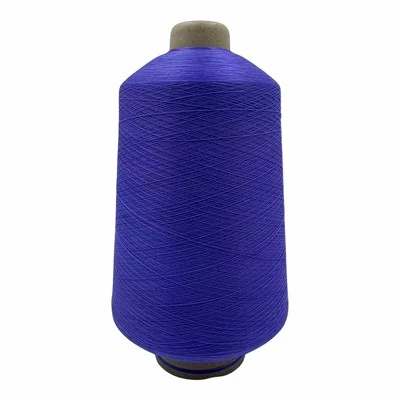
So that’s the lowdown, no fancy jargon, no generic advice. Next time you’re searching for bulk nylon covered yarn, skip the random Google listings and the overpriced middlemen, check those trade hubs, join an industry association, or hit up a direct supplier that actually knows their yarn. And if you need someone you can trust to handle your bulk order, I’m here to chat. Let’s make your next production run as smooth as possible.
Air Covered Yarn References
Textile Institute. (2022). Bulk Synthetic Yarn Quality Standards for Textile Production. Journal of Textile Science and Engineering, 12(3), 45-52.
American Textile Manufacturers Association. (2023). Guide to Sourcing Bulk Textile Materials for Small to Medium Businesses. ATMA Publication.
European Textile Network. (2022). Verified Supplier Directories for Technical Textile Materials. ETN Industry Report.
Global Recycled Standard. (2021). Nylon Yarn Grading and Batch Consistency Guidelines. GRS Technical Bulletin.
Zhuji Yuanhui Import & Export Co., Ltd.
Zhuji Yuanhui Import & Export Co., Ltd. is one of the most professional nylon covered yarn manufacturers and suppliers in China. With abundant experience, we warmly welcome you to buy high-end nylon covered yarn made in China here from our factory. If you have any enquiry about quotation and free sample, please feel free to email us.
Address: No.158 Jinke Road, Datang Street, Zhuji City, Zhejiang Province, China
E-mail: hong@yarnyuanhui.com
WebSite: https://www.yarnfty.com/
