Hey everyone,
If you’ve ever dealt with free chlorine analyzers (you know, the workhorses keeping pools, wastewater plants, and food processing lines safe), you know how finicky they can be. I’m [your name], part of the team supplying these units, and let’s be real—most people focus on hooking them up and calibrating them, but no one talks about what to do when you’re not using ‘em. Leave a chlorine analyzer sitting around wrong, and next time you fire it up, you’re either getting wonky readings or staring at a dead sensor that costs half as much as the unit itself. I’ve seen this mistake so many times from small pool shops to big municipal plants, so today I’m breaking down exactly how to store yours when it’s not in use—no fancy jargon, just what actually works. Free Chlorine Analyzer
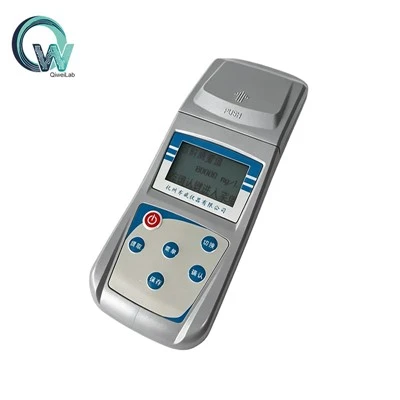
First off, let’s get one thing straight: “not in use” isn’t a one-size-fits-all term. Storing an analyzer you’re pulling offline for a 2-week pool off-season is way different than storing a spare unit you haven’t touched in 6 months, right? Same goes for a sensor you just swapped out mid-shift vs. a sensor you’re retiring. I’ll break it down by scenario so you don’t have to guess.
First Step: Prep Your Sensor Before Storing It (Non-Negotiable)
No matter how long you’re keeping it idle, you can’t just yank the sensor out, plop it in a toolbox, and walk away. That’s the fastest way to ruin the membrane. Let’s start with the basics: free chlorine sensors work off a polarized membrane (usually Teflon) that holds a fill solution, and any leftover chlorine, salt, or gunk on the sensor face will eat at that membrane or cause biofouling.
Here’s what I teach all my customers: when you’re removing the sensor from the analyzer, grab a squirt bottle of DI (deionized) or distilled water (tap water has chlorine and minerals that mess things up) and spray the sensor head thoroughly. Scrub the tip gently with a soft, lint-free cloth (no paper towels—they leave fibers!) to get rid of any buildup. Then, pat it dry—don’t leave it soaking wet, especially if you’re storing it long-term.
Pro tip from the shop floor: I’ve seen a few folks skip the scrub and use just water, and 3 months later, they call saying their sensor reads 5ppm when it’s really 1. That’s leftover organic gunk on the membrane, throwing off the reaction. So don’t skip the light scrub.
Scenario 1: Short-Term Storage (1 Week to 2 Months)
This is the most common case: maybe you’re closing a commercial pool for the winter, or a plant has a 30-day maintenance window where they swap the analyzer to a backup unit. For this timeline, you don’t need to do anything super intense, but you also can’t just tuck it in a corner.
First, don’t leave the sensor exposed to air. Wait—why? Because some free chlorine sensors (amperometric ones, which are the most common for industrial/pool use) rely on that fill solution sitting against the membrane. If you leave the sensor head dry, the membrane can shrink, crack, or get coated with dust, and it won’t work when you put it back online.
What to do instead: Grab a small vial or plastic cup, fill it with the same fill solution that came with the sensor (distilled works if you can’t get the exact brand, but never tap water), and submerge the entire sensor tip in it. Make sure no air bubbles are trapped under the membrane—bubbles cause dead spots, trust me. Then, cap the cup tight so no liquid evaporates.
Where to store it? Keep it in a cool, dark spot—like a utility closet, not a hot garage. Heat speeds up the breakdown of the fill solution and can warp the membrane. I’ve seen sensors go bad in 2 weeks just because someone left them on a windowsill in the sun. Also, don’t stack heavy stuff on top of the cup—cracking the membrane mid-storage is a avoidable disaster.
Wait, what about the analyzer itself (the main unit, not the sensor)? If you’re storing the whole unit, unplug it, wrap the cables in cable ties to keep them from kinking, and store it in its original cardboard box if you have it. If not, a plastic bin with a lid works—keeps dust out and prevents accidental bumps. Don’t just leave it on a workbench with tools all around—one misplaced wrench and you’re replacing the display.
Scenario 2: Long-Term Storage (2+ Months, Spare Sensors or Units)
This is where people mess up the most, because you can’t just leave the sensor submerged in fill solution for 6 months. The solution will break down, and the salts in it will crystallize, clogging the membrane pores.
So here’s the right long-term storage hack I’ve tested myself over the years: after cleaning and drying the sensor tip (make sure it’s totally dry—no water left on the face), wrap the sensor head in a small piece of wet foam (like the stuff from a sensor storage pad, or even a piece of a damp, lint-free cloth that’s been rung out super well) and then put it in an airtight plastic bag. Why wet foam? It keeps the membrane from drying out, but not enough liquid to cause crystallization.
Pro move: Write the date you’re storing it on the bag with a marker. Sensors have a 1-2 year lifespan max, so if you pull a spare out after 18 months, you know it’s probably due for a calibration check anyway.
For the main analyzer unit, if you’re storing it long-term, open the case (careful not to yank any internal wires) and blow out any dust with a can of compressed air (hold it upright so you don’t spray liquid). Then, wrap the display in a anti-static cloth—static is bad for the circuit boards, especially if you’re storing it somewhere dry. And again, plug it? No, leave it off. But if you’re in a super humid area, maybe plug it in once every 3 months for 24 hours to keep the circuits from corroding.
The “Don’ts” That Will Ruin Your Storage
Let’s run through the mistakes I’ve seen that cost customers hundreds (even thousands) of dollars:
- Never store a sensor in tap water. Tap has chlorine, chloramines, and minerals that will foul the membrane faster than you can calibrate it. DI water is non-negotiable here.
- Don’t leave the sensor sitting in air for more than a day. Even a dry tip for 48 hours can shrink the membrane, leading to inaccurate readings forever.
- Don’t freeze anything. If you’re storing stuff in a cold basement in winter, make sure the temperature doesn’t drop below freezing. The fill solution expands when it freezes, and it will crack the membrane. I once had a customer who stored 3 sensors in an unheated shed, and all 3 split—cost him $1,200 total. Ouch.
- Don’t label your sensor wrong. If you have multiple spares, label them with the installation date, not just “spare sensor”. A sensor that’s 6 months old will calibrate way better than one that’s 18 months old, even if it’s never been used.
- Don’t skip calibration after storage. No matter how well you store it, when you pull a sensor back out, you must calibrate it with a free chlorine standard solution. Even the best storage can throw off the membrane’s polarization, so a quick two-point calibration will save you from bad data.
What If You Forget?
If you’ve already got a sensor that’s been sitting in a toolbox for a month, don’t panic. First, clean the tip with DI water, soak it in a small vial of fill solution for 24 hours to rehydrate the membrane, then calibrate it. I’ve had customers save sensors that were “dead” just by rehydrating them. But if it’s been 6 months and it was dry the whole time? Probably time to replace it—don’t waste the effort.
Ready to Get Your Storage Right?

At the end of the day, storing a free chlorine analyzer isn’t rocket science, but it’s something that’s often overlooked. A properly stored sensor can last 2-3 years instead of 6 months, which is a huge cost saver. If you’re not sure what fill solution your specific model needs, or you need help picking storage kits for your spare units, reach out to our team. We can walk you through it, no sales pitch—just the straight scoop on what works for every setup.
COD Reactor References:
- “Amperometric Chlorine Sensor Storage Guidelines”, Instrument Society of America, 2021
- “Preventative Maintenance for Water Quality Analyzers”, Water Environment Federation, 2022
- “Membrane Care for Electrochemical Sensors”, Analytical Chemistry Journal, 2020
Hangzhou Qiwei Instrument Co., Ltd.
Hangzhou Qiwei Instrument Co., Ltd. is one of the most reliable manufacturers and suppliers of free chlorine analyzer in China, featured by quality products and good service. Please rest assured to buy bulk durable free chlorine analyzer in stock here from our factory. We also accept customized orders.
Address: Room 101, Building 25, No. 488-1, Donghu North Road, Linping District, Hangzhou City, Zhejiang Province, China
E-mail: info@qiweilab.com
WebSite: https://www.qiweilab.com/
