Hey everyone, it’s Jake here from your go-to butt-weld pipe fittings supplier—you know, the folks who’ve got your pipe connection needs covered for years, no fluff, no B.S. Today I wanna tackle a question I get at least once a week from HVAC techs, plumbers, and even small construction crew leads: Can butt-weld fittings actually work for gas lines? Let’s cut through the confusing spec sheets and industry jargon here, ’cause I’ve heard way too many people write ’em off or swear by ’em without the full story. Butt-Weld Pipe Fittings

First, let’s start with what butt-weld fittings are, for anyone who’s new to the game. If you’ve worked with pipe before, you know fittings are the little pieces that change direction, branch out, or connect different pipe sizes. Butt-weld (or BW, as we call ’em internally) fittings are the ones that look like cut ends of pipe, right? You slide the pipe into the fitting’s socket, weld it all around the outside, so there’s no gap—no threads, no compressible gaskets that can go bad over time. That’s a big deal for lines that carry gas, because leaks in gas lines aren’t just a hassle; they’re dangerous. Think carbon monoxide buildup, explosions, that whole messy stuff.
Now, the myth I hear a lot: “BW fittings are only for industrial water or chemical lines, not gas.” Is that true? Nah, not entirely. But there are definitely rules you gotta follow, and I’ve seen people mess up when they skip those. Let’s break down why they’re actually a solid option for gas lines, first. The biggest plus is that welded joints are permanent and way less likely to leak than threaded ones. Threaded joints rely on Teflon tape or pipe dope, which can break down over years, especially if the gas has trace oils or moisture (which natural gas often does). I’ve had customers tell me they had to re-do threaded gas lines every 5 years because of tiny leaks around the threads, but a welded BW fitting line? We’re talking 20+ years with zero issues, if installed right.
But wait, let’s not ignore the downsides. They’re not for every gas line, and not every type of gas. For example, small residential gas lines—like the 1/2-inch or 3/4-inch lines that go to your water heater or furnace—most plumbers still use threaded fittings, and that’s fine. Why? Welding a tiny line is more work, more time, and honestly, the cost difference isn’t worth it for a small residential job. But for commercial lines, or larger residential lines (like if you’re running gas to a whole new addition with a fireplace, or a commercial kitchen’s gas line for a range), BW fittings shine. They’re also perfect for high-pressure gas lines—like the ones that run from a gas main to a building, or for industrial applications where pressure is way higher than your home’s furnace. Threaded fittings can’t handle that kind of pressure consistently, but welds? That’s their bread and butter.
Now, let’s talk codes, because this is non-negotiable. You can’t just grab any BW fitting and weld it into a gas line. The biggest code we follow here in the U.S. is the National Fuel Gas Code, also called NFPA 54. I’ve got a binder full of this stuff, and my team attends quarterly training just to stay up on changes. NFPA 54 has specific rules for what type of fittings you can use for gas lines, based on the type of gas and the pressure. For example, if you’re working with natural gas, you can use carbon steel BW fittings—but you can’t use galvanized BW fittings. Wait, why? Galvanized steel has a zinc coating, and when you weld it, that zinc releases fumes that are bad, plus over time the zinc can flake off and get into the gas line, causing issues with appliances. That’s a common mistake I see first-timers make—they grab the cheapest BW fittings, which are often galvanized, and that’s a no-go for gas. We supply only black carbon steel BW fittings for gas lines, and for higher pressure or corrosive gas lines, we also have stainless steel BW fittings, which are code-approved too.
Another code thing: the welding process itself. You can’t just tack-weld a BW fitting on and call it done. NFPA 54 requires that the weld is a full penetration weld—meaning the molten metal goes all the way through the pipe and fitting wall, not just on the surface. A lot of DIYers or new welders mess this up, and that’s where leaks can start. That’s why I always tell folks: if you’re doing a commercial or high-pressure gas line, don’t cut corners on the weld. It’s worth paying a certified welder instead of trying to do it yourself to save a few bucks. A bad weld on a gas line is a disaster waiting to happen.
Now, let’s address the elephant in the room: what about LP gas (propane)? Can BW fittings work for propane lines too? Short answer: yes, but again, check the code. Propane is heavier than natural gas, so leaks are more of a hazard because they sink to low spots instead of rising. That means your joints have to be extra reliable, and BW fittings’ welded joints are perfect here. We supply a ton of BW fittings for propane lines at farm sites, for backup generators, and for small commercial facilities that use bulk propane. The key here is making sure the fitting’s schedule matches the pipe’s schedule. Wait, schedule? That’s just the wall thickness, right? For gas lines, especially high-pressure propane, you need schedule 40 or schedule 80 BW fittings, not the thin schedule 10 ones we use for some low-pressure water lines. That’s another mistake I see: someone grabs a cheap thin BW fitting, welds it on, and it can’t handle the propane pressure, leading to a rupture.
Let me share a quick customer story to make this real. Last year, a guy named Mike from a local construction company hit me up. He’d been using threaded fittings for all his restaurant gas lines, but he had three jobs in a row where leaks popped up within a year—one almost caused a shutdown of a burger joint. He was frustrated, heard we had BW fittings for gas lines, and gave them a shot for a new pizza place. He used schedule 40 black steel BW fittings, hired a certified welder, and now two years later, no leaks, no callbacks, he’s ordering 10 more fittings for his next three jobs. That’s the proof right there—when you do it right, it works.
But let’s be clear: BW fittings aren’t a one-size-fits-all. If you’re running a tiny 1/2-inch line for a patio heater, threaded is fine, cheaper, easier. If you’re doing a large commercial line, a high-pressure industrial gas line, or a propane line for a farm or generator, BW fittings are the way to go. Another thing I love about BW fittings: they’re reusable if you need to adjust the line? Wait, no—wait, welded joints are permanent, but wait, if you need to replace a section of pipe, you can cut out the old pipe and weld a new piece with BW fittings, no problem. Threaded lines, if you have to take a fitting apart, you risk damaging the threads, so you might have to replace the whole fitting. That’s a big plus for maintenance.
Now, let’s talk about common misconceptions that make people avoid BW fittings for gas lines. First, “they’re too expensive.” Yeah, initial cost is a little higher than threaded fittings, but over time, you save on callbacks, re-piping, and emergency repairs. A threaded line that leaks once every 5 years is going to cost you way more in labor and downtime than the extra cost of BW fittings upfront. Second, “they’re hard to install.” If you’re a certified welder, it’s no harder than threading pipe—you just need the right tools, and a lot of construction crews already have welders on staff. For plumbers who aren’t welders, you can sub out the welding, which is easy and worth it. Third, “codes ban them.” No, NFPA 54 and most local building codes explicitly allow BW fittings for gas lines, as long as you use the right material and install them correctly. I’ve worked with inspectors all over the country, and most are fine with BW fittings for gas lines as long as the weld is proper.
Wait, let’s touch on another point: leak testing. When you install a BW gas line, you can test it just like a threaded line—using a pressure test with air or nitrogen. The welds will hold the pressure just as well as any other joint, so there’s no extra step there. Some people think welded joints are harder to test, but that’s not true. You just pressurize the line to 1.5 times the maximum operating pressure, hold it for 15 minutes, and if the pressure doesn’t drop, you’re good. Same as threaded.
Now, what about different types of gas? I mentioned natural and propane, but what about other gases, like compressed air, or even specialty industrial gases? For low-pressure compressed air lines, BW fittings are fine too, but if you’re working with corrosive gases, like chlorine or something, you might need stainless steel BW fittings, which we carry. The key is matching the fitting material to the gas type and pressure, which is something my team can help you with—no guesswork, just straight advice.
Let me wrap this up with a clear summary. Can butt-weld fittings be used for gas lines? Yes, absolutely—when you follow the rules: use black carbon steel or stainless steel (no galvanized), match the wall thickness (schedule 40 or 80 for most gas lines), get a full penetration weld from a certified pro, and check your local code (which almost all allow BW fittings for gas applications). They’re not for every small residential job, but for commercial, high-pressure, propane, or long-lasting gas lines, they’re one of the best options out there.
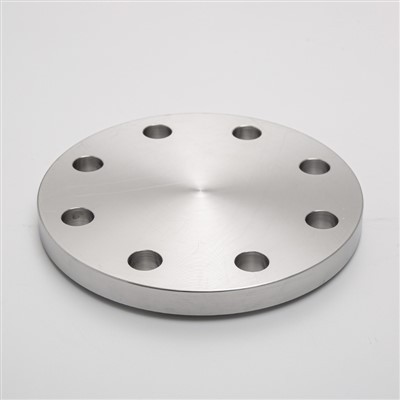
If you’re a plumber, construction lead, or DIYer looking to switch to BW fittings for your next gas line project, I’m here to help. We’ve got a huge inventory of BW fittings in all sizes, schedules, and materials, and our team can answer any questions about code compliance, material selection, or installation tips. No B.S., just honest advice and quality fittings that stand up to the job. Reach out to our team to talk through your project—we’d love to help.
ANSI/ASME B16.5 Flanges References:
- National Fuel Gas Code (NFPA 54), National Fire Protection Association, 2021 Edition.
- Butt-Weld Fitting Specifications, American Society of Mechanical Engineers (ASME) B16.9, 2022.
- Propane Gas Installation Codes, National Propane Gas Association (NPGA), 2020.
- OSHA Guidelines for Gas Line Welding and Installation, Occupational Safety and Health Administration, 2023.
Zhejiang Chengjiu Pipeline Co., Ltd.
Zhejiang Chengjiu Pipeline Co., Ltd. is one of the most professional bw pipe fittings manufacturers and suppliers in China, specialized in providing high quality customized service. We warmly welcome you to buy high-grade bw pipe fittings from our factory. For price consultation, contact us.
Address: NO.9-1 Hengsheng Road, Jinchuan Street, Changshan Prefecture, Quzhou, Zhejiang Province, China
E-mail: sale@cncjflange.com
WebSite: https://www.cncjflange.com/
