Hey folks, let’s cut to the chase if you’ve ever shopped for rectifiers—whether you’re powering a small industrial motor, a solar inverter, or even a commercial battery charging bank—you’ve probably wondered one thing more than any other: what the heck is the power rating I actually need? It’s not just a random number pulled from a spec sheet, right? I’m on the front lines every day as a rectifier supplier, so I see this question at least a dozen times a week from contractors, engineers, and even shop owners just trying to get their systems up and running without blowing a fuse. Let’s break this down like we’re chatting over a coffee, no stuffy jargon, no confusing equations that make your eyes glaze over. Rectifer
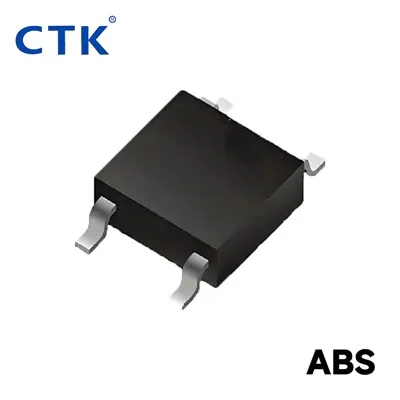
First off, let’s make sure we’re on the same page: a rectifier’s power rating isn’t just “how much power it can output.” Wait, no, it’s more nuanced than that. Let’s start with the basics—rectifiers turn AC (alternating current, the stuff that comes out of your wall outlet) into DC (direct current, the steady power that runs batteries, motors, and most electronics). That conversion isn’t 100% perfect, though. There’s always some heat lost along the way, which means a rectifier can’t push out every watt you put into it. So first rule of thumb: the power rating you’ll see on a spec is almost always the continuous DC power it can supply, and it has to account for that loss. If you skip that, you’ll end up with a rectifier that runs too hot, wears out way faster, and might fail when you need it most.
Wait, let’s use a real example that hits close to home. Last month, a small machine shop owner reached out panicking—his old 5kW rectifier fried mid-shift on his CNC milling machine. He’d bought a new one that was rated for 6kW, thinking “more = better,” but a quick check showed his milling machine’s peak DC draw was actually 5.8kW, not just the steady 4.5kW he thought he needed. Turns out, his 6kW unit couldn’t handle those 30-second peak spikes without overheating, because he missed a key part of power ratings: transient vs. continuous load. That’s the mistake I see most people make.
Let’s get specific about how power rating is calculated, without the deep math that’ll put you to sleep. For most standard line-frequency rectifiers (the kind you find in industrial setups, not the tiny ones in phone chargers), the formula boils down to: DC Power Rating = Output DC Voltage × Continuous Output DC Current. That’s it? Yep, mostly. But don’t ignore the AC input side, because efficiency plays a big role here. A rectifier’s efficiency is usually between 85% and 98% these days—so if you have a 10kW DC output rating, that means you’re pulling roughly 10.2kW to 11.8kW from the AC line to run it. Skimping on input capacity just to save a buck might seem smart, but it’ll hurt the rectifier’s lifespan. And for high-frequency rectifiers (used in things like solar inverters or EV chargers), the efficiency gap is even smaller, up to 99% these days, but the peak current specs are way tighter.
Now, let’s talk about the two big power rating terms everyone mixes up: continuous vs. overload (or peak) rating. Continuous rating is the big number on the front of the unit—it’s the amount of DC power it can supply 24/7, 365 days a year without overheating or shortening its life. Overload (or peak) rating is the short-term burst it can handle—think when your machine kicks on, or your solar array has a sudden cloud gap that makes the inverter pull extra power for a second. That machine shop owner I mentioned earlier? His rectifier had a 6kW continuous rating, but only a 6.6kW peak rating—his 5.8kW peak load was too close to that peak for comfort, so it overheated after 10 minutes of sustained high draw. We ended up swapping him to a 7.5kW continuous unit, which has an 8.2kW peak rating, and he’s been running smooth ever since.
Another thing that’s easy to overlook: ambient temperature. If your rectifier’s going in a hot warehouse where it’s 105°F (40°C) all summer, that power rating isn’t the same as it is in a cool 70°F (21°C) lab. Heat is a rectifier’s #1 enemy—every 18°F (10°C) rise above its rated ambient temp cuts its lifespan in half. So if you’re installing one in a tight, unventilated space, you need to derate the power rating. Let’s say a standard rectifier is rated for 10kW at 70°F. If your spot is 100°F, you might only get 8.5kW of safe continuous power out of it. That’s not a “suggestion”—it’s a hard rule from every rectifier manufacturer, and ignoring it is why so many units fail early. I can’t tell you how many times I’ve had someone call saying their new rectifier died in 6 months, and when we ask where it’s installed, it’s a closet with no ventilation and a space heater nearby. Oops.
Wait, what about different types of rectifiers? Because their power ratings work a little differently, too. If you’re using a diode rectifier (the simple, cheap ones for low-power apps like battery chargers), their power rating is straightforward, but they’re less efficient—so you have to account for more input power. Thyristor rectifiers (used for heavy industrial loads like large motors) have a bit more flexibility for overload, but their power rating can vary a little based on how you control the thyristors. Then there’s the switching rectifiers (the modern, efficient ones for solar and EVs) that have tight peak current specs, so their power ratings are way more precise—you can’t just guess with those.
Let’s bring this back to how you pick the right one, since that’s why you’re here, right? Let’s make a quick, actionable checklist (no jargon, promise):
- First, calculate your continuous DC load. Don’t just go by what the manufacturer says the machine uses—measure it if you can. Use a clamp meter on the DC output of your old unit (or ask your electrician to do it) to get an accurate number. Add a 10-15% buffer here—just in case you expand your system later, or your machine runs a little hotter than expected.
- Then, note your peak DC load. That’s the highest power your system pulls for short periods (usually 1-30 seconds). Add a 10% buffer here too, to avoid the mistake that machine shop owner made.
- Check your installation space. If it’s hot, tight, or has poor ventilation, derate the total power by 10-20%. If you’re installing it outdoors, or in a cool climate, you might not need to derate at all.
- Don’t forget efficiency. If you’re running a big rectifier, that extra input power adds up over time. A 95% efficient unit will cost you less in electricity bills than an 88% one, even if it’s a little pricier upfront.
I mentioned that machine shop call earlier—he wasn’t a newbie, he just didn’t account for those peak loads or the ambient temp in his shop (which runs 5°F hotter than standard all summer). Now, he’s got a 7.5kW unit that’s not only holding up, but his electric bill went down 8% because the new rectifier is 3% more efficient than his old one. Win-win.
Wait, let’s clear up a common myth: a lot of folks think higher power rating = better rectifier. That’s not true at all. If you buy a 15kW rectifier for a 5kW system, you’re wasting money—those units cost more upfront, and they’re less efficient when run at a fraction of their rated load. It’s like buying a truck to run errands to the grocery store—you’re paying for something you don’t need, and it’s less efficient at low speeds. The sweet spot is a rectifier that can handle your continuous load plus that 10-15% buffer, and can cover your peak loads without breaking a sweat.
Another thing I deal with a lot: folks mixing up voltage and power. A rectifier’s power rating is volts × amps, not just volts. If you have a 100V rectifier rated for 100A, that’s 10kW, but a 200V 100A rectifier is 20kW—same current, double the power. Don’t fixate on the voltage; look at the actual power number, but make sure it matches your required DC voltage too. A 20kW rectifier that outputs 200V won’t work if you need 100V, even if it’s the right power. We’ve had customers try that—they ended up having to return the unit and swap it, which is a hassle we all want to avoid.
Let’s talk about real-world use cases to make this stick. If you’re putting a rectifier in a 12V lead-acid battery charger for a small golf cart: your continuous load is probably 10A, so 120W, but add a 15% buffer for charging spikes, so 138W. A 150W rectifier would work perfectly. If you’re doing a 48V lithium-ion battery bank for an off-grid solar setup: your continuous charge might be 50A, that’s 2.4kW, peak charge could hit 55A (2.64kW), so a 3kW continuous rated unit would be ideal. No waste, no risk of overheating.
What if you’re working with a custom application? A lot of our clients are building unique systems, so their load isn’t a standard number. That’s where we come in—we don’t just push off-the-shelf units. We help you calculate exactly what you need, account for ambient temp, overloads, efficiency, even how the rectifier will be mounted (fan-cooled vs. air-cooled, which affects the power rating). For example, a fan-cooled rectifier can usually run at full rated power at higher ambient temps than a convection-cooled one, because the fan moves heat away faster. That’s a detail a lot of suppliers skip, but it makes all the difference.
Now, let’s get to the mistakes that cost people money. First, underestimating peak load: 60% of the issue calls we get are from folks who bought a rectifier that can’t handle their short-term power spikes. Second, ignoring ambient temperature: another 25% of failures are from units installed in hot, unventilated spaces without derating. Third, buying way too big a unit: that’s 10% of cases, where the customer spent $500 extra on a bigger unit they didn’t need, and it’s running inefficiently every day. Only 5% are just bad luck with a faulty unit, which is why we stand behind all our rectifiers with a 2-year warranty and 24/7 tech support if something goes wrong.
Wait, one quick note about maintenance: a rectifier’s power rating doesn’t stay the same over time. Dust buildup on the heat sink, a failing fan, or loose connections can make it run hotter, which lowers its effective power rating. That’s why we recommend checking your unit every 6 months—clean the heat sink, make sure the fan works, tighten any wire connections. A little maintenance goes a long way in keeping your power rating where it should be, and your rectifier running for 10+ years (which is the average lifespan for a good unit, if you take care of it).
So, to wrap this up, what is a rectifier’s power rating? It’s a number that tells you the maximum continuous DC power it can supply safely, adjusted for efficiency, ambient temp, and load type (continuous vs. peak). It’s not a random spec, it’s a tool to make sure your system works when you need it, and doesn’t burn out prematurely.
If you’re shopping for a rectifier right now, and you’re not sure which power rating is right for your setup—whether it’s for an industrial motor, solar system, battery charger, or anything else—we’re here to help. Don’t guess, don’t settle for a one-size-fits-all unit. Hit us up to chat through your needs, we’ll break down exactly what spec you need, no pressure, no confusing jargon. We’ve got off-the-shelf options for standard jobs and custom builds for when you need something tailored.
We can help you avoid that machine shop mistake, the one where you end up with a unit that’s too small, runs too hot, and costs you time and money. Let’s make sure your rectifier is the right fit, from power rating to installation. Reach out whenever you’re ready to talk details.
Middle Voltage MOSFETs References
- Rectifier Power Rating: Calculation, Standards, and Application Guidelines. International Electrotechnical Commission (IEC) Publication 60146, 2021.
- Industrial Rectifier Efficiency and Thermal Derating Methods. IEEE Transactions on Industrial Electronics, Vol. 68, No. 4, 2020, pp. 3125-3134.
- Solar and Energy Storage System Rectifier Specifying Guide. North American Electric Reliability Corporation (NERC) Application Note 2022-003.
- Thyristor and Diode Rectifier Load Handling. Industrial Electrical Association (IEA) Technical Bulletin TB-7, 2021.
Tongke Electronic Co., Ltd
Tongke Electronic Co., Ltd. is one of the most experienced rectifer manufacturers and suppliers in China, featured by quality products and low price. Please rest assured to wholesale advanced rectifer made in China here from our factory. Contact us for pricelist.
Address: No.3,Chayuan Rd, Street 3, AilingKan, Dalingshan, Dongguan, Guangdong, China.
E-mail: jack@ctk-elec.com
WebSite: https://www.ctkchip.com/
