Hey there, if you’re here, chances are you’ve stared at a flange butterfly valve spec sheet at 2 a.m., wondering, “Why is there so much jargon, and how do I not waste a bunch of money on the wrong size?” Trust me—been there, done that, spilled coffee on three spec sheets in the process. I’m the owner of a flange butterfly valve supplier, and let’s cut to the chase: picking the wrong size isn’t just annoying—it’s a ticket to leakages, pressure drops, and a whole lot of unnecessary downtime. I’ve seen it all: a plant that ordered a valve 2 inches too big and blew through 3 months of maintenance budget fixing leaks, another that went too small and overworked their pump system. Today, I’m breaking down how to nail the right size—no stuffy engineering degree required, just real-world tips I’ve picked up working with plumbers, plant managers, and even a few DIY weirdos (no shade, we’ve all been there). Flange Butterfly Valve

First off, let’s get one thing straight: flange valve sizing isn’t the same as, say, buying jeans. You can’t just guess and hope for the best. Way too many folks default to the pipe size they’re connecting to, but that’s only half the story. Pipe size is a starting point, not the final answer. Here’s why: if your pipe’s 6 inches, a 6-inch valve might work, but only if you don’t have to account for flow rate, pressure, or what’s actually moving through that pipe. Let’s start with the basics, but keep it casual.
Step 1: Grab your pipe specs and don’t just read the name. Wait—what do I mean? When you look at a pipe, folks usually say “it’s a 4-inch pipe,” but that’s nominal pipe size (NPS), not its actual inner diameter (ID). Flange butterfly valves are sized against NPS, but the real deal is the ID of your pipe, because that’s where the fluid’s moving. Let’s do a quick example: a 4-inch schedule 40 steel pipe has an actual ID of ~4.026 inches, while a 4-inch schedule 80 is ~3.826 inches. If you just order a “4-inch valve” without checking your pipe’s schedule, you might get something that’s slightly too big or small to line up properly with the flanges. That leads to gap gaps, bad gasket seals, and leaks. Pro tip: pull your pipe’s spec sheet (most are online free) or use a digital caliper to measure the outer diameter (OD) if you don’t have the spec—just remember, OD is different from ID, but for standard pipe, the OD is fixed for a given NPS. 4-inch pipe always has an OD of 4.5 inches, so a flange valve designed for that OD will line up. Easy enough, right?
Step 2: Flow rate is non-negotiable—skip this and you’re begging for trouble. I can’t stress this enough. Pipe size tells you where the valve goes, but flow rate tells you what size it needs to be to handle the stuff moving through it. Let’s say you’re moving water for a HVAC system. If you have a 6-inch pipe, but your flow rate is only 100 gallons per minute (GPM), a 6-inch valve is overkill. A 4-inch valve would work just fine, and it’ll cost way less, weigh less, and be easier to install. But if you’re moving 500 GPM through that same 6-inch pipe? A 4-inch valve would choke the flow, cause a huge pressure drop, and make your pump work twice as hard—wasting electricity and wearing out fast. How do you calculate flow rate? Don’t panic, it’s not rocket science. Most process control teams have a flow meter reading, or you can use a simple formula if you have pipe ID and velocity: Flow Rate (GPM) = (Velocity in ft/s) x (Pipe Area in sq inches) x 0.4085. Wait, if that scares you, ask your pipe installer or grab the data from your existing system—every pump or meter will have flow rate numbers, I promise. And for the love of all things good, don’t go by “max flow” unless you only ever run at max. Most systems operate at 70-80% of max flow, so size your valve to that, not the extreme end.
Step 3: Pressure classes—this is the part most people skip, and it’s a mistake. Flange valves come in pressure classes, like 150, 300, 600, right? That number (in PSI) is how much pressure the valve can handle. So even if your pipe is 8 inches and your flow is on point, if your system runs at 300 PSI, you can’t order a 150 class valve—it’ll blow. Wait, but hold up—pressure class isn’t just your system’s operating pressure. You have to account for surge pressure too. Surge is that sudden spike when a valve shuts fast, like when a pump trips. That surge can be 2-3 times your normal operating pressure. I had a customer a few years back who ordered a 150 class valve for a water system that ran at 100 PSI. When the pump shut off, the surge hit 250 PSI, and the valve’s flange split, flooding half their warehouse. Oops. So rule of thumb: pick a pressure class that’s 1.5-2 times your maximum operating pressure, plus 50 PSI for surge. And if you’re dealing with high-pressure systems (like oil and gas), go 2 times or more—no skimping here. Also, make sure the valve’s pressure class matches your flange’s pressure class. They have to be the same or higher, otherwise the seal won’t hold.
Step 4: Media type matters more than you think. What’s moving through your pipe isn’t just generic “fluid”—that changes the valve size, too. If you’re moving clean water or air, you can get away with a slightly smaller valve than if you’re moving thick sludge, chemicals, or gas. Gases compress, right? So a gas at high pressure might need a slightly bigger valve to keep flow smooth, because small valves can cause turbulence. Sludge, on the other hand, is thick, so if the valve’s too small, you’ll get build-up, blockages, and wear on the disc and seat. I work with a food processing plant that moves tomato paste—they used to order standard 6-inch valves, but we had to adjust to 8-inch because the paste would stick to the disc of a 6-inch valve and cause pressure build-up. They’ve cut maintenance on valves by 40% since we switched. Also, if it’s corrosive media, the valve’s material (like stainless steel vs. bronze) plays a part, but that’s more material than size—just a quick note: don’t use a small valve to compensate for a bad material, that’ll backfire.
Wait, let’s talk about common mistakes I see every single week. Number one: matching the valve size to the old valve, even if the old one was wrong. So many guys see a 6-inch valve on a pipe and just order another 6-inch, not realizing that old valve was undersized and causing issues. Number two: ignoring end connection types. Flange valves have different flange types, like raised face (RF) vs. flat face (FF). Even if the NPS is right, if the flange face doesn’t match your pipe’s flange, you can’t bolt them together. That’s a easy one to miss—always confirm the end connection matches. Number three: over-sizing “just to be safe.” Folks think bigger is better, but no—bigger valves have more lag time when opening/closing, they cost more, and they can actually cause water hammer (that loud bang in pipes when flow stops) if they’re too big. Water hammer is another way to blow seals or break pipes, so skip the “just in case” size.
Now, how do you actually measure this? Let’s make a quick, step-by-step cheat sheet you can pull up next time you’re ordering:
- Jot down your pipe’s NPS and schedule (or measure its OD—standard pipe OD is fixed for each NPS).
- Get your system’s flow rate (from meters, pumps, or calculate it).
- Note your maximum operating pressure, then add 50 PSI for surge, pick a pressure class that covers that.
- Check what media you’re moving (clean, thick, corrosive, gas?) to adjust size if needed.
- Confirm the flange end type (RF, FF, etc.) matches.
Let’s test this with a real example. Suppose you have a HVAC system for a small office, pipe is 4-inch schedule 40 (OD 4.5 inches), flow rate is 120 GPM, operating pressure is 80 PSI, moving clean water. Step 1: NPS 4, OD 4.5 inches. Step 2: 120 GPM—way under max for a 4-inch valve. Step 3: Pressure class: 80 PSI + 50 = 130, so 150 class is perfect. Step 4: Clean water, no size adjustment. Step 5: Flange is RF, so get an RF 4-inch valve, 150 class. That’s it—no overspending, no issues.
Wait, what if you’re dealing with a custom system? Or something unique, like a chemical processing line? That’s when you should talk to someone who knows their stuff (ahem, like me—we’ve helped hundreds of folks with custom sizing). I’m not saying you need an engineer on speed dial, but if you’re working with anything outside of basic water, air, or low-pressure gas, double-check your numbers with a supplier that’s actually honest. A lot of big box suppliers will just sell you whatever you ask for, even if it’s wrong. We test every valve we ship for sizing fit, so you don’t have to guess.
Another thing: disc design plays a tiny role here. Flange butterfly valves have different disc designs—concentric, double-offset, triple-offset. Triple-offset valves are for high pressure and high temp, and they’re slightly more compact, so sometimes you can go a size smaller than with a concentric disc, because they don’t rub on the seat as much. But that’s a deep dive—if you’re not dealing with extreme conditions, you can stick to concentric for basic use, and size as we talked.
Let’s wrap this up before I get too ranty (I tend to do that when talking about bad valve sizing). The biggest takeaway: don’t just go by pipe size. Flow rate, pressure class, media type, and flange specs are all part of the puzzle. I’ve seen so many businesses throw money away on the wrong valve, or deal with hours of downtime from a leak that could’ve been avoided by measuring twice and ordering once.
If you’re in the middle of this and you’re still not sure—stop guessing. We do free, no-obligation sizing checks for all our customers. Just send over your pipe specs, flow rate, pressure, and what you’re moving, and we’ll hook you up with the right size, no upsell, no weird fine print. We’re not the kind of supplier that will talk over your head or push a valve that’s too expensive. We’ve been doing this for years, and our customers keep coming back because we get that getting the right size is half the battle.
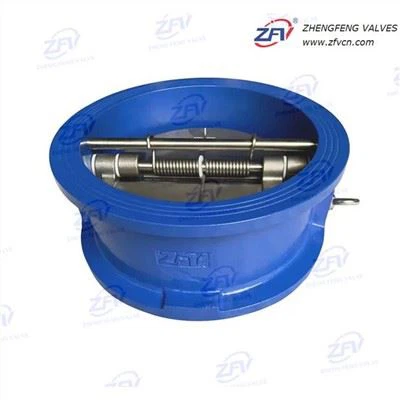
Next time you’re staring at a spec sheet, remember: it’s not about the number on the box, it’s about what that valve needs to do for your system. Don’t let a bad sizing call derail your project, waste your money, or give you a headache. Hit us up if you need help—we’re here to make this part easy, not complicated.
Double Offset Butterfly Valve References:
- Marks’ Standard Handbook for Mechanical Engineers, 11th Edition, Flow Control and Piping Section.
- ASME B16.34-2021, Valves – Flanged, Threaded, and Welding End.
- Hydraulic Institute, Pump and System Sizing Guidelines, 2022.
Zhejiang Zhengfeng Valve Co., Ltd.
We’re well-known as one of the leading flange butterfly valve manufacturers and suppliers in China. With abundant experience, we warmly welcome you to buy bulk advanced flange butterfly valve from our factory. If you have any enquiry about cooperation, please feel free to email us.
Address: Hengtong Road, Wuxing Industrial Park, Wenzhou, Zhejiang, China. 325105
E-mail: sales@zfvalve.com
WebSite: https://www.zfvcns.com/
