If you’ve ever spent time on a production line, a packaging setup, or a CNC machine, chances are you’ve used a slide table (also called a linear slide or linear module) without stopping to ask a critical question: What exactly is its stroke length? As a supplier that’s worked with hundreds of manufacturers, automation integrators, and small business owners over the last decade, this is one of the first questions we get from customers, and for good reason—stroke length isn’t just a spec number. It’s the backbone of how a slide table will perform, fit into your space, and deliver consistent results for years. Slide Table and Linear Module
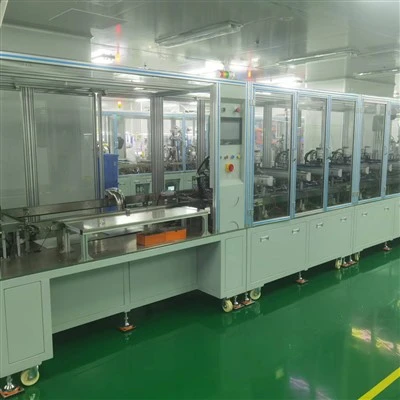
First, let’s get the basics out of the way, no industry jargon that makes your head spin. Stroke length, simply put, is the total distance a slide table’s moving carriage travels from its furthest retracted position to its furthest extended position. If you imagine a slide table sitting on a flat surface, with the carriage at one end of the rail, that’s retracted. When it slides all the way to the other end of the rail, that’s extended. The gap between those two points is your stroke length. It’s easy to think “more stroke is better,” but I’ve seen countless customers buy a table with double the stroke they actually need, only to deal with extra cost, a larger footprint, and even reduced accuracy because the extra rail length introduced more flex. It’s a balance, and that’s where our experience as a slide table and linear module supplier comes in—we don’t just sell parts, we help customers pick the right size for their application.
Let’s break this down a little more to make sure we’re all on the same page. There are two common ways stroke length is specified, and mixing them up is a rookie mistake that leads to headaches later. The first is “effective stroke length” – this is the usable distance the carriage can move without hitting the end caps of the rail. The second is “total length,” which includes the rail and the end caps, mounting plates, and any other hardware. For example, a slide table with a 100mm effective stroke might have a total length of 180mm, because 40mm of rail is taken up by end caps on each side. If you’re designing a machine that has a tight footprint, getting these two numbers mixed up can mean your table won’t fit where you need it. I remember a customer who was installing a new palletizing station a few years back—they ordered a slide table based on the “100mm stroke” spec they saw online, and thought that was the total length. When it arrived, it was 180mm long, and they’d only allocated 120mm of space for it. We swapped it for a custom shorter table that met their exact effective stroke, and saved them weeks of rework. That’s the kind of small, critical detail we focus on every day.
Now, what factors determine the right stroke length for your application? It’s not a one-size-fits-all number, so let’s go through the most common use cases and how we guide our customers.
First, the core function of your process. If you’re a packaging company moving bottles from a conveyor to a labeling station, your stroke needs to be just enough to reach from the main conveyor to the label applicator. If you’re CNC machining parts and need to move a cutting tool across a 500mm work area, your stroke needs to match that work zone, plus a small buffer to account for tool offset. Too short, and you can’t reach the area you need. Too long, and you’re wasting space and money on extra rail that doesn’t do anything for your process. That buffer is another key point—most manufacturers add 10-15mm of extra stroke to their required work distance to account for mounting tolerances, small position shifts, or future process changes. We always advise customers to build that small buffer into their spec, because it’s way easier to add a little extra length up front than to modify a machine later.
Next, load capacity and application speed. This is where stroke length interacts with more than just space. A longer stroke means a longer rail, which is more prone to flex under load, especially if you’re moving a heavy part at high speeds. For example, if you’re moving a 50kg workpiece at 1m/s, a 1000mm stroke slide table will have more rail flex than a 300mm stroke table. That flex can lead to position inaccuracy—something you don’t want when you’re placing parts with 0.1mm precision. Our engineers have tested this dozens of times: for heavy loads or high-speed applications, we often recommend shorter strokes paired with reinforced rails, rather than longer strokes with thinner rails that can’t hold up. I’ve seen a 3D printing manufacturer try to save money on a longer stroke table for their large format printer, only to have layer shifts every time the carriage was at the far end of the rail. Swapping to a shorter, stiffer table fixed the issue immediately—no more reprints, no more lost revenue.
Then there’s the type of slide table itself, because stroke length can vary wildly between different designs. Let’s talk about the most common types our customers use, and their stroke ranges. Ball screw driven slide tables are the most popular for high-precision applications—CNC, medical devices, automated inspection. These can have stroke lengths from as small as 50mm up to 6 meters, depending on the size of the rail and screw. They’re great for applications that need consistent accuracy, because the ball screw converts rotary motion to linear motion with minimal backlash. Then there’s belt driven slide tables, which are better for longer strokes and higher speeds, often used in packaging, palletizing, and material handling. Belt driven tables usually top out around 10 meters of stroke, though we can customize longer ones for specific projects. The downside? They have a little more play than ball screw tables, so they’re not ideal for ultra-precise work. Finally, there’s cross roller slide tables, used for small, light loads with extremely high precision—think semiconductor manufacturing or assembly of small electronics. These have much shorter strokes, usually between 10mm and 200mm, because their compact design doesn’t work well with long rails. Knowing which type of slide table you need will narrow down your stroke length options right away. A lot of new engineers I work with assume all slide tables can have the same stroke range, but that’s not the case.
Now, common mistakes we see customers make when choosing stroke length, and how to avoid them. First, buying a stroke that’s too long. As I mentioned earlier, longer strokes mean higher cost, more space, and more flex. A 500mm stroke table is usually 20-30% more expensive than a 300mm stroke table of the same width and load capacity— that’s a huge markup for unused rail. We had a customer in the automotive industry a while back who ordered a 1200mm stroke table for a simple part transfer, when they only needed 400mm. They were able to return it for a credit, but they almost missed their production deadline waiting for the swap. The second mistake: not accounting for mounting hardware. Many customers forget that the motor, coupler, and limit switches add a few millimeters to the total length of the table, so if you calculate your required stroke and then don’t leave space for these components, the table won’t mount correctly. We always send our customers a 2D and 3D CAD drawing of the table with exact dimensions, so they can plug it straight into their machine design software—no guesswork. Third, ignoring future needs. If you’re setting up a new line, it’s worth thinking about whether you might expand your process in the next 2-3 years. We’ve had many customers come back to us a year after installation, needing a slightly longer stroke for a new process. If you have a little extra space and budget, adding 20-50mm of stroke at the start can save you the cost of a full replacement later.
As a supplier, we also do custom stroke lengths for customers whose needs don’t match our standard inventory. A lot of people think slide tables only come in set sizes, but that’s not true—we’ve built tables with strokes as small as 25mm for medical device assembly, and as long as 8 meters for a custom material handling system for a food processing plant. The key is knowing what’s possible, and that comes from years of testing our products and working with different industries. When a customer tells us they need a specific stroke, the first thing we do is ask about their load, speed, precision requirements, and available space, because those factors will tell us if that stroke is achievable with their chosen table type.
Let’s talk about a real example to tie this all together. Last year, a customer making medical test kits came to us for a slide table for their automated pipetting station. Their process required moving a pipette from a reagent well to a sample well, a distance of exactly 120mm. They initially ordered our standard 150mm stroke ball screw table, because they thought extra stroke was better. But once they shared their machine layout, we saw that the pipette only needed 120mm, and the 150mm table would have added unnecessary weight, increased their cycle time by 5% (because the carriage had to move a little farther each cycle), and cost them 15% more. We customized a 120mm stroke table, cut to their exact effective stroke, with the same load capacity and precision, and it fit perfectly into their space. They saved money, their machine was faster, and we avoided them dealing with any issues from unused rail. That’s the kind of value we focus on— not just selling a product, but solving a problem.
Now, if you’re still not sure what stroke length you need, or which type of slide table is right for your application, that’s why we’re here. We’ve helped customers in industries from aerospace to food and beverage to semiconductor manufacturing, and we can walk you through every step. Whether you need a standard off-the-shelf table or a fully custom design, we’ll share our real-world experience, not just a spec sheet. We don’t want you to buy a table that’s too long, too short, or the wrong type— we want you to have a part that works for your process, today and for years to come.
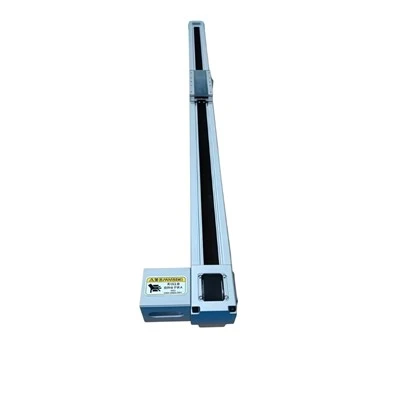
If you’re working on a new automation project, upgrading an existing line, or just have questions about slide table stroke length, feel free to reach out to our team for a no-obligation consultation. We can help you calculate exactly what you need, share performance data from similar applications, and make sure you get a solution that fits your budget and your space.
Enclosed Integrated Lead Screw Linear Module References:
- Linear Motion Systems Association. (2021). Slide Table and Linear Module Design Guidelines.
- Bosch Rexroth. (2022). Linear Motion Technology Handbook: Stroke Length and Application Matching.
- Parker Hannifin. (2020). Load, Speed, and Stroke Interactions for Linear Actuators.
- Motion Control Online. (2023). Common Mistakes in Linear Slide Selection for Industrial Automation.
Yangning (Xiamen) Intelligent Technology Co., Ltd.
With abundant experience, we are one of the most professional slide table and linear module manufacturers in China. As we have world-leading production equipment and strong manufacturing capabilities, we warmly welcome you to buy bulk advanced slide table and linear module from our factory. Customized orders are welcome.
Address: Room 307-2, No. 15 Duiying Road, Software Park Phase III, Torch Hi-Tech Zone, Xiamen, Fujian, China
E-mail: mia@ynautos.com
WebSite: https://www.ynautos.com/
