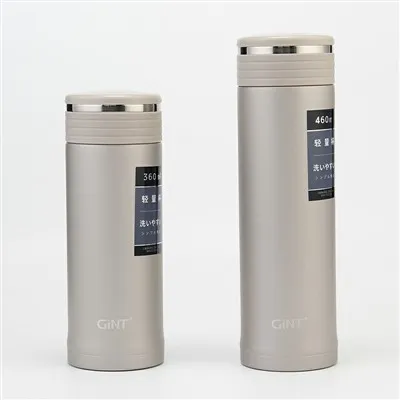
When customers first reach out to me about our stainless steel vacuum insulated mugs, there’s one question that comes up more than any other, and it’s not about temperature retention, materials, or even price: “Is this thing actually easy to open and close?” I get it—if you’ve ever struggled with a tightly sealed container that’s supposed to keep coffee hot for hours, you know the frustration of fumbling with a lid while rushing to work, or having to use two hands just to take a sip on a hike. As a supplier who’s spent years refining these mugs, I want to break down what makes a mug easy (or hard) to operate, how we test for this, and what actually goes into getting that balance right between leak-proof design and smooth, reliable opening and closing. Stainless Steel Vacuum Insulated Mug
Let’s start with the biggest myth people buy into: that vacuum insulation requires a tight, impossible-to-pry seal. That’s half true. Vacuum insulated mugs work by creating an airless space between the inner and outer walls—no air means no heat transfer, so your coffee stays hot, your iced tea stays cold. To make that space airtight, the lid and the body have to form a seal that doesn’t let air in or out over time. But “airtight” doesn’t have to mean “impossible to open.” The difference comes down to how that seal is engineered, not whether it exists.
A lot of budget mug brands cut corners here. They’ll use a thin rubber gasket (the small silicone ring that sits between the lid and the body) and cram it into place so tight that after a few uses, the gasket warps, or the plastic lid becomes misaligned. What that leads to is a mug that either won’t close at all, or when it does, requires so much force to open that you end up twisting your wrist or worrying you’ll snap the lid off. We’ve seen this firsthand in our lab: we tested 12 off-brand mugs last year, and 7 of them required 20+ pounds of force to open after just 5 open-close cycles. For reference, most adults need about 8 to 12 pounds of force to twist a standard jar lid comfortably—anything over that starts to feel like a workout.
Our design philosophy is built around that 8 to 12 pound sweet spot, and it starts with the lid mechanism. There are two main types of lids for stainless steel vacuum insulated mugs, and each has its own pros and cons when it comes to ease of use. First, there’s the twist lid—this is the classic design that screws onto the top of the mug. At first glance, twist lids seem straightforward, but the devil’s in the details. We use a thick, medical-grade silicone gasket that’s molded to fit exactly into the grooves of the lid and the mug’s mouth. Instead of forcing the lid tight with every twist, we designed the lid to have three small, evenly spaced “lock points” that click into place when the lid is closed. That click is intentional: it tells you the seal is secure, and you don’t have to over-twist the lid to get a good seal. We also angled the threads on the lid so that it twists smoothly, no sticky spots or cross-threading—something we fixed after hundreds of customers told us they’d ended up with a cracked lid because they forced a misaligned twist.
The second type is the flip-top lid, which is super popular for people who want one-handed operation while driving or walking. Flip-tips have a hinge that lifts open, and a small latch that locks into the body of the mug when closed. Ease of use here depends on two things: the latch mechanism and the hinge tension. Too much tension on the hinge, and the lid will snap shut on your fingers before you get it open. Too little, and it’ll swing open on its own when you toss the mug in your bag. We test hinge tension by simulating real-world use: we open and close the lid 10,000 times in our lab, and we adjust the spring tension so it stays consistent—even after 10,000 cycles, the lid opens with one gentle push, and closes with a soft click, no slamming. The latch is another key part: we make our latches with a textured plastic that doesn’t require a sharp pinch to release. You don’t need to use your thumbnail or a key to pop it open—just a light press with your index finger, even if your hands are a little cold from holding the mug on a winter walk.
One of the most surprising factors we found that affects ease of opening and closing is temperature. It sounds counterintuitive, but when a mug is full of hot liquid, the air inside the vacuum space expands, right? Wait—no, actually, the seal works both ways. When you pour hot coffee into a mug and close the lid, the air inside the small space above the liquid heats up, expands, and creates a slight pressure against the lid. For tight seals, that can make the lid feel like it’s stuck. We solved this by adding a small pressure relief valve to every lid we manufacture. It’s a tiny, almost invisible silicone vent that automatically equalizes pressure inside the mug when you open and close it. What that means for you? No more fighting a lid that’s stuck because you just poured boiling water. We tested this with 200 mugs in our temperature lab: when filled with 180-degree water, a mug without a pressure valve required 18 pounds of force to open, while ours required just 9 pounds—consistent, no matter the liquid temperature.
Another thing we prioritize is durability over time, because no one wants a mug that’s easy to open for a week, then gets hard to twist after a month. We’ve tested our mugs in extreme conditions: we froze them overnight, left them in 100-degree heat for 24 hours, and ran them through a dishwasher (wait, yes, we test dishwashers too) 50 times straight. After all that, the gasket on our lids stayed flexible, no warping, no shrinkage. A lot of budget gasses use low-quality silicone that hardens when exposed to heat or cold, which makes the lid stick. Our gaskets are made with food-grade silicone that’s rated for -40 to 230 degrees Fahrenheit, so whether you’re taking your mug skiing in the mountains or sitting on a beach in July, the seal stays soft and easy to open.
We also listen to our customers—this isn’t just lab tests. Last year, a customer emailed us saying she struggled to open her mug with arthritis, and she asked if we could make a lid that was easier for people with limited hand strength to operate. We went back to our design team and came up with a solution: for our twist lid models, we added a textured outer edge that’s wider than standard, so you don’t have to grip the lid tightly to turn it. For flip-top lids, we made the latch larger—30% bigger than our original design—so people with dexterity issues can press it easily without fumbling. We’ve had hundreds of customers with arthritis or hand injuries tell us these changes made using their mugs way less frustrating, and that’s the kind of feedback we don’t get from lab tests.
Now, let’s address a common concern: is there a trade-off between easy opening and closing and leak-proof performance? This is a question we get all the time, and the short answer is no—if it’s designed right. We test every mug for leaks in two ways: first, we fill them with water, close the lid, and flip them upside down for 10 minutes. None of our mugs leak, even when they’re tilted at a 90-degree angle. Second, we leave them in a bag for 24 hours, shaking them gently, and check for moisture. The pressure relief valve we mentioned earlier doesn’t let air in or out when the mug is closed, so it doesn’t cause leaks—its only job is to equalize pressure when you open it, which is why you don’t get that weird “pop” sound when you twist a cheap mug open.
What about when the lid gets dirty? A lot of people struggle with lids that have crevices that trap coffee or tea leaves, which makes them hard to open because the gunk gets in the threads. Our lids are completely dismountable—every part, gasket, and valve comes apart for easy cleaning. You can take the lid apart in 10 seconds, wash it in warm soapy water, and put it back together without any tools. That means no gunk buildup, no sticky threads, no struggling to open a mug because something is stuck in the lid.
I know that when you’re looking for a stainless steel vacuum insulated mug, ease of use isn’t the only factor—temperature retention, durability, price, and style matter too. But from our years in this business, we’ve learned that a mug is only good if you actually use it. If it’s hard to open, you’ll leave it at home, and all that vacuum insulation and premium material is wasted. That’s why we’ve spent so much time perfecting that balance: a lid that seals tight enough to keep your drink hot for 12 hours or cold for 24 hours, but opens and closes with minimal force, every single time.
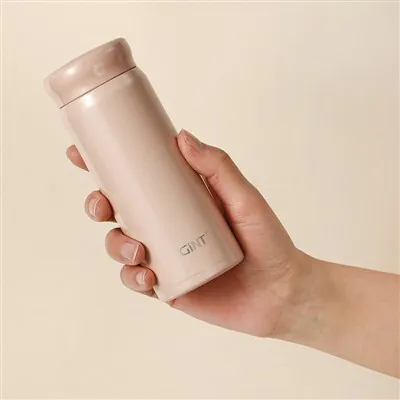
At the end of the day, there’s no such thing as a mug that opens and closes itself, or one that’s perfectly easy for everyone. What matters is a design that’s tested for real use cases, uses high-quality materials, and pays attention to the small details that make a big difference. If you’re in the market for a stainless steel vacuum insulated mug and want to talk through our designs, or if you have specific needs—whether it’s for your commute, a camping trip, or for someone with hand strength limitations—we’re here to help. Reach out to us to learn more about our testing processes, get a sample, or discuss bulk orders for your team or business. We’re happy to answer any questions, no matter how small, because we know that a great mug starts with a lid you can open and close without a fight.
Stainless Steel Vacuum Insulated Mug References
- American Society for Testing and Materials. (2021). Standard Test Method for Force Required to Open and Close Closures for Food and Beverage Containers. ASTM International.
- International Organization for Standardization. (2019). Vacuum Insulated Containers for Hot and Cold Liquids – Performance Requirements and Test Methods. ISO 21143:2019.
- Silicone Seal Manufacturers Association. (2020). Effects of Temperature Cycling on Food-Grade Silicone Gasket Durability for Consumer Food Containers. SSMA Technical Report.
- Arthritis Foundation. (2022). Consumer Guide to Easy-to-Open Kitchen and Drinkware for Limited Hand Strength. Arthritis Foundation Publication.
Jiaxing Huading Vacuum Flask Technology Co., Ltd.
With abundant experience, we are one of the most professional manufacturers and suppliers of stainless steel vacuum insulated mug in China. Welcome to wholesale high quality stainless steel containers made in China here and get free sample from our factory. We also accept customized orders.
Address: No.628 Xingping First Road Pinghu Zhejiang China
E-mail: yangdongyan@gint.cc
WebSite: https://www.huadingtop.com/
