Hey there! I’m a supplier of tungsten carbide alloy rolls and other accessories. Over the years, I’ve had my fair share of experiences in this industry, and I know how crucial it is to test the quality of these accessories. So, I thought I’d share some tips on how to do just that. Tungsten Carbide Alloy Rolls and Other Accessories
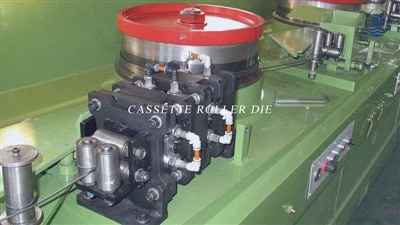
First off, let’s talk about why testing the quality of these accessories is so important. Tungsten carbide alloy rolls and their accessories are used in a variety of industries, from metalworking to mining. They need to be able to withstand high levels of stress, wear, and corrosion. If the quality of these accessories is subpar, it can lead to all sorts of problems, like reduced productivity, increased downtime, and even safety hazards. So, making sure they’re up to snuff is a must.
One of the first things you can do is check the material composition. Tungsten carbide is the primary material in these rolls and accessories, but it’s often combined with other elements to enhance its properties. You can use a spectrometer to analyze the material and make sure it has the right mix of elements. This will give you an idea of how strong, wear-resistant, and corrosion-resistant the accessory is likely to be.
Another important aspect to test is the hardness of the accessory. Hardness is a key indicator of its wear resistance. A Rockwell or Vickers hardness tester can be used for this purpose. These testers work by applying a specific load to the surface of the accessory and measuring the depth of the indentation. The harder the material, the less likely it is to wear down quickly during use.
Density is also a factor worth looking into. Tungsten carbide is a dense material, and any significant deviation from the expected density could indicate a problem with the manufacturing process or the presence of impurities. You can measure the density using a simple water displacement method. Just weigh the accessory in air and then weigh it again when it’s submerged in water. Using Archimedes’ principle, you can calculate the density.
Surface finish is crucial, especially for accessories that come into contact with the material being processed. A rough surface can cause scratches or other defects on the product being rolled or processed. You can use a surface roughness tester to measure the smoothness of the surface. The results will tell you if the surface finish meets the required standards.
Now, let’s talk about crack detection. Cracks can significantly weaken an accessory and make it prone to failure. There are several methods for detecting cracks, such as visual inspection, dye penetrant testing, and ultrasonic testing. Visual inspection is the simplest method, but it might not catch small or internal cracks. Dye penetrant testing involves applying a special dye to the surface of the accessory, letting it seep into any cracks, and then removing the excess dye. A developer is then applied, which makes the cracks visible. Ultrasonic testing, on the other hand, uses high-frequency sound waves to detect internal defects. It’s a more advanced method but can be very effective in finding hidden cracks.
Tensile strength is another important property to test. This measures the accessory’s ability to withstand pulling forces without breaking. A tensile testing machine can be used to apply a gradually increasing load to the accessory until it breaks. The maximum load it can withstand is recorded as its tensile strength.
In addition to these physical tests, you should also consider conducting some performance tests. This could involve using the accessory in a real-world or simulated environment to see how it performs. For example, if it’s a roll for a metal rolling mill, you can run a small batch of metal through the mill and observe how well the roll handles the load and how the metal is processed. Look for any signs of uneven wear, deformation, or other issues.
It’s also a good idea to have a quality control system in place. This means keeping detailed records of all the tests you conduct, including the results, the date of the test, and the specific accessory that was tested. This will help you track the quality of your products over time and identify any trends or potential problems.
Finally, if you’re unsure about how to conduct these tests or need more in-depth analysis, you can always consult with a professional. There are companies and laboratories that specialize in materials testing and can provide you with accurate and detailed reports.
Well, that’s my take on how to test the quality of other accessories for tungsten carbide alloy rolls. I hope these tips are helpful to you. As a supplier, I’m always here to offer support and advice. If you’re in the market for high-quality tungsten carbide alloy rolls and other accessories, don’t hesitate to reach out. Let’s talk about your needs and see how we can work together to get you the best products for your business.
Welding Wire Winding Machinery References:
- "Materials Science and Engineering: An Introduction" by William D. Callister Jr.
- "Mechanical Testing of Materials" by B.S. Meyers
Three Water Machinery Co., Ltd.
Three Water Machinery Co., Ltd. is one of the most reliable manufacturers and suppliers of tungsten carbide alloy rolls and other accessories in China. With abundant experience, we warmly welcome you to buy advanced equipment for sale here and get quotation from our factory. Contact us for more details.
Address: No.15, Jiaye Road, Liuanzhuang Industrial Park, Beichen District, Tianjin, China
E-mail: sales@eqet.com
WebSite: https://www.eqet.com/
