Hey everyone, if you’ve been hanging around pharma manufacturing for any amount of time, you know that even the tiniest misstep in production can turn a huge batch of life-saving meds into waste. That’s why I built a whole career around selling smart pumps—yep, I’m the guy from the smart pump supply side who’s talked to 100+ pharma production managers, process engineers, and quality leads over the last 5 years. Today I’m breaking down a question I get all the time: Can smart pumps actually work in pharmaceutical manufacturing? Spoiler: They’re not just a fancy upgrade—they’re a game-changer. But let’s get real, I’m not here to BS you with sales fluff. I’m here to tell you what actually works, what doesn’t, and why your next line of production could be missing a tool if you’re still on manual pumps. Smart Pump
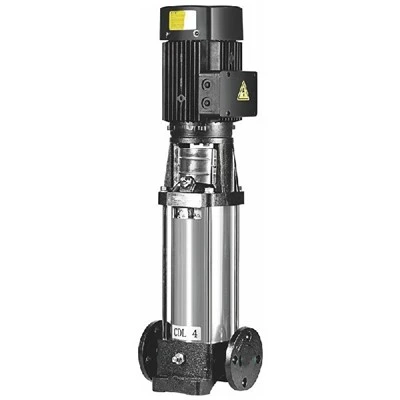
First, let’s cut through the jargon. When people say “smart pumps” in other industries (like hospitals), they think of things that track patient flow and alert nurses if a line’s blocked. But in pharma, these pumps are built for clean rooms, cold chains, and the strictest regulatory rules (FDA 21 CFR Part 11, ICH Q7—you know the drill). Let’s start with the biggest pain point in pharma manufacturing: precision. If you’re mixing APIs (active pharmaceutical ingredients) with excipients, even a 0.5% off in flow rate can ruin a batch. I once talked to a ops manager at a small biotech who lost a $200k batch of a monoclonal antibody because a manual pump’s rate slipped mid-run. No alarm, no way to go back and check what actually happened. Smart pumps fix that. They measure flow rate to within 0.1% accuracy, in real time, and log every single second of data. No more guessing if a batch was wrong.
Wait, but are they compliant? That’s the other big question. I hear it all the time: “We can’t switch to new tech if it means rewriting our whole SOP or failing an audit.” Here’s the thing: modern smart pumps are designed for pharma audits. They have tamper-proof data logs that can’t be edited—every flow adjustment, every alarm trigger, every power blip is timestamped and saved. You can export the data directly in a format that auditors love, no extra work. Last year, a client of ours (a mid-sized generic drug maker) passed an FDA audit on their first try after switching 3 mixing lines to our smart pumps. The auditor actually asked to see their pump data first because he’d heard how other teams were struggling with manual logs.
Let’s get specific about use cases, because generic talk is useless. Where are smart pumps actually making an impact right now in pharma?
First, API formulation. API production is super sensitive— you’re dealing with potent, often toxic materials, and flow rate changes can alter the chemical structure of the API. Smart pumps let you set a fixed flow rate and stay there, no drift. Some models even have built-in material compatibility checks—like if you’re pumping a corrosive solvent, the pump will adjust pressure automatically to prevent leaks or degradation. I had a client making a generic antidepressant API who was dealing with variable yields on their liquid formulation lines. After switching to our smart peristaltic pumps, their yield went up 12% in 3 months because they stopped over-pumping excipients. That’s pure profit for them, no extra labor.
Second, sterile liquid filling. If you’re making vaccines, eye drops, or IV meds, contamination is the enemy. Smart pumps integrate directly with your clean room’s monitoring systems—if the room’s pressure drops below a safe level, the pump pauses automatically so you don’t push contaminated product into vials. And they fill with super consistent volumes, so you don’t have to toss half your batch because some vials are underfilled or overfilled. During the 2022 vaccine booster push, a partner of ours was filling 10,000 vials an hour with our smart pumps and only had a 0.2% rejection rate, compared to 1.8% with their old manual setup. That’s 160 extra vials every hour they didn’t have to waste.
Third, cold chain raw material handling. A lot of pharma raw materials (like cell cultures or certain peptides) need to be kept at exact temperatures while being pumped. Smart pumps have integrated temperature sensors and can adjust flow rate if the temp strays—like if a cold line starts to warm up, they slow the pump to reduce friction heat, which keeps the whole batch stable. I once had a cryo-pump client who was pumping cell cultures for a gene therapy and lost a batch because the pump’s friction generated too much heat mid-run. Since switching to our smart pumps with temp feedback, they haven’t had a single batch loss from that issue.
Now, let’s be honest—this isn’t all rainbows. The biggest pushback I get is cost. Manual pumps are cheap up front, but the hidden costs are massive: batch waste, overtime for operators checking flow rates, audit time spent fixing bad logs. A client of mine ran the numbers for us: over 2 years, switching 5 lines to smart pumps cost them $120k, but they saved $380k from reduced waste, less overtime, and faster audits. That’s a return on investment in 8 months. Another pushback is training. Operators think new tech is hard, but most smart pumps have intuitive touchscreens and pre-loaded SOPs, so training takes 2 days max, not 2 weeks. We even have on-site support if a team gets stuck, so no one is left hanging.
Wait, what about older manufacturing lines? Can you retrofit smart pumps instead of replacing your whole setup? 100%. We’ve worked with everything from 20-year-old mixing lines to new clean room builds. Our pumps fit standard pipe sizes, connect to most PLC systems, and we have adapters for old manual pump controls. A lot of our clients don’t want a full line overhaul—they just want to replace the pumps that are causing the most problems, like the one that’s been breaking every month during sterile filling.
Another thing people don’t talk about: data that actually helps, not just audits. Smart pumps don’t just log data—they can flag trends. Like, if a pump’s flow rate starts drifting by 0.3% every 100 hours, that’s a sign it needs a part replacement before it ruins a batch. Predictive maintenance, basically. One client used this data to schedule part swaps during off-shifts, cutting unplanned line downtime by 22% last year. Downtime in pharma is expensive—when a line is down, you’re not making product, you’re losing revenue. Predictive maintenance fixes that.
Let’s also address regulatory stuff again, because it’s non-negotiable in pharma. All our smart pumps are calibrated annually (or they can be calibrated on-site) and have complete audit trails that are compliant with FDA, EMA, and WHO standards. No black boxes—every function is documented. We’ve had auditors from all over the world come through our client sites and never issue a finding related to pump data, because the logs are so clear.
Now, I know what some of you are thinking: “I make solid oral doses, not liquid vaccines—does this apply to me?” Yep. Even tablet manufacturing uses binding agents, lubricants, and solvents that require precise flow rates. We have clients making generic aspirin tablets that use our smart pumps for granulation mixing, cutting their powder waste by 9%. It’s not just for liquid lines—any process that involves moving materials at a consistent rate can benefit.
Here’s the thing I’ve learned in 5 years of being a smart pump supplier: a lot of pharma manufacturers treat production equipment as a necessary expense, not an investment. But smart pumps aren’t just equipment—they’re tools that reduce risk, save money, and help you make better meds for patients. I’ve seen small biotechs go from struggling to hit batch yields to scaling their product because of better pump tech. I’ve seen mid-sized firms pass audits on their first try instead of wasting months fixing log mistakes.
If you’re still on manual pumps or older semi-smart pumps, ask yourself: what’s the cost of one bad batch? What’s the cost of an audit delay? What’s the cost of overtime for operators monitoring lines 24/7? For most people, the numbers add up fast. We recently worked with a 100-person pharma plant that was losing $50k a month to batch waste, and after switching to our smart pumps, that number dropped to $8k. That’s $500k a year back in their pocket to invest in new products or employee raises.
If you’re ready to stop guessing, reduce waste, and make your production lines more reliable, we’re here to help. We don’t do one-size-fits-all solutions—we’ll walk through your current processes, point out where smart pumps can make the biggest difference, and even help with retrofit or integration with your existing systems. Whether you’re a small startup just launching your first batch or a large pharmaceutical company looking to update your global lines, we’ve got smart pumps that fit your needs.
Don’t wait until your next audit or your next ruined batch to make the switch. Reach out to us for a free, no-obligation assessment of your production lines. Let’s figure out how smart pumps can work for you, not against you.
QSP Landscape Fountain Pump References
- ICH Q7 (Good Manufacturing Practice Guide for Active Pharmaceutical Ingredients), International Council for Harmonisation of Technical Requirements for Pharmaceuticals for Human Use
- 21 CFR Part 11 (Electronic Records; Electronic Signatures), U.S. Food and Drug Administration
- “Smart Pump Technology in Pharmaceutical Manufacturing: A Systematic Review”, Journal of Pharmaceutical Innovation, 2023
- “Batch Yield Optimization in Liquid Formulation: The Role of Precision Flow Control”, Journal of Manufacturing and Operations Management, 2022
- “Predictive Maintenance for Pharmaceutical Process Equipment: Benefits and Implementation”, Pharmaceutical Engineering Magazine, 2024
Longbiao Pump Industry Co., Ltd.
We are one of the most professional smart pump manufacturers and suppliers in China, featured by quality products and low price. Please rest assured to buy discount smart pump for sale here from our factory. We also accept customized orders.
Address: Unit 101, Building 11, Pan’ao Entrepreneurship Park, Daxi Town, Wenling City, Taizhou City, Zhejiang Province, P.R. China
E-mail: 1653746797@qq.com
WebSite: https://www.cnlongbiao.com/
