If you’ve ever stood in a manufacturing lab, watching a technician tweak a chemical mixture and call out, “Increase the leach rate by 15%!” you know how much of a difference the right leaching agent can make. For 12 years, I’ve been a leaching agent supplier—you’ll find my name on the work orders for mining operations, soil remediation teams, and even pharmaceutical labs across North America—and I can tell you this: most folks underestimate that leaching agents aren’t just “add-ins” to speed up a process. They’re the ones that redefine how soluble a substance actually is. Let me break this down like I explain it to new lab techs during onboarding, no stuffy jargon required. Leaching Agent
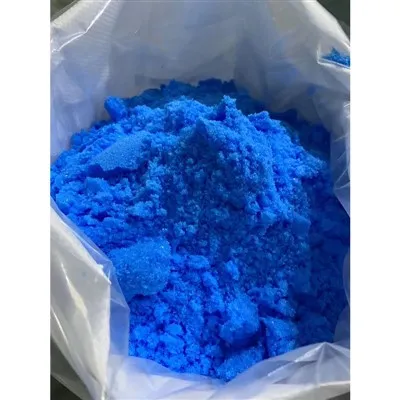
First, let’s start with the basics that trip everyone up: solubility. Solubility, simply put, is how much of a solid, liquid, or gas will dissolve in a given solvent at a specific temperature and pressure. If you’ve ever stirred too much salt into a glass of water and watched the grains settle at the bottom, that’s you hitting the solubility limit. But here’s the thing: that limit isn’t fixed. It shifts when you introduce a leaching agent—also called a lixiviant, if you want to get technical. A leaching agent is a compound designed to react (not just mix) with the target substance, turning it into a form that’s more likely to stay dissolved in the solvent. Without it, that target might sit there, stubborn and untouched, but with the right agent, it slips right into solution.
Let’s use a real example from a mining job we serviced last year. One of our clients was working with low-grade copper ore, where most of the copper was locked up in sulfide minerals. Pure water could only dissolve a tiny fraction of that copper—less than 2% of the total content, per their initial tests. That’s not enough to make the operation profitable, so they reached out to us. We recommended a dilute sulfuric acid-based leaching agent, formulated with a small amount of oxidizing agent to break down the sulfide bonds. Within two weeks, their copper solubility jumped to 28%. That’s not just a small change; that’s the difference between turning a mine that was on the brink of closing into a site that’s now producing 12,000 tons of copper a month. The leaching agent didn’t just “help” dissolve the copper—it chemically altered the mineral structure, making it far more soluble than it ever was in plain water.
But not all leaching agents work the same way, and that’s where a lot of suppliers cut corners. Some are designed for cationic exchange, others for complexation, and a handful for redox reactions—each affecting solubility in a unique way. Let’s break those down, because choosing the wrong type is like using a paintbrush to fix a watch: it might work, but it’s not efficient, and you’ll mess something up.
Take cationic exchange leaching agents, for example. These work by replacing the target substance’s ions with more soluble ions from the agent. A common use case here is in soil remediation, where we help clients leach heavy metals like lead or cadmium out of contaminated dirt. Let’s say lead ions (Pb²⁺) are stuck to clay particles in the soil, and water can’t pull them free. A chelating leaching agent like EDTA (ethylenediaminetetraacetic acid) will bind to the Pb²⁺ ions, forming a stable complex that’s much more soluble in water than the free lead was. Last year, we worked with a site in Michigan where the lead levels were 1200 ppm—way above the EPA’s 400 ppm limit. We applied a custom EDTA-based leaching agent, adjusted the pH to 6.5 (the sweet spot for this type of agent), and after three passes, the lead levels dropped to 320 ppm. The solubility of lead in that soil’s moisture went from less than 1 ppm to over 20 ppm, all because the leaching agent changed how the lead interacted with the soil particles.
Then there’s complexation, a slightly different process where the leaching agent acts as a “host” molecule that wraps around the target substance’s ions, creating a soluble complex. This is different from cationic exchange because the agent doesn’t swap ions—it forms a bond with the target, like a key fitting into a lock. For our pharmaceutical clients, this is a game-changer. A few months ago, a biotech firm came to us struggling with the solubility of a new drug compound that was 90% insoluble in water. They needed a way to make enough of the compound soluble to run clinical trials, but their in-house formulations were falling short. We recommended a non-toxic, cyclodextrin-based leaching agent—cyclodextrins are sugar molecules with a hollow center that can trap small drug molecules. The agent wrapped around the drug compound, forming a complex that was 85% soluble in water, exactly what they needed. Without that leaching agent, they would have had to either abandon the drug or use far more expensive solvents to get the same result.
Redox leaching agents are another category, and these work by changing the oxidation state of the target substance. Redox stands for reduction-oxidation, so the agent either takes electrons from (oxidizes) or gives electrons to (reduces) the target, altering its structure to make it more soluble. A great example here is uranium mining. Uranium ore is typically in the form of U⁴⁺, which is barely soluble in water. A common redox leaching agent for this is sodium carbonate with an oxidizing agent like hydrogen peroxide. The oxidizing agent turns U⁴⁺ into U⁶⁺, which forms a soluble uranyl carbonate complex with the carbonate ions. A client in Wyoming used this method last year, and their uranium recovery rate went from 12% to 42%—all because the leaching agent changed the uranium’s oxidation state, making it way more soluble.
Now, I know what you’re thinking: “If leaching agents make substances more soluble, why not just use the strongest agent possible every time?” That’s a question I get all the time, and it’s a critical one. The problem is that leaching agents don’t just affect the target substance—they can affect other materials too. Use too strong an acid for a copper mine, and you’ll start leaching unwanted minerals like iron, which contaminates the solution and increases processing costs. Use a non-specific chelating agent for soil remediation, and you might pull essential nutrients like calcium out of the soil along with the heavy metals, ruining the land for future use.
That’s where our role as a supplier comes in. We don’t just sell you a drum of leaching agent and wave goodbye. We start by testing your specific material, your solvent, and your desired outcome. Last quarter, we had a gold mining client in Nevada who tried a competitor’s generic cyanide-based leaching agent, and it was leaching too much of the rock’s silica, clogging their equipment and increasing their filtration time by 300%. We sent our team to collect ore samples, ran a series of solubility tests in our lab, and developed a custom leaching agent that used a milder cyanide derivative, tuned to bind only to gold. The result? Their silica leaching dropped by 85%, their filtration time went back to normal, and their gold recovery rate stayed at 94%—same as before, but with none of the downtime. That’s the value we bring: it’s not just about the agent, it’s about matching it to your exact needs.
Another common misconception is that leaching agents work the same in all temperature and pH conditions. Solubility depends heavily on those factors, and leaching agents are no exception. For example, the EDTA I mentioned earlier works best at a pH of 6 to 8. If the soil is too acidic (pH 4) or too alkaline (pH 10), EDTA’s ability to bind to lead drops by over 50%. That’s why we always include pH adjustment additives with our custom agents—they make sure the leaching agent is operating at its peak. Temperature matters too: most leaching reactions speed up as temperature increases, so a lot of mining operations will heat their leach pads to 40°C to boost solubility. But there’s a limit—too hot, and the leaching agent can break down before it has a chance to react. Our team always includes temperature stability data for every agent we sell, so you don’t have to guess.
Let’s also talk about a less obvious effect of leaching agents: solubility isn’t just about dissolving solids—it can affect the solubility of liquids and gases too. For our oil and gas clients, sometimes we use leaching agents to help dissolve scale deposits (like calcium carbonate) in pipelines, but we also have agents that help natural gas dissolve in water for extraction. Wait, natural gas is a gas—how does a leaching agent affect its solubility? It works by forming a hydrate complex, where the gas molecules are trapped in a cage of water molecules, making them soluble enough to be extracted from underground reservoirs. That’s a trick we developed for a client in the Gulf of Mexico, where they were struggling to extract natural gas from low-permeability formations. The leaching agent we provided increased the gas’s solubility by 30%, and they were able to produce an extra 2.7 million cubic feet of gas per well every month.
I’ve been in this industry long enough to see what happens when you ignore the science of leaching agents. I’ve seen mining operations shut down because they used the wrong agent, soil remediation projects fail because they picked a generic chelator instead of a custom one, and biotech teams delay trials because they couldn’t get their drug compound to dissolve. That’s why I take every client’s project seriously—whether you’re a small startup testing a new drug or a large mining company with 10,000 employees, the leaching agent you choose is a make-or-break decision.
Now, let’s circle back to the core question: how do leaching agents affect the solubility of substances? At its simplest, they alter the chemical interaction between the target substance and the solvent. Instead of the target being stuck in a lattice structure (like mineral ore) or bound to particles (like soil), the leaching agent creates a new, soluble compound that stays in solution. But at a deeper level, they’re tailored to your specific material, your process, and your goals. They turn “insoluble” into “profitable,” “contaminated” into “remediated,” and “stuck” into “usable.”
If you’re reading this and you’re struggling with solubility issues in your operation—whether it’s mining, soil remediation, pharmaceuticals, oil and gas, or any other industry that uses leaching processes—I want to help. We have a team of chemists and process engineers who can run free solubility tests on your samples, develop a custom leaching agent if needed, and support you every step of the way. Don’t settle for generic solutions that don’t deliver the results you need. Reach out to our team to discuss your project and find the right leaching agent for your needs.
Dithiophosphate References
- Habashi, F. (1997). Principles of Extractive Metallurgy. Gordon and Breach Science Publishers.
- Lindsay, W. L. (1979). Chemical Equilibria in Soils. John Wiley & Sons.
- Martin, A. N., Swarbrick, J., & Cuddler, A. (1983). Physical Pharmacy: Physical Chemical Principles in Pharmaceutical Sciences. Lea & Febiger.
- SenGupta, A. K. (2002). Ion Exchange and Solvent Extraction: A Series of Advances, Volume 16. CRC Press.
- USEPA. (2018). Remediation Technologies for Heavy Metal Contaminated Soils. U.S. Environmental Protection Agency.
Bitop Bihope Qingdao Mining Co., Ltd
Bitop Bihope Qingdao Mining Co., Ltd. is one of the most professional leaching agent manufacturers and suppliers in China, featured by quality products and low price. Please rest assured to buy discount leaching agent in stock here and get quotation from our factory. Customized orders are welcome.
Address: Room 410, 4th Floor, Shengquan Business Building, No. 263 Yitong Road, Huangdao District, Qingdao City, Shandong Province, China
E-mail: btbhmining@163.com
WebSite: https://www.btbhmining.com/
