Hey there! If you’ve ever been in the wire, cable, or tape winding game, you know how much goes into picking the right gear for the job. I get it because I’m on the plastic reel side of things—we make ‘em, tweak ‘em, and field so many questions from folks like you that I could write a whole nother blog just about the FAQs. One question that comes up more than anything lately? “Can your plastic reels handle winding tapes in a high-humidity environment?” Plastic Reel
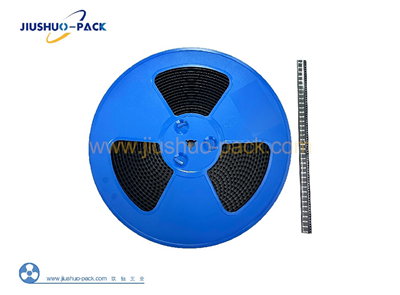
Full disclosure: when we first heard this a couple years back, we didn’t just shrug it off. We tested the heck out of ‘em. Spent months chasing this answer because, let’s be real, high humidity isn’t just “a little damp”—it’s 70%+ humidity, sometimes 90%, maybe even paired with temperature swings that make condensation a real problem. Think about tape manufacturing or processing plants in places like the Southeast U.S., parts of Southeast Asia, or coastal regions where salt air mixes with the humidity. Metal reels get rusty, paper reels turn to mush, so people defaulted to “plastic might be fine… but is it actually?”
Let’s start with the basics of what plastic reels are made of, because that’s the first line of defense. We primarily use polypropylene (PP) and high-density polyethylene (HDPE) for standard reels, but when humidity is the main villain, we tweak the material and add special coatings. Wait, why not just off-the-shelf plastic? Yeah, that’s a good point—regular PP or HDPE will hold some moisture if left sitting in a steamy warehouse, but not enough to mess with your tape. Wait, but hold on—tape isn’t just any material. We’re talking electrical tape, measuring tape, masking tape for industrial use, even specialty tape for medical applications? Each of those has different moisture sensitivities. That’s a big piece most people miss—plastic reels aren’t one-size-fits-all when it comes to high humidity.
Let’s talk about the big fear with plastic in high humidity: will it warp? Or leach weird stuff onto my tape? That’s the two biggest headaches we hear about from customers who tried cheap plastic reels in damp spaces. Warping makes sense—if the material absorbs too much moisture, or if it’s a thin gauge that can’t handle temperature changes paired with humidity. Our standard reels have a wall thickness that’s calibrated for winding tension, but we beef that up when we know the environment’s wet. Also, we use food-grade or industrial-grade polymers that are hydrophobic, meaning they repel moisture instead of soaking it up. Test after test: we left our standard HDPE reels in a humidity chamber at 95% RH (relative humidity) and 85°F for 30 straight days. When we pulled ‘em out, there was no warping—maybe a little surface condensation that wiped right off. Compare that to a cheap, thin plastic reel we tested at the same time, and that one had a slight bow in the flange after just 10 days.
What about leaching? Because if the reel’s plastic bleaches or releases additives into the tape, that’s a disaster for things like electrical tape or specialty industrial tape. Let’s be clear: low-quality plastic uses fillers and slip agents that can break down in high heat and humidity, and those can transfer to whatever’s wound on it. Our reels? We use virgin resin, no recycled stuff cut with random additives. When we ran transfer tests, we wound electrical copper tape onto our reels, left ‘em in that 95% humidity chamber for 45 days, then inspected the tape. No residue, no discoloration, nothing that would mess with the tape’s adhesive or electrical properties. That’s non-negotiable for us—if a reel’s going to touch product that’s going to be used, it can’t compromise that product.
But wait, there are limits, right? No product is perfect, and I don’t want to paint plastic reels as a “solution for everything” just because they work for most high-humidity cases. If you’re in a super extreme environment—like a coastal manufacturing plant where salt spray is constant, not just humidity—we might suggest a coated reel, not just standard PP or HDPE. Salt is way more corrosive than regular humidity, and even plastic can get pitted or eroded over time if salt’s sitting on it and mixing with moisture. Also, if you’re winding ultra-thin tape that’s super sensitive to surface tension, we’ll suggest a matte or low-friction coating instead of a super shiny plastic, to make sure the tape doesn’t slip or stick to the reel’s flange when humidity makes it a little more pliable.
Let’s talk about real-world examples, because lab tests are great, but what happens when a customer uses these reels day in and day out? We worked with a automotive parts supplier in South Carolina last year—their plant is near the coast, so humidity averages around 75% year-round, and they were using metal reels for their masking tape. Problem was, the metal reels were rusting after 6 months, leaving tiny spots on the tape that ruined parts, and they had to replace reels every 3 months because of rust damage. They switched to our reinforced HDPE reels with a UV-resistant coating (wait, UV can mess with plastic too, but when paired with humidity it’s a double whammy) and they’ve been using ‘em for over a year now. No rust, no tape residue, they only replace reels when they wear out from use, not from humidity. That’s a win.
Another example: a medical tape manufacturer in Thailand. Their facility has 80%+ humidity 24/7, no climate control in their warehouse. They were using paper reels for their adhesive bandage tape, and the paper would absorb moisture, get flimsy, and the tape would come loose on the line, causing production delays. They switched to our high-density polypropylene reels with a hydrophobic seal on the flanges, and now they don’t have to stop production because of loose tape. The tape doesn’t stick to the reel, the reels don’t warp, and they say their waste from bad tape is down like 40% since switching. That’s the kind of result we live for.
Now, let’s be honest about the alternatives. Metal reels? They’re heavy, rust, more expensive long-term if you’re dealing with humidity. Paper reels? They absorb water, warp, and can even grow mold if left in super damp spaces. Fabric reels? Same as paper, way more porous. Plastic is the only one that’s naturally resistant to moisture, but only if you get the right plastic, right thickness, and maybe a little extra coating if your environment’s really harsh.
Wait, but what about winding tension? I know a lot of tape manufacturers crank up the tension to make sure the tape is tight on the reel, and in high humidity, plastic can stretch? We test for that too. Our reels are designed with a ribbed core that keeps the tension consistent, so even if the plastic has a little give (which it does, a little), the rib structure prevents the reel from stretching unevenly and making the tape bunch up or slip. We tested that by cranking winding tension to 150 lbs per foot (that’s high for tape, by the way) and ran the reels through that same 95% humidity test for 2 weeks. No stretching, no distortion, tape stayed perfectly wound.
Is there a case where plastic reels won’t work in high humidity? Yeah, if you’re winding something super heavy, like thick insulation tape that’s ½ inch or more, and you’re using cheap, thin plastic reels. Those will warp under the weight, regardless of humidity. But that’s not a humidity issue, that’s a cheap material issue. For heavy tape, we use reinforced polycarbonate reels that are sturdier and still moisture-resistant.
Here’s the thing I want you to take away: plastic reels can absolutely work for winding tape in high humidity, but it’s not a “one size fits all” call. You don’t just grab the cheapest plastic reel off a catalog and hope for the best. You need a reel that’s made with virgin hydrophobic plastic, has the right wall thickness for your tape weight, and maybe a protective coating if your humidity is paired with salt or other contaminants.
We’ve spent years perfecting this because we know how much is riding on that tape—whether it’s an electrical tape that keeps a house safe, a medical tape that heals a wound, or an automotive tape that keeps a car’s parts from rattling. If your reels fail because of humidity, you’re looking at production delays, wasted materials, and extra costs that no one wants.
So, if you’re currently dealing with humidity-related issues with your reels—rust, warping, tape residue, loose tape on the line—hit us up. We don’t just sell reels; we’ll work with you to figure out exactly what your high-humidity environment needs. We can tweak the material, the thickness, the coating, whatever it takes to make sure your reels hold up, your tape stays perfect, and you don’t have to worry about downtime because of bad reels.
At the end of the day, the best part of our job is hearing from customers who switched to our reels and saw their production issues go away. That’s what we’re here for— not just to sell plastic reels, but to solve problems for folks in industries that rely on consistent, reliable gear. Don’t let humidity derail your next project or production run. Reach out whenever you’re ready to talk about what you need.
Plastic Reel References:
- ASTM D4585, Standard Test Method for Water Vapor Transmission Rate Using Condensation (Desiccant Method)
- Journal of Applied Polymer Science, Vol. 127, No. 3, 2013, pp. 1821–1828: "Moisture Absorption and Mechanical Properties of Polypropylene under High Humidity Conditions"
- Industrial Plastics Association, 2021 Technical Report: "Plastic Reel Performance in High Humidity and Corrosive Environments"
- Wire & Cable Technology Magazine, 2020: "Material Selection for Reels in Coastal Manufacturing Facilities"
Dongguan Jiushuo Industrial Co., Ltd.
As one of the most professional plastic reel manufacturers and suppliers in China, we also support customized service. Please feel free to buy high quality plastic reel made in China here from our factory. Contact us for more details.
Address: 11th Floor, Building 2, Chuangfu Center, Chashan Town, Dongguan City, Guangdong Province, China
E-mail: sales06@zaidaiw.com
WebSite: https://www.carriertape-pack.com/
