If you’ve ever stood on a construction site, automotive assembly line, or even a backyard deck build, you know that a bolt’s job isn’t just to hold two pieces of metal together. It’s to withstand rain, temperature swings, road salt, and all the hidden environmental factors that can turn a fastener into a failure waiting to happen. As a bolt supplier who’s spent 12 years on the floor answering call after call from confused builders, mechanics, and small business owners, I’ve learned that the biggest mistake people make isn’t buying the wrong bolt size—it’s pairing the bolt with the wrong coating. A $0.05 difference in coating can mean the difference between a fastener that lasts 5 years and one that falls apart in 18 months. Let’s break down how to pick the right one, no fancy engineering degree required. Bolts
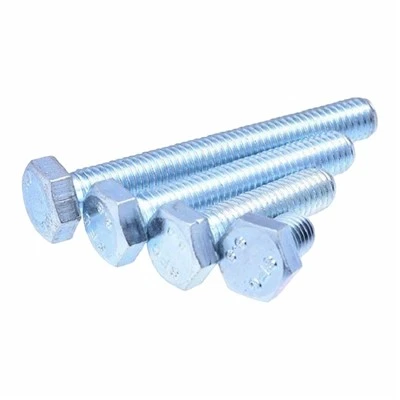
First, let’s start with the basics: coatings don’t just make bolts look pretty. They act as a barrier between the bolt’s base metal (usually carbon steel, the standard for most bolts) and the elements that cause corrosion. Corrosion is a chemical reaction—water and oxygen mix with iron in the steel to form rust, which expands, weakens the bolt, and can even cause connected parts to crack. A good coating stops that reaction cold, but not all coatings work for every scenario. The first step in choosing is mapping where the bolt will live. That’s not just “outdoors” or “indoors”—it’s specifics. Is it a bridge bolt that will be submerged in saltwater for months? Or a cabinet bolt that lives in a climate-controlled office? Is it a brake line bolt on a truck that drives through salted winter roads, or a railing bolt on a coastal deck that deals with constant humidity and salt air? That location is your north star.
Let’s walk through the most common coatings we offer, and exactly when to use each—this is the stuff I share with every customer who comes to me unsure, because it’s tested, not just theory.
First up: Zinc plating. This is the workhorse of bolt coatings, and for good reason. It’s affordable, easy to apply, and works for thousands of general use cases. Here’s how it works: zinc acts as a “sacrificial anode,” meaning it corrodes before the base steel does. If a scratch nicks the zinc coating, the zinc around that scratch will rust instead of the bolt. Most of the zinc plating we sell is electroplated—thin, uniform, and perfect for indoor applications or mild outdoor use. Think: shelf brackets, indoor machinery, decorative hardware. I tell customers who are building a standard backyard fence that zinc-plated bolts are non-negotiable. But here’s the catch: zinc plating isn’t for harsh environments. If it’s exposed to constant high humidity, salt, or chemicals (like the undercarriage of a car), that thin zinc layer will wear down in 2-3 years. Another downside: zinc can hydrogen-embrittle high-strength bolts. If you’re using bolts with a tensile strength over 1,000 MPa (the kind used in heavy construction), electroplated zinc can make them brittle enough to snap under pressure. We never recommend zinc plating for those high-strength applications, no matter how cheap it is.
Next, hot-dip galvanizing (HDG). This is the thicker, tougher cousin of zinc plating, and it’s the go-to for outdoor structural work. The process here is simple: you dip the entire bolt into molten zinc, so the coating is a thick 50-100 microns (versus 5-15 microns for electroplated zinc). That thickness means it can handle way more abuse—scrapes from construction equipment, heavy rain, even salt exposure for a few years. We use HDG for bridge bolts, guardrails, deck posts, and any bolt that will be exposed to the elements long-term. The key benefit here is that the coating is continuous, even in the threaded parts, which are the most common spot for corrosion. But again, there are caveats. HDG isn’t great for close-tolerance parts—if you’re bolting two pieces that need a precise fit, the thick zinc layer can throw off measurements. It also doesn’t do well in highly corrosive environments like coastal areas, where salt air will eat through even the thick HDG in 5-7 years. And like regular zinc, it can embrittle high-strength bolts, so we reserve it for standard carbon steel bolts for general structural use.
Then there’s galvannealing. Wait, I know it sounds like a fancy brand, but it’s a variation of zinc coating that’s worth mentioning. It’s HDG that’s been heated to fuse the zinc layer into the steel, creating a metallurgical bond instead of just a coated one. That makes it even more scratch-resistant than regular HDG, and it has a dull, matte finish that’s less reflective than raw HDG, which is a plus for architectural projects where looks matter. It’s a middle ground between zinc plating and HDG—more durable than electroplated zinc, more precise than HDG. We often recommend it for exterior trim, window frames, and small structural parts where you want a bit more durability than basic zinc.
Now, for the harsh stuff: when regular coatings won’t cut it, we turn to epoxy coatings. Epoxy is a polymer-based coating that’s applied as a liquid, then baked on to create a hard, non-porous layer. Unlike zinc, which sacrifices itself to protect the steel, epoxy acts as a total barrier—water and oxygen can’t get through it at all. That makes it perfect for high-corrosion environments: coastal docks, off-road vehicles, agricultural equipment that’s exposed to fertilizer (which is corrosive), and industrial machinery that’s near chemicals. We use a 100% solid epoxy coating for most of these applications, which is way more durable than the solvent-based epoxies you might find at a hardware store. The downside? Epoxy is more expensive, and it can chip if the bolt is subject to heavy impact, like a bolt on a farm tractor that’s bouncing over rocky fields. Also, if the epoxy gets scratched, there’s no sacrificial layer—so the scratch can turn into a corrosion spot quickly. I always tell customers using epoxy to pair it with a regular zinc primer for extra protection if impact is a concern.
Next up: stainless steel. Wait, is stainless a coating? No, it’s a base metal, but it’s so commonly used for bolts in place of coated steel that I have to include it. Stainless steel is made by adding chromium to steel, which creates a thin, invisible oxide layer that repels corrosion. There are different grades—304 and 316 are the most common. 304 is enough for most indoor outdoor use: deck bolts, kitchen cabinet hardware, fence posts. 316 is the marine grade—10x more corrosion-resistant than 304, perfect for saltwater docks, boat trailers, and coastal construction. The big difference between stainless and coated carbon steel is durability: stainless can last 20+ years in harsh environments, versus 5-10 years for epoxy or HDG. But the trade-off is cost: a 304 stainless bolt is 3x more expensive than a zinc-plated carbon steel bolt, and 316 is even pricier. I only recommend stainless when the environment is so corrosive that even epoxy won’t hold up, or when the part is too small or intricate to coat evenly. For example, we use 316 stainless for boat propeller shafts and dock cleats, but never for a standard residential fence—stainless is overkill there, and you’re wasting money.
Then there’s the stuff for specialty use: PTFE (Teflon) coatings. These are not for corrosion protection, first and foremost. PTFE is for lubrication. If you have a bolt that needs to be removed and reinstalled frequently—like a machinery adjustment bolt, a bolt on a tent frame that gets taken down every season, or a bike seat bolt—a PTFE coating will reduce friction so you don’t have to wrestle it off. A lot of customers mix up PTFE with corrosion coatings, so let me be clear: PTFE alone won’t stop rust. It’s a lubricant, not a barrier. If you’re using it outdoors, you’ll still need a base zinc coating to prevent corrosion, with a thin PTFE top layer for easy removal. That’s a combo we sell a lot for construction equipment that needs regular maintenance.
Now, I get it—this can feel overwhelming. There are so many options, and it’s easy to second-guess if you’re picking the right one. Over the years, I’ve built a quick checklist that I walk every customer through, no matter the project, to narrow it down fast. Let me share that with you, because it’s the same one I use when I’m helping a customer on the phone at 2 a.m. before a big job.
First, ask: Where is the bolt going to be used, and for how long? If it’s indoor, <10 years: go with zinc plating. If it’s outdoor, 10-20 years: HDG or galvannealing. If it’s outdoor, coastal, or submerged: epoxy or 316 stainless. If it needs frequent removal: add a PTFE coating on top of your base corrosion coating.
Second, ask: What’s the bolt’s tensile strength? If it’s a standard bolt for a fence or shelf, tensile strength is low (under 1,000 MPa), so no problem with zinc or HDG. If it’s a high-strength bolt for a bridge or heavy machinery, skip zinc and HDG—those can embrittle the bolt, leading to failure. For high-strength, we offer zinc-nickel coatings, which are less embrittling, or we use uncoated alloy steel bolts with a separate surface treatment. That’s a detail a lot of suppliers won’t tell you, but it’s make-or-break for safety.
Third, ask: What’s the budget? If cost is the top priority for a non-critical application, zinc plating is the way to go. If longevity is more important, even if it costs a bit more, go with HDG or epoxy. If you’re working on a critical project—like a building’s structural bolts, a bridge, or a vehicle’s brake parts—don’t cut corners. The small extra cost for a better coating will save you from lawsuits, repairs, or replacements down the line. I’ve seen customers try to save $20 on bolts for a deck, only to spend $2,000 tearing it apart and replacing all the corroded bolts 3 years later. It’s not worth it.
Let me also share a common mistake I see all the time: mixing coatings on different metals. If you’re bolting a steel beam to an aluminum bracket, a zinc-plated steel bolt will create a galvanic reaction. The two different metals will corrode at a faster rate, because the bolt acts as a bridge between them. If you’re joining dissimilar metals, we recommend using a zinc-nickel coating, or a coating specifically designed for galvanic compatibility, or even a stainless bolt that matches one of the metals. That’s another detail most casual builders don’t know, and it leads to a lot of preventable corrosion.
Now, before I wrap this up, let’s talk about testing. As a bolt supplier, I don’t just take coating specs at face value. We test every coating we sell in our own lab—salt spray tests that simulate 5 years of coastal exposure, humidity tests that mimic tropical climates, tensile tests to make sure the coating doesn’t weaken the bolt. If a customer says they need a bolt for a saltwater dock, I don’t just point them to epoxy—I send them a sample of our 316 stainless and our heavy-duty epoxy coated bolts, and let them test both side by side. That’s how you make sure you’re getting what you pay for, not a generic coating that’s been overhyped.
At the end of the day, choosing the right bolt coating is about matching the coating’s properties to your specific environment and needs. There’s no one-size-fits-all, and the last thing I want is for a customer to end up with a bolt that fails because they picked the wrong coating. If you’re still unsure, whether it’s a small backyard project or a large industrial build, don’t guess. Reach out to our team, tell us where the bolt is going, how long it needs to last, and what kind of bolt strength you need. We’ll help you pick the right one, no sales pitch, no confusing jargon—just straight talk, based on 12 years of working with builders and mechanics every day.
You don’t have to be an expert in coatings to get it right. All it takes is a little bit of planning, and a supplier who’s willing to answer your questions instead of just push the most expensive product. That’s what we do, and we’re here to help you pick the perfect bolt for your project.
Structural Nuts References
- ASM International. (2016). Corrosion of Fasteners and Protective Coatings.
- International Organization for Standardization. (2018). ISO 10684: Fasteners – Hot-dip galvanized coatings.
- NACE International. (2020). Protective Coatings for Steel Fasteners in Marine Environments.
- Automotive Industry Action Group. (2019). Fastener Coating Guidelines for High-Strength Bolts.
Handan Jihao Fastener Co., Ltd.
We’re known as one of the most professional bolts manufacturers and suppliers in China. With abundant experience, we warmly welcome you to wholesale customized bolts made in China here from our factory. If you have any enquiry about cooperation, please feel free to email us.
Address: A2, Row 31, Feiyu Screw World, Hebei Pu, Linmengguan Town, Yongnian District, Handan City, Hebei Province
E-mail: wenzhaona0@gmail.com
WebSite: https://www.chinaboltnut.com/
