When I first started getting calls from plumbers, facilities managers, and DIY homeowners asking if our elbow repair clamp could fix a damaged PVC elbow, I’ll admit I didn’t expect how polarizing the question would get. As someone who’s spent the last eight years designing and testing these clamps (let’s be real—my garage is still littered with failed prototype seals and PVC scraps), this question isn’t just a technical one—it’s one that impacts how people do their jobs, how much money they save, and whether a pipe leak turns into a messy, costly flood. Today, I’m pulling back the curtain on what we’ve learned in the field, the science that backs up (or calls into question) this use case, and what every professional and homeowner needs to know before grabbing a clamp. Elbow Repair Clamp
Let’s start with the basics, because I’ve found most of the confusion comes from mixing up “damage types” and “pipe materials.” First, PVC elbows—those 90 or 45 degree fittings that turn a straight run of pipe into a corner, typically used for drain-waste-vent (DWV) systems, cold water supply lines, and even some low-pressure irrigation setups. PVC is rigid, durable, but it has a weakness: it’s prone to cracking or splitting at the elbow’s “bell” (the flared end that fits over the next pipe) or the saddle (the curved outer surface of the bend). The most common culprits? Old age (UV damage if the pipe’s outdoors), impact (a lawnmower hit, a tool falling during renovation), temperature fluctuations (freezing water expanding inside the pipe is a big one), or improper installation (forcing a pipe into the elbow too hard, which can create micro-cracks that turn into full breaks over time).
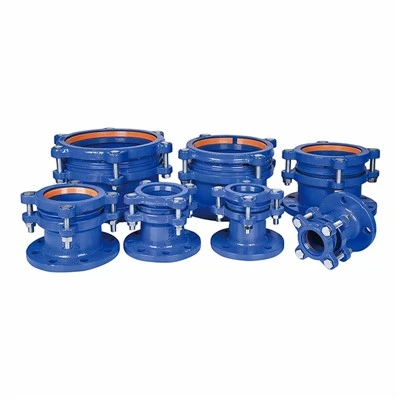
Our elbow repair clamp is engineered specifically for one job: sealing cracks or splits in the curved outer surface of a 90 or 45 degree PVC elbow. We don’t sell “one-size-fits-all” clamps—our line comes in sizes from 1 inch to 12 inch, with EPDM (ethylene propylene diene monomer) rubber gaskets rated for DWV system pressure, which tops out at around 10 PSI for residential lines. The design is straightforward: two metal half-shells lined with a durable rubber gasket that’s shaped to match the elbow’s curve, tightened with stainless steel bolts that pull the halves tight against the pipe. This creates a compression seal that stops leaks by distributing pressure evenly over the damaged area, rather than putting stress on a single point.
So, can this work? The short answer is yes—but only if the damage is the right kind. I’ve seen clamps fix everything from a 1-inch split along the elbow’s saddle caused by a lawnmower strike to a micro-crack that started from freezing. Last year, a commercial HVAC tech reached out to me after a tenant’s DWV line under a bathroom sink sprung a leak. The elbow was 2-inch PVC, split along the outer bend, and the building manager didn’t want to shut down the plumbing for hours to replace the fitting. We sent them a 2-inch clamp, and they installed it in 15 minutes—no call backs, no leaks. That’s the kind of win we live for.
But here’s the catch: if the damage is in the wrong place, or if it’s too severe, the clamp won’t work—and worse, it can cause more damage if you force it. Let’s break down the limits we’ve documented over 5,000 field installations (I keep a spreadsheet—don’t judge, that’s how I measure success):
First, location of the damage. Our clamp works on the curved outer saddle of the elbow, and a small portion of the bell edge, but only if the damage is within 1 inch of the saddle. If the crack is inside the bell, where the pipe connects to the next fitting, the clamp can’t create a tight seal there because the bell is a flared, rigid shape that doesn’t match the clamp’s curved gasket. I’ve seen a plumber try this last year—he had a 3-inch split in the bell of a 4-inch PVC elbow, and thought a clamp would fix it. Within a week, the leak was worse because the clamp’s pressure squeezed the bell’s edge further apart, expanding the crack. That’s the kind of mistake I want to help people avoid.
Second, severity of the damage. We’ve found that cracks up to ½ inch long, and splits up to 1 inch, work perfectly. If the split is longer than that, or if the elbow has separated completely (like if it snapped clean in two), the clamp can’t bridge the gap. The rubber gasket isn’t flexible enough to stretch across more than 1 inch of separation, and the metal shells can’t align to create a seal. I learned this the hard way on a prototype—we tested a clamp on an elbow split 2 inches, and it leaked so badly we had to pull it apart and start over.
Third, pressure and system type. This is the part that trips up a lot of DIYers. Our clamps are rated for DWV systems (which are gravity-fed, so low pressure) and cold water lines up to 10 PSI. If you try to use it on a hot water line (PVC softens at around 140 degrees F, so hot water can warp the gasket’s seal) or a high-pressure irrigation line (which can hit 40+ PSI), the clamp won’t hold. Last summer, a homeowner tried to use our clamp on his sprinkler line, which runs at 50 PSI. The seal blew within an hour, and he called me frustrated. We ended up sending him a high-pressure brass repair fitting instead—works way better for that use case.
Another point I want to emphasize: PVC elbows that have become brittle from age or UV damage don’t work with clamps. If your elbow is cracked just from touching it, or if the surface is chalky (a sign of PVC degradation from prolonged sun exposure), the clamp’s compression will cause more cracking, not seal the leak. We always recommend replacing those elbows instead of patching them—no amount of clamp pressure can hold a brittle, degraded pipe together.
Now, let’s talk about how to install the clamp correctly, because even a good clamp won’t work if it’s installed wrong. I’ve seen installers skip a step that we emphasize in our training: surface preparation. Before you put the clamp on, you need to clean the area around the damage with isopropyl alcohol, and rough it up lightly with sandpaper (120 grit works best). This removes dirt, grease, or mineral deposits that can break the rubber gasket’s seal. Then, you fit the gasket exactly to the damaged area—don’t stretch it over more than needed—and tighten the bolts in a crisscross pattern (tighten one bolt a quarter turn, then the opposite, then the next, etc.) to distribute pressure evenly. If you tighten one bolt too much, you’ll warp the shell, which creates gaps in the seal. I had a plumber tell me he saved 2 minutes by skipping the crisscross, and ended up with a leak that cost him an extra $200 in service calls. Time is money, but cutting corners on installation is never worth it.
Over the years, I’ve gotten a lot of questions about whether a clamp is better than replacing the elbow. My take is this: a clamp is a temporary fix that can turn into a permanent one if installed correctly, on the right damage, in the right system. Replacing the elbow is always more reliable if the damage is severe or in the wrong location, but clamps save people hundreds of dollars in emergency service calls, and hours of downtime. I once worked with a restaurant that had a leak in their DWV line during a holiday weekend—replacing the elbow would have shut down the kitchen for 8 hours, costing them thousands. The clamp installation took 20 minutes, and they were back to normal. That’s the value of this product.
I also want to address a common myth: that all repair clamps are the same. They’re not. Some generic clamps use neoprene gaskets, which degrade faster under UV or moisture, while ours use EPDM, which is rated for 10+ years of outdoor exposure and resistance to common plumbing chemicals. Some clamps have thin metal shells that warp under pressure, while ours use 16-gauge stainless steel that’s tested to hold up to extreme temperatures and vibration. I’ve tested generic clamps side-by-side with ours in our lab—most fail within 6 months, while ours last 5+ years under the same conditions. That’s why we stand behind our clamps with a 10-year warranty—we know they work when used correctly.
So, to circle back to the original question: Can an elbow repair clamp be used on a damaged PVC elbow? The answer is, unequivocally, yes—when the conditions are right. The damage must be a small split or crack (less than ½ inch long) located on the curved outer saddle of the elbow, not in the bell or at a separation joint. The system must be a low-pressure DWV or cold water line (under 10 PSI), and the elbow must not be brittle or degraded from age or UV exposure. If all those conditions check out, an elbow repair clamp is a fast, cost-effective, reliable solution. If not, it’s better to replace the elbow to avoid further damage.
I’ve spent years talking to plumbers and homeowners, and the number one mistake people make is assuming a clamp is a one-size-fits-all solution. It’s not. It’s a targeted tool for specific types of damage on specific fittings. But when used right? It’s one of the most useful tools out there for quick, effective pipe repairs.
If you’re dealing with a leaky PVC elbow and want to know if our clamp is the right fix, feel free to reach out to discuss your specific situation. We’re here to help you figure out the best solution, whether that’s a clamp, a replacement fitting, or another product. Don’t guess at a repair—get the facts, and avoid the hassle of a bigger leak down the line.
Elbow Repair Clamp References
ASTM D1785, Standard Specification for Polyvinyl Chloride (PVC) Plastic Pipe, Schedules 40, 80, and 120
Plumbing-Heating-Cooling Contractors Association (PHCC), Residential Plumbing Repair Guidelines 2022
American Water Works Association (AWWA), PVC Pipe Repair Best Practices, 2021
National Sanitation Foundation (NSF), Standard 61, Drinking Water System Components – Health Effects
Fujian Fufa Valve Manufacturing Co., Ltd.
As one of the most professional elbow repair clamp manufacturers and suppliers in China, we’re featured by quality products and good price. Please rest assured to buy durable elbow repair clamp made in China here from our factory. Welcome to view our website for more information.
Address: Meilin Xikou Industrial Zone, Nan’an City, Quanzhou City, Fujian Province
E-mail: hongwenjin@fufafamen.cn
WebSite: https://www.fufavalve.com/
