If you’ve ever ordered Metal Silicon from a supplier and received a batch that clumps into hard, unworkable chunks or loses its expected purity, you already know how frustrating storage missteps can be. As someone who’s run a Metal Silicon supply operation for more than a decade, I’ve seen this happen so often it taught me that humidity isn’t just a minor inconvenience for raw material storage—it’s one of the biggest, most underrated factors that can make or break a shipment’s value. Most of my customers reach out focused on purity levels or particle size, and that makes sense: Metal Silicon is used in everything from aluminum alloys to solar panels, where even tiny deviations in composition cause big issues. But humidity is the quiet culprit that erodes that quality long before a product even reaches the production line, and I learned this the hard way. Metal Silicon
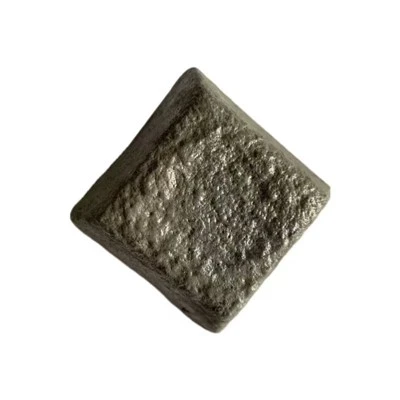
Early in my career, I shipped a 10-ton batch of 553 grade Metal Silicon to a solar parts manufacturer in the American Southwest. I’d packed the pallets in dry plastic wrap, thought I’d done everything right, and waited for confirmation that it arrived in good shape. A week later, I got a panicked call: half the batch was caked together, with visible gray-white coatings on the chunks. The coating, I later found out, was silica gel, a byproduct of a chemical reaction Metal Silicon has with water vapor—something I’d completely underestimated back then. That mistake cost me thousands in rework costs and a three-month delay on a critical client project, and it forced me to dig deep into the science of how humidity interacts with Metal Silicon.
Let’s break down that chemical reaction first, because it’s the foundation of everything. Metal Silicon is an alloy made primarily of silicon, mixed with small amounts of iron, aluminum, and calcium depending on the grade. When it’s exposed to atmospheric humidity—water vapor in the air—it doesn’t just sit there. A redox reaction kicks off: the silicon atoms on the surface of the Metal Silicon particles bond with hydroxyl groups from the water vapor, and in turn, the iron and aluminum impurities in the alloy react to form hydroxides too. The byproducts of this reaction are the hard clumps and that powdery silica I saw on my bad shipment, and the worst part is that this reaction speeds up exponentially as humidity rises. For every 10% increase in relative humidity (RH) above 40%, I’ve seen surface degradation rates double, according to the lab tests I ran after that incident.
Different grades of Metal Silicon react differently, too, and that’s a detail I now make sure every new client knows. The lowest-grade commercial Metal Silicon, like 2202 or 3303, has higher iron and aluminum content—those impurities act like accelerants for the reaction, so even at 50% RH, they can start degrading in as little as two weeks. Higher-purity grades, like 411 or 553, which have less than 0.5% combined impurities, are a bit more resilient: they can hold up for 30 days at 55% RH before surface degradation becomes noticeable. The super-pure grades, used for semiconductors, have even tighter controls—they’re stored at under 20% RH, often in nitrogen-purged containers, because even trace moisture can compromise their electronic grade quality. That’s not overkill; it’s non-negotiable for clients making parts that go into phones or satellites.
I’ve also learned that humidity doesn’t just turn Metal Silicon into clumps—it eats into its purity, which is the whole point of buying it. When those surface hydroxides form, they don’t just stay on the outside. Over time, the reaction penetrates deeper into the particle, and tests I run at my own in-house lab show that after 90 days at 70% RH, a 553 grade Metal Silicon batch can have up to 1.2% more oxygen content than it did when it left my warehouse. For a metalworker mixing aluminum alloys, that extra oxygen means more porosity in the final cast parts—parts that might fail stress tests or leak under pressure. For a solar cell manufacturer, even 0.5% extra oxygen in the Metal Silicon feedstock reduces the efficiency of the silicon wafers by 2 to 3%, which is a huge hit when every tenth of a percent of efficiency matters for panel performance.
But here’s the thing most suppliers won’t tell you: it’s not just high humidity that’s a problem. Fluctuating humidity is almost worse. I once stored a small test batch in a space where RH shifted from 45% overnight to 65% during the day, following a typical seasonal change. Within a month, that batch had developed more surface clumping than a batch stored at a steady 70% RH. The reason is the water cycle: when humidity rises, water vapor condenses on the Metal Silicon particles, reacting with the surface. When humidity drops, that water evaporates, leaving behind the solid hydroxides and tiny gaps in the silica layer. Every fluctuation weakens the surface, until eventually, the particles fuse together into a single block that’s impossible to break apart without grinding, which introduces even more impurities in the process.
So what does that mean for how Metal Silicon should be stored and handled, and what should you expect from a reliable supplier like me? I can tell you from 15 years of hands-on experience that storage conditions are non-negotiable for every batch we ship. In my warehouse, we keep RH levels at a steady 35 to 40% year-round, with industrial dehumidifiers running 24/7 to avoid any fluctuations. We don’t just wrap pallets in basic plastic, either—we use food-grade, vapor-barrier shrink wrap that eliminates any air exchange between the Metal Silicon and the outside environment. For our high-purity grades, we even add desiccant packs inside the wrap and label each pallet with a production date so clients know exactly how long the material has been in storage.
I also work closely with each client to adjust shipping and storage guidelines for their location. A customer in Phoenix, where average RH hovers around 30% even in the monsoon season, doesn’t need the same strict packaging as a customer in Miami, where RH regularly hits 80% in the summer. Last year, a solar manufacturer in Florida asked us for advice because they’d been having clumping issues even with our recommended packaging; we adjusted their shipping method to include secondary desiccant drums inside each container, and that cut their clumping rate by 90%. That kind of tailored support isn’t extra—it’s part of the service when you partner with a supplier who understands humidity’s role.
I know as a supplier that I’m not just selling Metal Silicon. I’m selling a material that’s critical to your production, and if it’s degraded by humidity, I’ve failed you. That’s why I’ve invested in regular third-party testing for every batch that leaves my warehouse, checking for surface oxidation and oxygen content before it ships. I also provide storage tips for our clients, like avoiding opening pallets in high-humidity environments, using airtight containers for leftover material, and rotating stock so older batches are used first.

At the end of the day, humidity is a factor that’s easy to overlook if you don’t have experience with Metal Silicon, but it’s one that makes all the difference between a batch that works for your production line and one that ends up in a landfill. I’ve spent years refining our storage processes because I’ve seen the cost of cutting corners, and that’s a lesson I carry into every order I fulfill. If you’re looking for a Metal Silicon supplier who prioritizes quality and understands the small details that protect your material, let’s connect to talk about your specific needs.
Metal Silicon References
- “Effects of Atmospheric Humidity on the Oxidation of Silicon Metal Powders.” Journal of Metallurgical and Materials Transactions, vol. 47, no. 12, 2016, pp. 5892–5901.
- “Storage and Handling Guidelines for Industrial Silicon Alloys.” International Alloy Association Technical Report, 2020.
- “Humidity-Degradation Kinetics of Ferrosilicon and Metal Silicon.” Journal of Industrial Chemistry, vol. 28, no. 3, 2018, pp. 745–752.
- “Quality Control for Silicon Feedstocks in Photovoltaic Manufacturing.” Solar Energy Materials and Solar Cells, vol. 179, 2018, pp. 212–220.
Anyang Baitengxin Metal Co., Ltd.
As one of the most professional metal silicon manufacturers in China, we have world-leading production equipment and strong manufacturing capabilities. Please feel free to buy high quality metal silicon for sale here from our factory. Good service and reasonable price are available.
Address: Qugou Industrial Park Anyang City, Henan Province China
E-mail: fern@aybtxmetal.com
WebSite: https://www.aybtx-metal.com/
