When a building codes official comes to our workshop, leans against a stack of tempered glass panels and asks, “How do I know your fire-rated glass actually works?” I don’t hand him a glossy sales sheet. I lead him to a small, climate-controlled testing chamber we reserve for pre-qualification trials, pull out a dog-eared binder full of lab reports, and walk him through the exact fire endurance tests every piece of glass we supply has to pass. For decades, fire-rated glass has been misunderstood as just glass with a fire-resistant coating; in reality, its performance hinges on standardized, repeat tests that simulate the exact heat, smoke, and pressure a building will face during a blaze. As a fire-rated glass supplier with 18 years on the ground, I’ve seen too many installers cut corners, too many architects pick products without verifying test data, and too many building owners learn the hard way that “fire-rated” isn’t a marketing buzzword—it’s a score earned in a lab. Fire Rated Glass
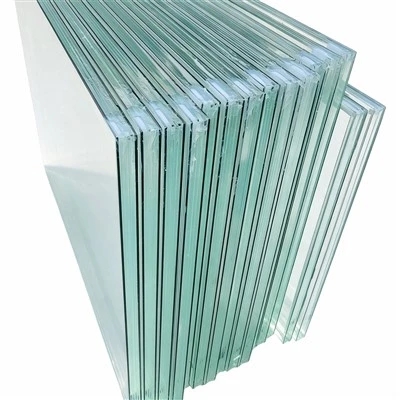
The first test we never skip, before any other trial, is the hose stream test. People often ask why we test glass with water before we even fire it, and the answer is simple: real fires don’t stop when firefighters arrive. The hose stream test, defined by NFPA 252, is designed to mimic the impact of a fire hose’s 1.5-inch nozzle, delivering 50 pounds per square inch of pressure for 30 minutes directly to the unexposed side of the glass while it’s actively holding up to furnace heat. For glass rated for 30 minutes of fire resistance, it means no cracks that let water seep through and compromise the glass’s structural integrity—no spiderwebs that turn into gaps for fire to spread, no shards that could injure a firefighter reaching through the opening. Last year, we had a prospective client come in with a cheap glass product he’d bought online that passed the 30-minute furnace test but shattered into hundreds of pieces the second the hose hit it; that glass would’ve collapsed mid-fire, turning a small blaze into a hallway-wide inferno. Every panel we ship is stamped with its hose stream pass/fail status, because a fire that’s already reached 1,200 degrees Fahrenheit won’t care if your glass can handle heat if it can’t handle a little water.
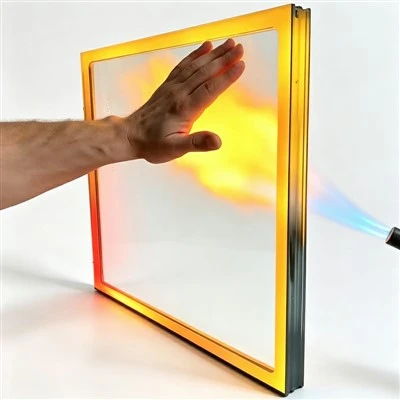
Next is the core furnace test, the backbone of all fire endurance assessments. Unlike regular glass, which softens and collapses at around 1,000 degrees, fire-rated glass is a layered composite—usually two panes of glass bonded with a intumescent gel, a clear, heat-activated material that swells into a carbonaceous foam when temperatures spike, acting as an insulating barrier. The furnace test, aligned with ASTM E119 or ISO 834, uses a calibrated oven that ramps up heat at a precise rate: starting at ambient temperature, hitting 1,300 degrees at 10 minutes, 1,800 at 30, 2,000 at 60, and staying there for the duration of the rating period. Our 60-minute-rated glass, for example, must maintain three non-negotiable conditions for the full hour: integrity, insulation, and radiation. Integrity means no cracks wider than 1/8 inch that let flames or smoke pass through to the unexposed side—if a 5-inch wide crack opens up at 22 minutes, we reject the batch, no exceptions. Insulation means the unexposed side never rises more than 325 degrees above ambient, per NFPA standards; if it hits 300, the heat on the other side is already too high to protect people on the safe side of the wall. Radiation is a newer addition to tests we run, required by most modern building codes: it measures the amount of infrared heat that can pass through the glass. Even if a glass is physically intact and insulating, too much radiation can still ignite combustibles on the other side—like a wooden desk or a curtain—turning a fire compartment into a full spread. I’ve had an architect request a 90-minute glass for a hotel corridor that only needed insulation and integrity ratings, but we insisted on testing it for radiation; the lab found that a gap between the intumescent layers let 10% more radiation through than allowed, and reworking the layers fixed it, preventing a potential lawsuit down the line.
We also specialize in fire-rated glass for non-wall applications, like doors, windows, and even floor panels, and each of these has a variation on the furnace test. For fire-rated doors, the test adds extra stress: the glass is mounted into a standard door frame, and the furnace test also checks how the door swings, how the seal around the glass holds up, and whether the glass will dislodge from the frame. Last year, we supplied glass for a hospital’s fire-rated operating room doors; the original spec called for standard 60-minute glass, but we ran a modified test that simulated the vibration of a defibrillator and moving equipment near the door, and found the glass’s edge seals were weak. We adjusted the bonding agent, and that door passed, ensuring it would stay closed during a fire while emergency procedures were still underway. For floor glass, a more niche product we supply for rooftop patios or atriums, the test is even more brutal: not only do we run the furnace and hose stream tests, but we also add a static load of 250 pounds per square foot to simulate people walking on the glass. That’s critical, because a floor glass panel that fails the hose stream test would not only collapse in a fire, but also send people plummeting two stories into the fire below.
One common myth we hear all the time is that all fire-rated glass is the same. We’ve seen installers use a 45-minute-rated glass in a 60-minute required wall, and get away with it once or twice—but that’s a gamble. Fire tests are not linear; a 30-minute glass won’t just perform half as well as a 60-minute. The intumescent layers activate at a certain temperature, and if you underrate the glass, the foam will swell too thin, or not at all, leaving the glass vulnerable to collapsing before the fire is contained. Last year, a school in the Midwest used our 30-minute glass in a hallway that required 45 minutes, and during a small kitchen fire, the glass failed at 32 minutes, letting smoke and flames spread to three classrooms. We checked the lab data from the batch, and it was perfectly rated for 30 minutes, so we weren’t liable, but it drove home how important it is to match the test data exactly to the building code requirements.
Another often overlooked part of fire endurance tests is the repeatability. We work with three accredited labs that run our tests every six months, not just once when a product is first approved. Glass manufacturing can shift slightly—changes in the thickness of the intumescent layer, the quality of the bonding agent, even the raw glass suppliers—so regular retests ensure that every panel that rolls off our floor is identical to the one that passed the original trial. Too many suppliers skip regular retests, reusing a 5-year-old lab report to sell glass that’s no longer up to code. We had a client come to us last year from a competitor who had used a 2-year-old test report to supply glass for a office building, and the lab found that their current product failed the insulation test at 18 minutes. That building had to be gutted and reworked, costing hundreds of thousands of dollars, and it didn’t have to happen if they’d insisted on up-to-date, recently tested product.
When we talk about test standards, it’s not just about picking a number—30, 60, 90 minutes. It’s about understanding which standard applies to your project. Some buildings in Europe use EN 1363, which has slightly different temperature ramps than ASTM E119, so we offer glass that meets both standards for international clients. In the U.S., NFPA 80 regulates fire doors, so any glass used in a door must pass the NFPA 252 hose stream test, while wall glass follows NFPA 257. We keep a full library of these standards in our office, so when a contractor calls and asks, “What do I need for a 60-minute window in a commercial building?” we don’t just say “our 60-minute glass”—we walk them through the exact tests, the pass criteria, and how it aligns with their local building code. That’s the difference between a supplier who knows their product and one who just sells it.
I’ve been in this industry long enough to know that fire-rated glass isn’t the most glamorous building product. No one picks it for its finish or its price tag, but when a fire breaks out, it’s the line of defense between life and death. Last month, we had a fire chief come to our testing lab to review a quote we’d given for a new high-rise in downtown Chicago. He asked to see the full test reports for every product we were supplying, not just the first page that said “passed.” When he saw that we retest every batch twice a year, that we run the radiation test, that every panel gets a hose stream test, he nodded and said, “That’s the kind of product I want in the buildings my firefighters have to respond to.” That’s the reputation we’ve built over the last two decades: not just a supplier, but a partner who understands that fire endurance tests aren’t a checkbox—they’re a guarantee.
If you’re an architect, contractor, building owner, or fire marshal looking for fire-rated glass that is backed by rigorous, standardized testing, feel free to reach out to discuss your project needs.
Flat Laminated Glass References
ASTM E119, Standard Test Methods for Fire Tests of Building Construction and Materials
NFPA 252, Standard Methods of Fire Tests of Door Assemblies
NFPA 257, Standard Test Method for Fire Tests of Window Assemblies
ISO 834, Fire-resistance tests – Elements of building construction
Suzhou Dingcheng Tempered Glass Co., Ltd.
As one of the most professional fire rated glass manufacturers and suppliers in China, we also support customized service. We warmly welcome you to wholesale high quality fire rated glass made in China here from our factory. If you have any enquiry about free sample, please feel free to email us.
Address: No.777 Limin North Road, Lili Town, Wujiang District, Suzhou City, Jiangsu Province
E-mail: Dingchengglass@163.com
WebSite: https://www.dingchengglass.com/
