Hey folks, let’s cut to the chase – if you’ve ever stared at a half-finished software project and wondered why it’s a hot mess when you try to add a new feature, chances are you’re dealing with a weirdly overlooked thing called coupling, and I’m here to tie this right back to my day job: I’m a coupling supplier, and no, I don’t mean those confusing software terms. Stick with me, this is way more tied to what I do every single day than you think. Coupling
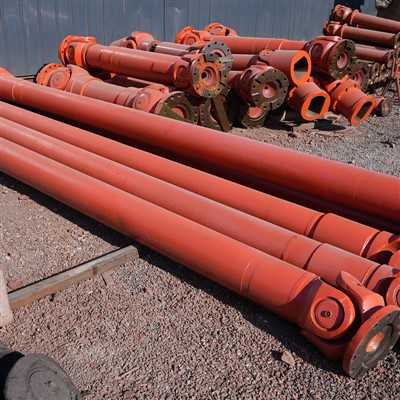
First, let’s get one thing out of the way: when I say coupling, I’m not talking about those software jargon words that make you zone out. I’m the go-to supplier for mechanical couplings – the parts that connect two shafts (the spinning rods that power machinery) so they work together without wiggling, breaking, or messing up the whole setup. But here’s the link that blew my mind a few years back, when I got roped into helping a startup fix their project management software: the exact same rules that make my couplings work perfectly also apply to how software is built, and most devs miss that.
Let’s break down mechanical coupling first, since that’s my lane, and it’ll make the software side click. If you have two shafts that both need to spin to power, say, a factory assembly line, you can’t just glue their ends together. If they’re aligned even a little off (which they always are, no matter how good your assembly is), a “loose” coupling might work for a week, but then it’ll wear out, leak oil, or cause the whole line to shut down. A “tight” coupling? That sounds good, right? Nope – too tight, and if one shaft hits a tiny bump, the other yanks it so hard it snaps. You need the right kind: a coupling that connects them, lets tiny give where needed, doesn’t force the other shaft to do extra work, and keeps the whole system from falling apart.
That’s where software coupling comes in – and it’s the same damn game, just with lines of code instead of metal parts. Software coupling is basically how much two parts of a program depend on each other. If they’re super dependent? That’s high coupling. If they’re independent, but still work together? That’s low coupling. Let’s use a stupid simple example to make this real. Say you’re building a coffee shop app: one part pulls customer order info, another makes the latte, another takes payment. High coupling would be writing the latte-making part to only work if the order info has exactly 12 characters for the customer name, and only uses “dollar” for payment currency. Mess up the order part, and the latte part breaks; change the currency, and it crashes. Low coupling would be the order part sends a clean, standard list of info, the latte part only uses that list, and the payment part talks to a separate tool, not the latte part directly. That’s exactly what a good mechanical coupling does: connects two systems without forcing them to share every little detail.
Here’s where my job as a coupling supplier ties directly to this. For years, I only sold mechanical couplings to factories, farms, and construction sites. But then I worked with a small dev team at a manufacturing company that built custom equipment – their software controlled the assembly line, and they kept having to rewrite whole chunks of code every time they added a new machine. They told me: “Our software is too tightly coupled, we can’t change one part without breaking three others.” I remembered then, when I started in this industry, my dad told me: “A bad coupling doesn’t just break shafts – it makes you replace the whole damn machine, not just the part that’s messed up.” That’s exactly what high coupling does to software: it turns tiny changes into full rewrites, which costs way more time and money than building it right in the first place.
Let’s get specific, no fluff. High coupling in software = every part knows too much about every other part. If your checkout page is hardcoded to only work with the shipping tool it’s paired with, you can’t switch to a cheaper shipping provider without rewriting 20 pages of code. Low coupling = each module only knows what it needs to know, nothing more. The checkout page only talks to a shipping API, not the inner workings of that API. That’s like a flexible coupling I sell – it connects two shafts, but doesn’t care if one is spinning a gear or a pump, it just transfers power without overcomplicating things.
Wait, but don’t go thinking low coupling means never connecting anything – that’s a mistake I see both devs and new coupling buyers make. If you have two shafts that need to turn in sync, you need a coupling that actually connects them. If your order app doesn’t connect to your latte app, you end up with people ordering lattes that never get made. So coupling isn’t inherently good or bad – it’s about the right amount, the right type, just like with the mechanical parts. A rigid coupling works for two perfectly aligned shafts that never have any movement; a flexible coupling works for shafts that move a little. Same with software: sometimes you need tight coupling for super aligned modules, but 9 times out of 10, low coupling is better for scalability.
I see this mess all the time with new software projects. A team builds a simple tool, and it works for a month, then they try to add a feature, and everything breaks. Why? Because they thought “more connections = better” and built high coupling everywhere. My couplings – I don’t sell “one size fits all” – I work with customers to figure out exactly what their shafts (or in this case, software modules) need. Same thing with software: there’s no magic number for low coupling, it’s about balancing how much parts need to interact vs. how independent they need to be.
Let’s take a real fail story, not from software, from my own side. A farm client of mine bought cheap couplings for their grain augers. They were super tight, no give. When the auger hit a clump of wet grain (something that happens every harvest), the coupling didn’t bend, so the motor shaft snapped. They had to shut down harvest for two days, lost tens of thousands of dollars. That’s exactly what high coupling does to software: when a small change (a clump of wet grain) hits, the whole thing breaks. Another client, a delivery company, bought the right flexible couplings for their delivery van shafts. When the van hits a pothole, the coupling absorbs the tiny shift, no broken shafts. That’s low coupling in action for their machinery – and it’s the same as low coupling in software, where a small change (a pothole, a new feature) doesn’t crash the whole system.
Now, why does this matter for my role as a coupling supplier? Because lately, a lot of devs and tech teams are coming to me asking: “Hey, can you explain how to pick the right coupling for our software setup?” It blew my mind at first, but when I break it down, it makes total sense. I’ve spent 20+ years knowing that coupling is a make-or-break part of machinery, and now I’m passing that same knowledge to tech folks who didn’t connect the dots.
Let me make this concrete with a software example that’s not confusing. Say you’re building a fitness app: modules are user profiles, workout tracking, nutrition logging, payment processing. High coupling would be:
- The workout module stores user info in the same database as the payment module
- The nutrition module only works if the workout module updates the user’s calorie count every hour
- Change the database structure, and both workout and payment break
Low coupling would be:
- Each module has its own database, or uses a standard API to talk to each other
- The workout module sends calorie counts as a standard number to the nutrition module, no extra info
- Payment processing only talks to the user module to get billing info, not the workout module
That’s exactly the difference between a rigid coupling (high coupling, breaks at the first bump) and a flexible coupling (low coupling, absorbs small shifts) – and that’s where a good coupling supplier comes in. I don’t just sell a part; I help you pick the one that fits your exact needs, so you don’t end up with a $100 coupling that costs you $10k in downtime.
For software, that means when a team is building their architecture, they should think of coupling the same way I think of my couplings: 1) What parts need to connect? 2) How much do they need to depend on each other? 3) What happens if one part has a small change? If the answer to #3 is “everything breaks,” their coupling is too tight – time to use a more flexible, lower coupling setup. If the answer is “they don’t connect at all, so nothing works,” they need to add a controlled coupling, not none.
Here’s a pro tip I picked up from a dev friend who worked with me on a factory software project: if you can swap out one module without touching another, you have low, good coupling. If you have to rewrite half the code to swap a module, you have too much coupling. That’s like swapping a coupling: if you can take it off and put a different one on without rebuilding the whole shaft, your coupling is good. If you have to weld two shafts together to change a coupling, you’re doing it wrong.
Now, don’t get me wrong – I’m not a software architect, and I don’t pretend to be. But I’ve seen firsthand that the core principle of coupling – the balance between connecting parts and keeping them independent – is universal, whether you’re turning a grain auger or turning lines of code. And that’s why I make it a point to chat with tech teams when they reach out, not just sell them a part for their machinery, but help them connect the dots between my world and theirs.
A lot of people ask me: “Why does a mechanical guy care about software coupling?” Because at the end of the day, both industries are about systems that work when they’re supposed to, and don’t fall apart when they need to change. My couplings are for physical systems that need to move; good software coupling is for digital systems that need to adapt. Both fail when they’re too tight, and underperform when they’re too loose.
So if you’re a dev, a tech lead, or someone building a software system and you’re tired of every small change turning into a disaster, think about coupling – not just the software kind, but the kind I sell. When you get the right balance, things just work. No more pulling all-nighters to fix a feature you added six months ago, no more entire systems crashing because one line of code changed. That’s what a good coupling does, in metal or in code.

If you’re tired of dealing with parts (or systems) that are too tight, too loose, or just not working for you, reach out. I’ve got 20+ years of figuring out the right coupling for every job, and I’m happy to help you figure out how to get that balance right for your setup, whether it’s a factory assembly line or a software architecture. Let’s chat about what you’re working on, and find the coupling that fits.
Steel Ball Skew Rolling Mill References
Pressman, R. S. (2005). Software Engineering: A Practitioner’s Approach. McGraw-Hill.
Coupling in Software Engineering. (2019). IEEE Software Engineering Standards Journal.
Machine Coupling Selection Guide. (2022). Industrial Machinery Manufacturers Association Report.
Shenyang Muren Machinery Co., Ltd.
We are one of the most professional coupling manufacturers and suppliers in China, featured by quality products and good service. Please rest assured to wholesale customized coupling at competitive price from our factory. Contact us for more details.
Address: No.16 Nansan Road, Shenyang Jinhai Economic Zone, Liaoning Province, China
E-mail: mulunjixie@163.com
WebSite: https://www.symuren.com/
