Hey everyone, if you’ve ever walked through a commercial building, data center, or even a big industrial warehouse, you might not have noticed the wire mesh cable tray holding all those power and data cables. But as a wire mesh cable tray supplier who’s been in this game for over a decade, I can tell you—this stuff isn’t just a “hole in the wall” afterthought. Getting the design right makes or breaks how well a system works, how long it lasts, and even how much money the client saves down the line. Let’s break down the real, practical design considerations that actually matter, not just the industry jargon they throw around at trade shows. Wire Mesh Cable Tray
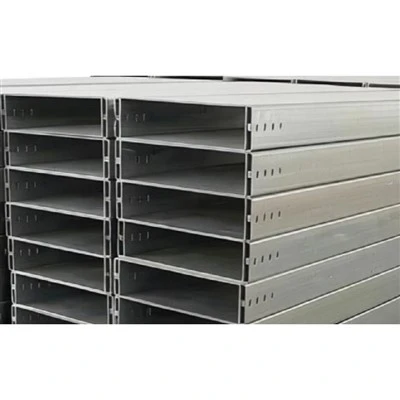
First off, you can’t design a tray without knowing what cables it’s going to carry. I see this mistake all the time: someone specs a generic tray because it’s cheaper, only to realize a month later they’ve got 1,000 Cat 6 cables and 50 high-voltage power cables that generate way more heat than the tray was built to handle. Wire mesh trays are open, so heat dissipation is a big win, but load capacity isn’t just about total weight—it’s about the mix of cables. Thick, rigid power cables take up more space and put more stress on the tray’s structural bars, while delicate fiber optic cables need extra room to prevent kinks. We always ask clients to send us a cable schedule before we even quote a custom run, not just a number of cables. Also, if there’s a mix of voltage classes—like low-voltage data and medium-voltage power—you have to account for electromagnetic interference (EMI) too. Cheap trays use thin wire that doesn’t block EMI, so data cables pick up static and drop connections. We use thicker, galvanized steel for mixed systems specifically for that reason.
Next, environmental conditions are non-negotiable. A tray in a clean office basement is way different from one in a food processing plant where there’s grease and moisture, or an outdoor installation that’s exposed to rain and UV rays. I once had a client who put a standard galvanized tray in a meat packing plant—within six months, the corrosion from ammonia and fat vapor ate through the wire, and half the cables fell loose. That’s the kind of problem that makes us go back and revise our design process. For harsh environments, we spec either stainless steel (type 304 for most corrosive stuff, type 316 for saltwater near docks) or powder-coated trays with a thick, scratch-resistant finish. Outdoor trays also need to account for thermal expansion—metal expands when it’s hot, so if you span a run longer than 10 feet without expansion joints, the tray will warp in the summer heat. Small detail, but it’s saved clients thousands in repairs.
Span length and support spacing are another area where cutting corners bites. The span is the distance between two support brackets holding the tray up, and the spacing depends entirely on the tray’s width and load. If you space supports too far apart, the tray sags—badly. I’ve seen a 12-inch wide tray with 500 pounds of cables sag so much the lowest cables were dragging on the floor. For most standard indoor runs, we recommend a maximum span of 8 feet for trays up to 18 inches wide, and 6 feet for anything wider. But if the load is extra heavy, we reduce that span to 5 feet. Also, don’t forget about vertical runs—those need more frequent support points because gravity’s pulling the cables down. One of our go-to designs for vertical cable runs uses adjustable clamps every 4 feet, so the tray stays straight and doesn’t pull away from the wall over time.
Accessibility is often overlooked until someone needs to add a new cable at 2 a.m. when the IT team’s panicking. Wire mesh trays are supposed to be easy to access, but not all designs are equal. Some cheap trays have welded joints that are sharp, so you can’t fish cables through without getting cut. Others have gaps that are too small to fit bulkier power cables. We design our trays with smooth, rolled edges and 1-inch wire gaps—big enough to pull any standard cable through, but small enough that a thin fiber optic won’t slip out and get damaged. We also add quick-release connectors between tray sections, so electricians don’t have to wrestle with bolts every time they need to split a run to add a new cable. For data centers, where cable changes are constant, this is a game-changer—cutting access time by 30% on average, according to the clients we work with.
Weight distribution ties back to the load capacity, but it’s a separate design point. If you cram all the heaviest cables in one section of the tray, that creates a concentrated load that can break the wire, even if the total weight is within specs. We tell clients to distribute heavy power cables evenly along the tray, 2 to 3 feet apart, and leave empty space at the ends for future additions. For extra-heavy loads, like runs of high-voltage cables in a factory, we add a reinforcing cross-wire every 2 feet to spread the weight out. Also, when mounting the tray, the support brackets have to be rated for the total load too—we’ve had clients use generic wood studs for mounting, which couldn’t hold the weight, so the tray collapsed. We always include mounting bracket specs in our design recommendations, not just the tray itself.
Compliance is another thing that can’t be skipped, especially in regulated industries like healthcare, aerospace, or government facilities. Local building codes, NEC (National Electrical Code) in the US, or IEC standards abroad have specific rules for cable trays—like fire resistance, grounding requirements, and maximum load limits. I remember a client in a hospital who tried to use a non-compliant tray for their new wing; the inspector made them rip it all out and replace it, costing them $20k in labor. We make sure all our trays are tested and certified to meet NEC, OSHA, and relevant industry standards, and we can provide test reports for any project. For fire-prone areas, like server rooms, we also offer intumescent coating options that expand when exposed to heat, blocking fire from spreading through the tray.
Wait, let’s talk about something that’s super important right now: future-proofing. No one wants to install a cable tray and have to replace it 5 years later because they need to add more cables. When we design trays, we always leave 20% extra space—we call it “cable headroom”—for future additions. That doesn’t mean buying an over-sized tray that costs twice as much; it means calculating the current load, then adding enough extra wire gaps and span capacity to handle at least one more major cable installation. For small businesses, that’s a big deal because they don’t want to dig up the floor to replace a tray in a few years. We also offer modular tray systems that can be extended on-site without welding, which saves a ton of time and money down the line.
Grounding might seem technical, but it’s critical for safety and equipment performance. Improper grounding can cause electrical shocks, damage sensitive electronics, or even start a fire. Wire mesh trays are conductive, but you have to design the grounding path correctly—adding grounding straps every 50 feet, and making sure the tray connects to the building’s grounding system properly. Some cheap trays have thin wire that doesn’t provide a good ground, so we use thicker, 12-gauge galvanized wire for grounding straps, and specify that all tray sections are bonded with corrosion-resistant connectors. We’ve had data center clients tell us that proper grounding reduced their equipment downtime by 15%, which is huge when a single hour of downtime can cost millions.
Oh, and let’s not forget aesthetics for indoor commercial spaces, like lobbies or offices. A lot of people don’t care, but some clients want the cable tray to look neat and not ruin the interior design. We offer powder-coated trays in white, black, and gray that match ceiling tiles or wall paint, so the tray blends in instead of standing out. We can also bend the tray into custom shapes—like around corners or along curved ceilings—without losing structural integrity. That’s a big request for office renovations, where hiding cables is a priority.
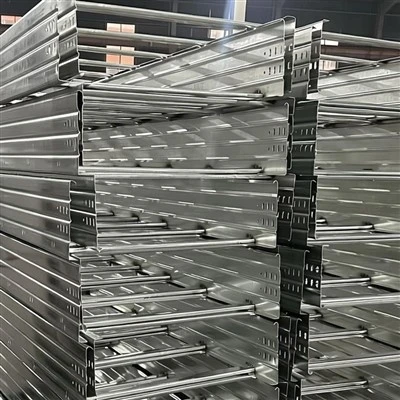
At the end of the day, every project is different. A small office in downtown Chicago has totally different needs than a manufacturing plant in Texas, or a data center in Silicon Valley. That’s why we don’t just send a standard tray when someone reaches out—we ask questions about their cables, their environment, their long-term plans, and their industry. If you’re in the market for a wire mesh cable tray, you don’t want to cut corners on design— that’s the stuff that comes back to haunt you. If you’re ready to talk through your specific project, no matter how big or small, hit us up to chat about what will work best for your needs.
Barbed Wire References
- National Electrical Code (NEC), Article 390: Cable Trays
- Steel Manufacturers Association, "Corrosion Resistance of Steel Cable Trays for Industrial Applications"
- Underwriters Laboratories (UL), Standard 2024: Cable Tray Systems
- International Electrotechnical Commission (IEC), Standard 61537: Cable Trays and Cable Ladder Systems
Hebei Shenyi Metal Products Co., Ltd.
Hebei Shenyi Metal Products Co., Ltd. is one of the most professional wire mesh cable tray manufacturers and suppliers in China, featured by quality products and good service. Please rest assured to wholesale durable wire mesh cable tray in stock here and get free sample from our factory. Customized orders are welcome.
Address: Gengtun Industrial Zone, Gengtun Village, Xiliangwa Township, Anping County, Hengshui City, Hebei Province
E-mail: HBshenyi@outlook.com
WebSite: https://www.shenyimetal.com/
