If you’ve ever watched a precision metal part come to life from a solid block of material, spinning smoothly under a sharp cutting tool, chances are it was made on a CNC lathe. As a CNC lathe supplier who’s worked with shops large and small for over a decade, I’ve seen how the right lathe can turn a one-week project into a one-day job—or, conversely, how a mismatched machine can turn a simple order into a series of costly delays. The key to picking the right equipment starts with understanding the different types of CNC lathes, each built for specific jobs, materials, and production volumes. CNC Lathe
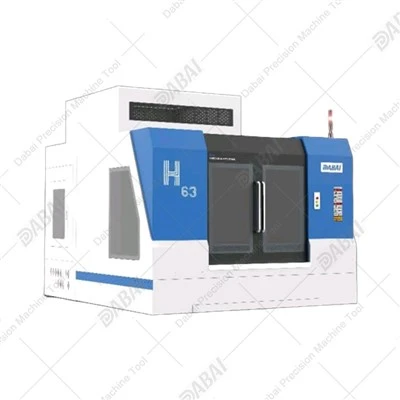
First, let’s cut through the jargon: a CNC lathe (short for Computer Numerical Control lathe) is a machine that rotates a workpiece while cutting tools shape it, all programmed via computer to deliver consistent, high-precision results. Unlike manual lathes, which rely on an operator’s skill and physical input, CNC lathes repeat the same cuts flawlessly, making them ideal for everything from tiny aerospace bolts to large industrial pipes. Over the years, designs have evolved to serve niche industries, so let’s break down the most common types you’ll encounter in shops today.
The first, and most widely used, is the 2-Axis CNC Lathe. Think of this as the workhorse of small to medium production runs. It has two axes: X, which controls the tool’s movement left and right, and Z, which controls movement along the length of the workpiece. Most basic turning jobs fall here: shafts, bushings, plain cylindrical parts. For example, a local automotive parts shop I supply relies on 2-axis lathes to crank out 10,000 identical brake caliper spacers every month. Their simplicity makes them affordable, easy to program for new operators, and perfect for low- to medium-volume work. The downside? They can only handle simple shapes—no complex contours or off-center features here. If you need a part with a grooved edge or a tapered end, a 2-axis lathe can do it, but more intricate designs will require a more capable machine.
Next up is the 3-Axis CNC Lathe, which adds one extra axis for greater flexibility. What does that mean? Most commonly, it’s the C-axis, which lets the workpiece rotate independently of its main spin. Suddenly, the lathe can do far more than just turn: it can mill flat faces, drill angled holes, and even tap threads on the side of a part without moving it to a separate mill. I’ve seen 3-axis lathes transform small job shops into go-to suppliers for custom parts like hydraulic fittings, which often require holes drilled at a 45-degree angle to the main shaft. A few years back, a customer of mine needed 500 custom valve components—their old 2-axis lathe would’ve required fixturing the part three times, adding hours of work. With a 3-axis lathe, we programmed all cuts in one setup, cutting production time by 60%. This type is a sweet spot for shops that need versatility but don’t want to invest in a full multitasking machine.
Then there are Multitasking CNC Lathes, sometimes called “turn-mill centers” or “live tool lathes.” These are the powerhouses, combining the rotational turning of a lathe with full milling, drilling, and even grinding capabilities all in one machine. The difference between a 3-axis lathe and a multitasking lathe is simple: a 3-axis might have a few live tools for secondary operations, but a multitasking lathe has multiple turrets, sub-spindles, and extra axes (Y, B, even C) that let it machine entire complex parts in a single setup. I work with a medical device manufacturer that uses a multitasking lathe to make titanium bone screws—tiny parts with threads, a hex drive, and angled slots. Before they had this machine, they had to move the screw through three separate machines, risking damage and waiting days for completion. Now, one operator loads the raw titanium bar once, and 20 minutes later, the finished screw comes out, ready for packaging. Multitasking lathes pay for themselves quickly in high-complexity, high-volume industries like aerospace, medical, and defense, where even a small part can have multiple features.
For jobs that are too large or too heavy for standard lathes, there are Heavy-Duty CNC Lathes. These are built to handle workpieces that weigh several tons, like large marine propeller shafts, wind turbine components, or oil and gas drill collars. Unlike compact shop lathes, they have reinforced beds, powerful spindles that can spin heavy loads slowly, and long Z-axis travel to accommodate parts that are 20 feet or more in length. Last year, a ship repair yard I supply needed to re-face a 15-foot-long propeller shaft; a standard lathe couldn’t support the weight, but our heavy-duty model handled it in a single pass, avoiding the risk of bending the shaft during transport. These machines are less common in small shops, but they’re essential for industries that deal with oversized work.
Another type worth noting is the Swiss-Type CNC Lathe (often called a Swiss lathe or screw machine). This machine is a specialist in small, ultra-precise parts—think watch components, electronic connectors, or tiny dental implants. The key feature here is the guide bushing that holds the workpiece close to the cutting tool, eliminating deflection (wobble) even when working with material as thin as a human hair. A customer in the watch industry once told me their old manual Swiss-style lathe had a 5% rejection rate for tiny gears; switching to a CNC Swiss lathe dropped that rate to less than 0.5%. They can produce hundreds of small parts per hour, each within a tolerance of 0.001 inches. For any job that requires precision in miniature, Swiss-type lathes are the go-to choice, though they’re not ideal for large parts or low volume—programming and setup can be more complex than standard lathes.
We should also mention Turning Centers with Sub-Spindles, a variation that’s become popular in recent years. A sub-spindle is a secondary head opposite the main spindle that can grip the other end of the workpiece, letting the lathe machine both ends without removing the part. This cuts down on setup time and eliminates the need to handle delicate parts mid-production. For example, a customer making automotive fuel injectors uses a sub-spindle lathe to machine one end to precise specifications, flip the part automatically, and machine the other end—all in one continuous cycle. They now produce twice as many injectors per shift with fewer errors, because there’s no risk of misaligning the part when re-fixturing.
Now, as a supplier, I get asked a lot: “Which of these is right for my shop?” The answer almost always depends on three things: your part complexity, production volume, and budget. If you’re running low-volume, simple cylindrical parts, a 2-axis lathe is probably all you need—and it will save you thousands in upfront costs. If you’re making medium-volume parts with secondary features, a 3-axis or sub-spindle lathe will give you the flexibility to take on more jobs without outsourcing work. For high-volume, ultra-precise small parts, a Swiss-type lathe will pay for itself in reduced waste and faster output. And if you’re working with large, heavy industrial parts, a heavy-duty model is non-negotiable.
I’ve seen shop owners make the mistake of buying a more advanced machine than they need, tying up cash in features they’ll never use. Conversely, I’ve seen others try to cut costs with a basic lathe that can’t handle their growing order book, leading to late deliveries and lost customers. That’s why I always take time to walk through a shop’s current projects, talk about their growth plans, and match them to a lathe that fits—not just today, but in a year or two.
If you’re in the market for a CNC lathe, whether you’re a small job shop looking to expand or a large manufacturer updating your equipment, I’d love to help you find the right fit. Don’t hesitate to reach out to discuss your specific needs, even if you’re not sure exactly what type of machine you need—we can work through your project details together to find a solution that boosts your productivity and bottom line.
Gantry Machining Center References:
- American Society of Mechanical Engineers (ASME). "Design and Application of CNC Lathes." ASME Press, 2021.
- Manufacturing Engineering Association (MEA). "Types of Turning Equipment for Modern Production." MEA Technical Report, 2022.
- Machinery’s Handbook, 31st Edition. Industrial Press, 2020.
- National Tooling and Machining Association (NTMA). "Advanced CNC Lathe Applications for Small Batch and High-Volume Production." NTMA Industry Guide, 2023.
Dabai Precision Machine Tool (Jiangsu) Co., Ltd.
As one of the most professional CNC lathe manufacturers and suppliers in China, we’re featured by quality products and good price. Please rest assured to buy advanced CNC lathe for sale here from our factory. We also accept customized orders.
Address: No. 66-1, Zhenhu North Road, Hudai Town, Binhu District, Wuxi City
E-mail: elaine@dabaicnc.com
WebSite: https://www.cnc-dabai.com/
