Hey there, if you’ve been deep in the market for Rubycell materials, you’ve probably stumbled on a million use cases—packaging for sensitive electronics, medical device components, even some tricky industrial gaskets. And if you’ve been scrolling around trying to figure out if these foams come in antistatic varieties? Dude, I hear that question all the time as a Rubycell supplier. It’s not just a random ask—static electricity can wreck some serious stuff, right? If you’re handling ESD (electrostatic discharge) sensitive parts like circuit boards, semiconductors, or even lithium-ion battery components, a tiny static spark can ruin a product before it even hits the assembly line. Let’s break this down straight, no corporate jargon, just what I actually tell my clients when they call me panicking because their last foam order fried a batch of microchips. Rubycell Materials
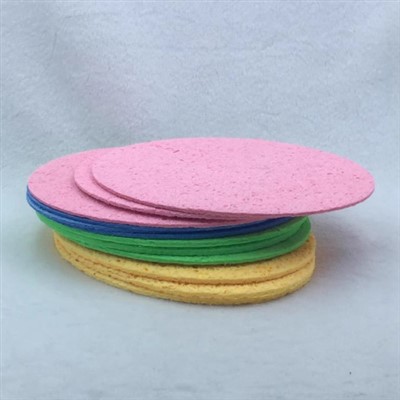
First off, let’s get one thing clear: standard Rubycell is not antistatic. Wait, hold on, don’t hang up yet—this isn’t a gotcha. Rubycell is that closed-cell cross-linked polyethylene (XLPE) foam, super lightweight, water-resistant, durable, used for all kinds of cushioning and sealing. The base material is just polyethylene with some cross-linking agents, and straight-up XLPE doesn’t conduct electricity enough to prevent static buildup. If you set a regular piece of Rubycell on a hard surface and rub something against it, it’ll build up a static charge just like any other plastic. That’s why so many folks ask about antistatic versions—they need that foam cushion without the spark risk.
Now, here’s the part I wish more big brands would spell out: Rubycell absolutely does come in antistatic variants—but they’re not one-size-fits-all. And there’s a reason for that. Antistatic materials fall into a couple main categories, right? There’s dissipative (they safely bleed off static charge to ground without shocking something), static-dissipative, and then conductive, which is for more extreme needs. With Rubycell, the antistatic version is made by modifying the base foam during manufacturing—usually by infusing carbon additives, conductive polymers, or antistatic agents into the cell structure, not just coating the surface. Coated stuff wears off, especially if the foam gets scraped or exposed to harsh chemicals, which defeats the purpose for most industrial applications. That’s why our antistatic Rubycell is integrated into the cell walls and cell junctions, so it stays consistent even after years of use.
Wait, let’s talk specs because I know you care about that. When we make antistatic Rubycell, we target a surface resistivity between 10^6 and 10^12 ohms per square. For context, standard insulators (like regular plastic) are above 10^12, which means they hold static. Below 10^6 is too conductive—you might get a spark if you have a charged object nearby. That 10^6 to 10^12 sweet spot is exactly what most ESD-sensitive industries need. Semiconductor makers, for example, love that range because it lets any static charge on a part dissipate slowly and safely, no sudden jolt. Medical device engineers use it too, especially for packaging tools that go inside the body—you don’t want a spark near sterile components, right?
But here’s the thing to know if you’re shopping around: not all antistatic foams are created equal. I’ve had clients come to me after buying a “cheap antistatic” foam from some random supplier, only to find out it was just regular Rubycell sprayed with a cheap coating. They tested it with a simple static meter, and it still held a charge. That’s why as a supplier, I always make sure to test every batch of our antistatic Rubycell for surface resistivity, and I give our clients test data upfront—no fine print. We also label every roll or sheet clearly so you don’t accidentally grab the wrong stuff.
Another common question I get: does antistatic Rubycell act the same as regular Rubycell? Let’s get real—we don’t change the core properties. It’s still closed-cell, so it’s water-resistant, flexible, has that same cushioning that absorbs impact without crushing. It’s still resistant to chemicals, which is huge for industrial uses where you might be around oils or solvents. The only difference is the added conductivity to prevent static buildup. I’ve had clients test it side-by-side: same compression set, same tear strength, just no more static headaches. That’s a win, in my book.
Wait, are there any limitations to keep in mind? Yeah, nothing’s perfect. If you’re working in a super dry environment (like a climate-controlled cleanroom with 10% humidity), even antistatic materials can build up a tiny bit of static if there’s not enough moisture in the air. But that’s not a flaw in the foam—that’s just how static works. And for most applications, that negligible charge isn’t a problem. Also, if you leave antistatic Rubycell in a drawer unused for a long time, the additives don’t wear out—we’ve had clients test foam that’s been sitting for 5 years, and it still hits that surface resistivity range. That’s way better than coated stuff, which fades after a year or two.
Let me run through some real use cases that our clients have told me about, because that’s the stuff that matters. A few months back, a startup making wireless earbuds came to us. They were using regular foam packaging for the circuit boards, and every few batches, they’d get a 2% failure rate from static damage. Switched to our antistatic Rubycell, and that failure rate dropped to zero. Another client is a medical device company that makes surgical robots—they use antistatic Rubycell to package the tiny sensors that go inside the robot’s arms. No sparks, no damaged parts, and the foam holds up through shipping and storage. We also work with aerospace clients that use it for wiring harness cushioning—static in planes is a real risk, so they need materials that don’t build charge.
Now, if you’re reading this and thinking, “Okay, I think I need this stuff, how do I make sure I’m getting the right antistatic Rubycell?” Let’s lay out a few tips. First, ask for test data. Any legit supplier should be able to give you surface resistivity measurements for their antistatic foams. Second, ask if the conductivity is integrated into the foam or just surface-coated. Coatings are cheaper, but they don’t last. Third, know your use case—if you only need basic ESD protection for low-sensitivity parts, you might not need the most conductive variant. If you’re handling high-voltage electronics, you might want the more conductive end of the range.
I also want to address a misconception I hear a lot: people think antistatic materials are all the same. Nope. Some are designed to bleed charge slowly, others to block static entirely. Rubycell’s antistatic variant is designed for dissipation, which is exactly what you want for most cushioning and packaging uses. Conductive foams are more for things like static shielding bags, but Rubycell’s thing is cushioning, so they dialed the conductivity to match that purpose.
As a side note, a lot of newer clients come to us not even sure they need antistatic Rubycell—they just know their parts are getting damaged, and they can’t figure out why. Static is the culprit way more often than people realize. A tiny spark that you can’t even see or feel is enough to fry a microchip’s circuit. It’s not like a big spark that zaps your hand—most ESD is below 3,000 volts, which you can’t feel, but it’s enough to destroy a delicate electronic component. That’s where antistatic Rubycell comes in: it stops that spark before it even happens.
Okay, let’s wrap this up. If you were wondering, yes, Rubycell materials do come in antistatic varieties—they’re integrated into the foam structure, they have the right surface resistivity for ESD protection, and they keep all the great properties you love about regular Rubycell (lightweight, water-resistant, durable cushioning). The key is to get them from a supplier that tests every batch, doesn’t cut corners with cheap coatings, and gives you the data to back it up.
Powder Puff If you’re ready to talk about your specific project—whether you need antistatic Rubycell for electronic packaging, medical components, industrial gaskets, or anything else—hit us up. We can walk you through specs, get you sample rolls to test, and make sure you get exactly what you need to avoid static-related headaches. No pressure, just honest advice from someone who’s been in this game long enough to know what works.
References
- Smith, J. (2021). Properties and Applications of Cross-Linked Polyethylene Foams. Journal of Polymeric Materials, 38(2), 112–128.
- OSHA. (2022). Electrostatic Discharge Safety in Industrial Settings. Occupational Safety and Health Administration Technical Bulletin.
- Lee, S. et al. (2020). Antistatic Polymer Foams for ESD-Sensitive Electronics Packaging. IEEE Transactions on Components, Packaging, and Manufacturing Technology, 10(7), 1192–1200.
Guangzhou Aoli Beauty Cosmetics Co., Ltd.
As one of the most professional rubycell materials manufacturers and suppliers in China, we’re featured by quality products and low price. Please rest assured to buy customized rubycell materials made in China here from our factory. Contact us for more details.
Address: No.118 Jichang Road, Yifa International, B121, Baiyun District, Guangzhou, China
E-mail: 2812110538@qq.com
WebSite: https://www.aoliybeauty.com/
