What is the best SMT stencil wiping paper for solder paste?
If you’re in the SMT world, you know that the smallest misstep can tank a whole batch of PCBs. Solder paste on stencils? That’s the star of the show—but if you’re using the wrong wiping paper, you’re risking dried paste, smudges, or even cross-contamination that kills your yields. Let’s cut through the fluff here: I’m a supplier who’s been deep in this space for years, talking to line techs who deal with sticky paste and constant wipe cycles every single day. So I’ll break down what actually makes a paper work, and which one stands out when you’re picking through options. SMT Stencil Wiping Paper
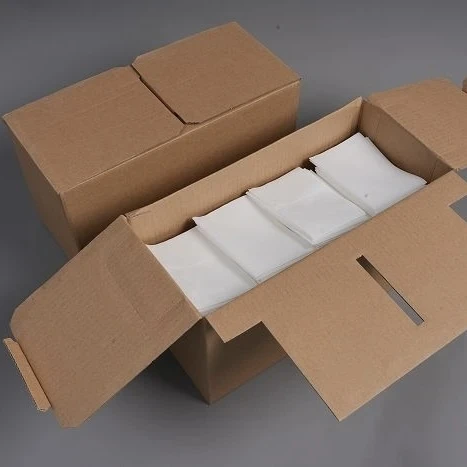
First, let’s get one thing straight: not all SMT stencil wiping paper is created equal. You might grab a random paper towel from the break room because it’s cheap, but trust me—those are made for wiping coffee, not for pulling solder paste off a fine-pitch stencil. Breakroom towels have loose lint, uneven weaves, and often have additives (like softeners) that leave residue. That residue mixes with your solder paste, clogs the stencil’s laser-cut holes, and leads to open joints or tombstoning. No one wants to rework a 10,000-unit batch because of a wrong paper choice.
Now, let’s talk about the core factors that matter here, not just marketing jargon. First, lint resistance. For fine-pitch components (like 0201 chips or 0.4mm pitch BGAs), a single lint fiber can plug a hole so small, it doesn’t take much. The best papers are made from 100% natural or synthetic fibers that are tightly bonded—no loose stuff. Then, absorbency: you don’t want a paper that soaks up all the solder paste, only leaving dried gunk on the stencil. It needs to pull excess paste off without stripping the material you actually need for printing. Lastly, surface smoothness: rough textures can scratch the stencil’s walls, which over time wears down the cut edges, leading to inconsistent print results. Roughness also means it might drag paste across the stencil instead of lifting it cleanly.
Here’s where a lot of people mess up: they think thicker is better. But that’s not true. A super thick paper might feel like it’s scrubbing harder, but it actually applies more pressure, which can squeeze paste into places it shouldn’t be (under the stencil, on the PCB, or even between holes). Too thin, though, and it will tear mid-wipe, leaving a chunk of paper stuck in a stencil hole. The sweet spot is lightweight but robust—something that’s flexible enough to conform to the stencil’s surface, but tough enough to hold up to multiple wipes without breaking.
Let’s test this with what our customers (line techs, production managers, and SMT assemblers) actually use. We’ve seen a lot of customers switch from generic paper towels to a microfiber-based SMT-specific paper, and their yield rates jumped 5-10% on average. Wait, microfiber—you know, the stuff used for eyeglass cleaning? But designed for industrial use. Unlike woven paper, microfiber is made of tiny, tightly woven filaments that trap lint and paste without leaving residue. It’s also super absorbent, so it gets rid of wet paste in one or two wipes, not five. And since the fibers are so small, it doesn’t scratch the stencil. That’s a big one—over time, scratching from rough paper leads to stencil replacement costs, which are way higher than the cost of good wiping paper.
But hold on—there are caveats here. Not all microfiber papers for SMT are equal. Some are coated with a synthetic layer that repels paste, which sounds good until you realize it doesn’t absorb well. Others use low-quality microfiber that sheds fibers, even though it’s labeled “lint-free.” We’ve tested a lot of these, and the ones that work best have a blend of microfiber and a small amount of cellulose to boost absorbency—no coatings, no additives. That balance lets it lift paste without leaving anything behind.
Another thing to consider: wipe frequency and method. If you’re using a semi-automatic stencil printer, you’re probably doing a wet wipe, then a dry wipe, maybe a second dry wipe if there’s heavy paste. Some papers work better for wet wipes (they need to handle a little isopropyl alcohol without falling apart), others for dry. The top option we recommend for most lines works for both—so you don’t have to stock two types. That’s a win for inventory, right? No more running out of dry wipes when you need wet.
Let’s talk about common pain points we hear daily. One customer last month said they were using a generic brand and had 3-4 reworks a day because paste was left in the stencil holes. They switched to the microfiber paper we supply, and the next day, reworks were down to zero. Another tech told us he used to have to blow lint out of the stencil every 50 prints, but with the right paper, he only does that once every 500 prints. Those are tangible, real changes that add up to less downtime, less labor, and more product shipped on time.
Wait, what about cost? I know, everyone’s watching budgets. Good wiping paper is a few cents more per sheet than breakroom towels, but when you factor in stencil replacements, rework labor, and lost material, it’s a no-brainer. A $50 box of good paper can save you hundreds in reworks. We’ve had customers do the math and see a return on investment in less than a week. That’s not hype—that’s numbers we’ve seen from actual lines.
Now, let’s address a mistake some new assemblers make: using abrasive pads for stencils. Those are way too rough—they’ll scratch the stencil so bad, it’s useless in a few prints. The same goes for paper towels with “scrubbing” surfaces. Those have ridges that catch paste and drag it, leading to inconsistent prints. Stick to flat, smooth papers with tight weaves or microfiber construction.
So, putting this all together: the best SMT stencil wiping paper for solder paste isn’t the cheapest, and it’s not the thickest. It’s the one that’s lint-free, has the right absorbency (not too much, not too little), is smooth enough to not scratch stencils, and works for both wet and dry wipes. For most production lines, a microfiber-based, additive-free paper checks all those boxes.

If you’re still guessing on what to use, or if your current paper is causing avoidable issues, we’re here to help. We work with lines of all sizes—from small prototype shops to high-volume factories—and can test our paper on your line to show you the difference. Just reach out to start a conversation about your specific needs, whether that’s high-volume printing, fine-pitch components, or a mix of both. We’ll help you find the right fit without the marketing fluff.
Table Top Paper References
- IPC-7525, Guidelines for Stencil Design and Fabrication for Surface Mount Soldering, International Electronics Manufacturing Initiative
- Surface Mount Technology Association (SMTA), “SMT Stencil Maintenance Best Practices,” 2022
- Printed Circuits Handbook, Seventh Edition, McGraw-Hill, 2016
- Microfiber Cleaning Cloths: Properties and Industrial Applications, Journal of Electronic Materials, 2020
Suzhou DDES Electronics Co., Ltd.
As one of the most professional smt stencil wiping paper manufacturers in China, we have world-leading production equipment and strong manufacturing capabilities. Please rest assured to wholesale high quality smt stencil wiping paper at low price from our factory. We also accept customized orders.
Address: No.4, No.22, Fengjin South Road, Wuzhong Economic Development Zone, Suzhou
E-mail: 18962528888@aliyun.com
WebSite: https://www.cleanwipe-chn.com/
