When you’re shipping a car, whether you’re a dealership moving inventory across the country or an individual relocating for a new job, one question always comes up: “How far can a car actually be driven during transport?” As a vehicle shipping provider, I get this ask nearly every day, and it makes sense—there’s a lot of misinformation out there about transport limits, and it’s easy to worry that driving a car too long or too far mid-transit will cause wear or damage. The truth is, the answer isn’t a one-size-fits-all number, but breaking down the science, industry standards, and logistics of car transport will help you understand exactly how far your car can go, and what you can do to keep it safe. Vehicles Shipping
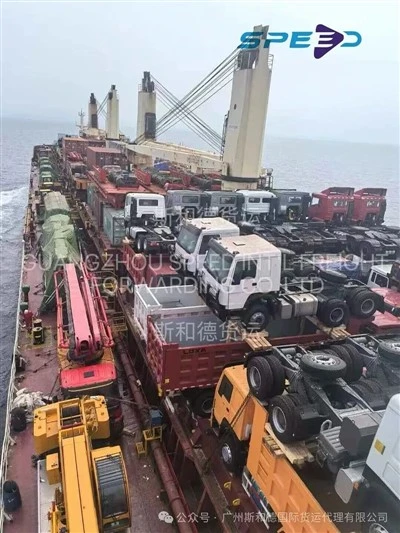
First, let’s clear up a common misconception: the “transport distance” we’re talking about here isn’t the total miles between your pickup and delivery locations. That’s the shipping route, which can span 10 miles for a local move or 1,500 miles for a cross-country haul. No, the “maximum distance a car can be driven during transport” refers to the miles the car itself is moving while it’s part of the shipping process. That usually falls into one of two categories: driving the car to its pickup point, or moving it from the final drop-off terminal to your door. Wait, but what about when the car is on a carrier? Does it count its wheels turning on the road as “driven”? That’s a question I get from customers all the time, and the answer is no. When a car is strapped to an open or enclosed auto carrier, its drive train is disconnected from the wheels—so the car isn’t actually being driven, just transported on a platform. The only times the car’s own power is used during transport are those local, short legs: getting it from a private residence to a terminal, or from a terminal to your driveway.
Let’s start with those local “driven segments” first, because that’s where most of the real limits come from. Most auto transport companies cap the distance they will drive your car using its own engine at 50 to 100 miles per segment. Why such a small number? It comes down to a few key factors: wear and tear, liability, and efficiency. First, driving a car with someone else’s engine adds wear to its components. Even a modern vehicle with low miles will accumulate friction on the pistons, transmission, and brakes every time it turns over. For a shipping company, that risk translates to liability: if you drive a car 200 miles from a terminal to a customer’s home, and the transmission fails the next week, proving the transport drive didn’t cause it is possible—but not always straightforward. Most providers keep those local drives short to minimize that risk.
Then there’s efficiency. Auto carriers plan their routes to drop off or pick up multiple cars in a single day, and driving a car 100 miles one way is a waste of time and fuel that could be better used moving multiple vehicles. For example, if you live 75 miles from the nearest terminal, the driver will drive your car there with its own engine, but if you live 150 miles away, the standard process is usually to have your car towed from a closer terminal instead. Tow trucks are built for longer hauls, and they’re less stressful on the vehicle than driving it, even on a highway. That’s a big point for customers: just because your home is 150 miles from the nearest terminal doesn’t mean your car will never touch its own wheels—you’ll just use a tow instead of a driver behind the wheel.
Now, what about the rare cases where a customer does need their car driven a bit farther? I’ve worked with dealerships that need to move a demo car from a factory dealership 120 miles away to their lot, or a family that’s relocating and driving their own moving truck with their sedan in tow, so they don’t have to leave their car behind. In those instances, some providers will bend the 100-mile rule, but only after a few checks. First, the car has to be in good running condition: no check engine lights, no transmission leaks, no issues with the alternator. If a car has a minor problem, like a sticky brake, a driver might agree to drive it, but they’ll do a pre-trip inspection and flag any potential issues ahead of time. Second, the customer has to sign a waiver. That waiver says the transport company isn’t liable for any wear or damage that comes from the extra drive, which protects both the provider and the customer. I’ve seen us drive a car up to 150 miles, but that’s the outer limit for most of our fleet—any more than that, and the risk of breakdown, or even an accident, goes up too much.
But wait, let’s get back to that original question: “maximum distance a car can be driven during transport.” Is there a hard upper limit? For most standard passenger cars, the answer is around 150 miles, total, across all local segments. That includes driving from your home to pickup, from drop-off to your home, and any other local moves the carrier has to make. Even a 20-year-old sedan with 200,000 miles on it will usually fit within that cap—we’ve driven a 2008 Toyota Corolla 120 miles once for a customer, and it ran fine, but we wouldn’t push it to 150 because the transmission was starting to slip. The only exception I’ve seen is for classic cars, which people often ship long distances and want to avoid putting extra miles on their low-mileage engine. For classics, we almost always use flatbed or trailer transport for all local segments, even if that means towing a car that’s only 20 miles from a terminal, because the last thing a classic car owner wants is to add a few extra miles to their prized vehicle.
Now, let’s talk about the factors that can change that maximum distance, because not all cars are the same. The first big one is vehicle condition. If a car is brand new, with 0 miles, we might agree to drive it up to 100 miles, but we still check the engine before we take it. If a car has a rebuilt engine, or a manual transmission that’s hard to shift, that changes things too—we might be more cautious, and cap the drive at 80 miles. If a car doesn’t run at all? Then it’s a non-runner, and we’ll need to tow it, regardless of how far it is. We don’t even attempt to drive non-runners, because that’s a major liability risk—if the engine seizes up mid-drive, it can cause an accident, and that’s a risk we’re not willing to take.
Another factor is the transport route. If you’re in a rural area, with few terminals, we might adjust the distance. I recently had a customer in a small town in northern Michigan, where the nearest terminal was 85 miles away. Instead of towing, we agreed to drive his 2019 Honda Civic, because towing it would have required a special flatbed that would have cost him an extra $300. He signed a waiver, we did a pre-trip inspection, and we drove it the 85 miles without any issues. That’s a common adjustment we make for rural areas, where the cost of towing can add up a lot faster than the extra wear of a short drive.
Then there’s the type of transport you choose. Open transport, which is the most common and affordable option, usually allows for a bit more flexibility with local drives, because we have more drivers on the road for open carriers. Enclosed transport, which is for classic or high-end cars, often has stricter limits, because those cars are more valuable and we want to minimize any risk of damage, even from local drives. For example, if you’re shipping a $100,000 Ferrari, we won’t drive it 100 miles—we’ll tow it, even if that means a few extra steps, because the cost of a breakdown is way higher than the cost of a tow.
Now, let’s address a question that many customers don’t ask, but should: what happens if a car breaks down during a local transport drive? That’s the risk that comes with driving a car during transport, and it’s why we have protocols in place. First, every driver carries a basic emergency kit, and we have a 24/7 support team that can coordinate with local mechanics if needed. If a car breaks down within 50 miles of the pickup point, we might tow it back to the terminal, but if it’s on the way to a delivery, we’ll work with a local mechanic to fix it, at the customer’s cost. That’s another reason we keep local drives short—if a car breaks down, it’s easier to fix when it’s not halfway across a state.
Let me also share a real example from my own experience, to put this in perspective. Last year, a customer in Austin, Texas, needed to ship his 2017 Ford F-150 to a dealership in Dallas, a total of 180 miles. He lived 20 miles from the Austin terminal, and the Dallas terminal was 15 miles from the dealership. The total distance he wanted us to drive was 20 + 15 = 35 miles, which was well within our limit, so that worked out fine. But if he had lived 70 miles from the Austin terminal, and the Dallas dealership was 75 miles from the terminal, the total drive would have been 145 miles, which is right at our 150-mile cap. We would have checked the truck’s engine, transmission, and brakes, had him sign a waiver, and agreed to drive it. But if he had lived 90 miles from the Austin terminal, making the total drive 165 miles, we would have told him to tow it, because the risk of the transmission failing on a 165-mile drive was too high. That’s exactly the kind of calculation we go through every day when a customer asks about how far their car can be driven during transport.
Another point that’s often overlooked: mileage accumulation and vehicle value. For most everyday cars, 150 extra miles is negligible—most cars have a lifespan of 150,000 to 200,000 miles, so adding 150 miles is less than 0.1% of their total. But for classic cars, electric vehicles, or rare models, that’s a different story. An electric car’s battery, for example, is designed to last hundreds of thousands of miles, but even so, many electric vehicle owners prefer to have their cars transported on a carrier, not driven, because they want to avoid charging and discharging the battery unnecessarily during transport. For classic cars, a 150-mile drive can add wear to an engine that’s only got 50,000 miles on it, which can lower its value if it’s ever resold. That’s why we offer both options: if you want to save money, and your car is a daily driver, we can drive it up to 150 miles. If you want to protect your vehicle’s condition and value, we’ll tow it, no matter how far it is.
Now, let’s clear up another myth: some people think that driving a car during transport voids the manufacturer’s warranty. That’s not true. Manufacturer warranties cover defects in materials and workmanship, not normal wear and tear, and adding 150 miles of driving is well within normal use. The only time a warranty might be affected is if the driver is negligent—like if they drive a car with a blown head gasket, and that causes more damage. But as long as we do a proper pre-trip inspection, and the customer signs a waiver acknowledging that they’re responsible for any damage from normal driving, the warranty won’t be affected. We always make sure to tell customers this upfront, so there are no surprises later.
So, to wrap this up, what’s the maximum distance a car can be driven during transport? For most standard passenger vehicles, it’s 150 miles total, across all local segments. That includes driving from your home to the pickup terminal, from the delivery terminal to your home, and any other local moves the carrier needs to make. For rural areas, we might adjust that to 85 miles, if towing would cost significantly more. For classic, high-end, or non-running cars, we cap that number much lower, or eliminate driving altogether, opting for towing instead. The key factors that determine that limit are vehicle condition, value, location, and the customer’s preferences.
If you’re planning to ship a car, the best thing you can do is talk to your transport provider upfront, before you book. Tell them where you’re located, what type of car you’re shipping, and any specific needs you have—like if it’s a classic, or if you’re on a tight budget. A good provider will walk you through the options, explain the risks of driving vs. towing, and give you a clear idea of how far your car can be driven during transport. At the end of the day, the goal of any vehicle shipping service is to get your car to its destination safely, without unnecessary wear or cost, and understanding those distance limits is a big part of that.

If you’re ready to ship your car, or have more questions about transport distances, vehicle shipping options, or anything else related to moving a car, don’t hesitate to reach out to our team to discuss your needs. We’re here to make your vehicle shipping process as smooth and stress-free as possible, every step of the way.
South Africa Shipping References
- American Automobile Association. (2022). Vehicle Transport and Shipping Guidelines. AAA Exchange.
- National Highway Traffic Safety Administration. (2021). Vehicle Shipping and Liability Protocols for Commercial Carriers. NHTSA Office of Compliance.
- Specialty Equipment Market Association. (2023). Best Practices for Shipping Classic and Collector Vehicles. SEMA Industry Report.
- Consumer Reports. (2022). Car Shipping: What to Know Before You Book. Consumer Reports Auto Services.
Speed Supply Chain (Guangzhou) Co., Limited
Speed Supply Chain (Guangzhou) Co., Limited is a licensed NVOCC and first-level freight forwarder in China. With a professional team, we deliver reliable, efficient and cost-effective vehicles shipping service for global customers. If you have any enquiry about quotation, please feel free to email us.
Address: Room 2001-2002, Dongzhao Building, No. 515 Dongfeng Middle Road, Yuexiu District, Guangzhou, Guangdong, China
E-mail: mika.li@speedsucc.com
WebSite: https://www.speedsupplychain.com/
