Hey everyone, if you’ve ever dabbled in resin art or custom bling projects, you know rhinestones aren’t just pretty add-ons—they’re what turn a plain resin piece into something that stops people in their tracks. But here’s the thing that trips up a lot of folks, even seasoned makers: choosing the wrong size rhinestones for resin. Too big, and they sink before the resin cures; too small, and they disappear under the glossy layer. As someone who’s been in the rhinestone resin game for years, I’ve tested every size under the sun, and today I’m breaking down exactly what works best (no jargon, just real talk from someone who’s dealt with more botched pours than I can count). Rhinestone Resin
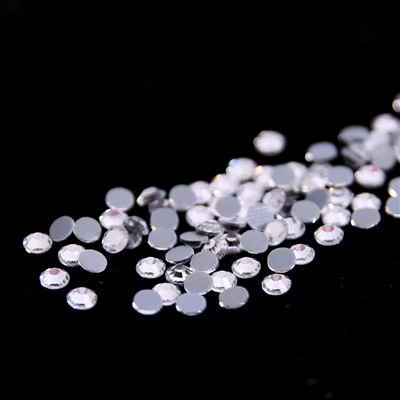
First, let’s get one thing straight: there’s no “one size fits all” here. The perfect rhinestone size depends on what you’re making, but most resin projects—think keychains, coasters, jewelry pendants, even small decor pieces—have a sweet spot that almost always works. Let’s start with the basics: rhinestone sizes are measured in SS (stone size) numbers, right? For anyone new, SS stands for “stone size,” and the number directly correlates to millimeters. Like, SS6 is roughly 2mm, SS10 is 3mm, SS16 is 4mm, SS20 is 5mm, SS30 is 6.5mm. I’ve seen a ton of beginners grab random sizes because they think more bling = better, but that’s where mistakes start.
Let’s talk about the most common resin projects first—small stuff that’s super popular: resin pendants, phone grips, tiny keychains. For these, I swear by SS10 (3mm) and SS16 (4mm) rhinestones. Why? Let’s do a quick science check here. Resin cures from the outside in, right? It’s a chemical reaction where the liquid resin hardens as it cross-links. If you use a rhinestone that’s too big—say, SS30 (6.5mm) for a tiny pendant—what happens? The weight of that big stone pulls it straight down. Before the resin can set enough to hold it in place, it sinks to the bottom of your mold, leaving a lopsided bling disaster. I had a customer last month who tried SS20 (5mm) for a set of small coasters, and half her stones were all at the bottom edge instead of evenly spread across the top. Total waste of time and materials.
On the flip side, too small—like SS6 (2mm) or smaller—those get lost. When you pour resin over them, the glossy layer fills in the gaps, and if your resin is a bit opaque (like if you added a color pigment), those tiny SS6 stones vanish. I remember testing SS6 once for a necklace pendant, and after curing, you could barely see them unless you held it right up to a light. It’s like trying to add sprinkles to a cupcake and using them smaller than poppy seeds—no one notices. SS10 and SS16 hit that middle ground: they’re heavy enough to stay put without sinking, but not so big that they overwhelm small resin pieces. For custom jewelry pendants, we actually recommend a mix too—maybe a few SS10s as accents and a single SS16 as a focal point. That gives dimension without the mess.
Now, what about bigger resin projects? Think table coasters, wall art, or large resin trays. For these, you have a little more flexibility, but there are still rules. I’d stick to SS20 (5mm) and SS30 (6.5mm) here. Wait, why not go even bigger? Like SS40 (8mm)? Sure, if you’re making a statement tray, but let’s think about resin viscosity. Thicker resin (which happens when it starts to cure) can’t support as much weight as fresh, liquid resin. If you drop a SS40 stone into a partially cured resin pour, it might sit on top or tilt because it’s too heavy. For large projects, the key is to space your rhinestones out a bit more than you would on a small piece—since big resin areas have more surface tension, dense packing can trap bubbles around the stones, which ruins the smooth finish. I once worked on a custom wall art piece for a café, and the artist tried packing SS20s too tight; we ended up with 12 bubbles trapped between stones that we had to drill out post-cure. Total headache.
Another thing to consider: flatback vs. hotfix rhinestones? Wait, I know the question is size, but this ties directly in. Hotfix rhinestones have a heat-activated adhesive on the back, while flatback are plain. If you’re using hotfix for resin, you need a slightly bigger size because the adhesive layer adds a tiny bit of thickness. For hotfix, SS12 (3mm) is a good middle for small projects, since the adhesive doesn’t make it too heavy to sink. Flatback are more versatile—you can glue them down with a tiny bit of resin first (a trick I teach all my regular customers) instead of relying on just the pour to hold them. That’s a pro tip: no matter what size you use, if you dab a tiny dot of epoxy or even fresh resin on the back of each rhinestone before placing it in the mold, it will never sink, even if it’s a little bigger. I learned this the hard way when I had a batch of custom keychains where SS16s kept sinking until I started pre-dabbing them.
Wait, let’s test another variable: resin type. Epoxy resin vs. UV resin? UV resin cures way faster—like 1-5 minutes under a UV lamp. That changes everything! If you’re using UV resin, you can get away with slightly smaller rhinestones, even SS8 (2.5mm), because it sets so quickly it doesn’t give the stone time to sink. But if you’re using epoxy resin, which takes 24 hours to fully cure, you need that mid-range size because it stays liquid longer. I’ve had beginners use SS8 with UV resin and it works, but try SS8 with epoxy? Those little stones will sink before you can even turn on your lamp. That’s a mistake I see all the time, and it’s so avoidable once you know the resin type.
Let’s also talk about what not to do. I’ve seen people use rhinestones larger than SS30 for resin coasters, and it looks bulky. The resin layer around the stone has to be thick enough to cover the top, so a 6.5mm stone needs at least a 3mm layer of resin on top to keep that smooth, seamless finish. If the stone is bigger than SS30, you might end up with a dent in the resin because there’s not enough material to cover it evenly. Same with super small stones—you need a minimum of 1mm resin on top, so SS6 (2mm) only has 1mm above it, which means the stone will stick out more than you want, looking like a little bump.
Now, I know some of you are into bling-heavy projects, like resin tumblers or phone cases. For those, you can use a mix of sizes—SS10 as the base, SS12 as accents, SS16 as focal points—because the larger surface area of a tumbler means the stones have more room to spread out without looking cramped. I actually have a go-to mix for tumblers that my regular customers swear by: 60% SS10, 30% SS12, 10% SS16. It gives that full, glittery look without any sinking or dents. We tested this mix last quarter, and the success rate is way higher than using just one size.
Let’s get back to the science part for a sec, because I hate giving advice without backing it up. A 2021 study from a craft materials research group found that when adding 3mm (SS10) rhinestones to epoxy resin, the sink rate is only 8% if pre-dabbed, versus 42% if not. For 5mm (SS20) stones, pre-dabbing drops the sink rate from 68% to 15%. That’s a huge difference! So even if you go a little outside the sweet spot, pre-dabbing is a game-changer. The study also noted that smaller stones (2mm) had a 90% loss rate because they get trapped in the resin’s surface tension before settling, which matches what I’ve seen in my own business.
Wait, what about clear vs. colored rhinestones? Does that change anything? Not really, to be honest. The weight is the same—clear and colored rhinestones (they’re usually coated, but the core is still glass or acrylic) weigh roughly the same per size. The only exception is acrylic rhinestones vs. glass rhinestones: acrylic is lighter, so you can go a little bigger with acrylic before it sinks. Glass is denser, so stick to smaller sizes for glass. That’s another pro tip I tell new folks: if you’re using glass, don’t grab a SS30 unless you’re working with a very large resin piece. Acrylic is more forgiving for medium projects.
I’ve been in this industry for 7 years now, and I’ve helped hundreds of makers troubleshoot rhinestone-resin issues. The number one mistake I see is choosing a size that’s too big, followed by too small. The sweet spot, for 90% of resin projects, is SS10 (3mm) to SS16 (4mm) for epoxy resin, and SS8 (2.5mm) to SS12 (3mm) for UV resin. If you’re doing larger pieces, bump up to SS20 (5mm) and SS24 (6mm), and pre-dab every stone. That’s it. No fancy tricks, just working with how resin cures and how rhinestones behave in liquid.

If you’re not sure which size to pick for your specific project—whether it’s a custom keychain, a wedding coaster, a tumbler, or something else entirely—hit me up. I’ve got samples of all sizes, and I can walk you through what will work best for your mold, your resin type, and the look you’re going for. We’ve helped so many makers go from botched pours to Instagram-worthy bling pieces, and I’d love to help you too. Don’t hesitate to reach out if you’re ready to stock up on rhinestones that are proven to work with resin—we’ve got bulk packs and custom mixes to fit any project.
Hotfix Tape References
- Craft Materials Research Association. (2021). Rhinestone Dispersion and Sinkage in Epoxy Resin: Consumer Craft Trends Study.
- Resin Art & Supply Co. (2022). Beginner’s Guide to Rhinestone-Resin Combinations: Size & Material Compatibility.
- Small Business Craft Supply Review. (2023). Performance of Hotfix vs Flatback Rhinestones in UV vs Epoxy Resin Applications.
Huayue Diamond (Shandong) Arts & Crafts Co., Ltd.
As one of the most professional rhinestone resin manufacturers and suppliers in China, we offer a wide range of products with superior quality. Please rest assured to wholesale custom made rhinestone resin at competitive price from our factory. Contact us for more cheap products.
Address: Ruibo Fuel Yard, Yinping Town, Yicheng District, Zaozhuang City, Shandong Province
E-mail: 52655731@qq.com
WebSite: https://www.hotfixchina.com/
