Communication cable compounds play a crucial role in the telecommunications industry, providing the necessary insulation and protection for cables that transmit data and signals across vast distances. As a leading supplier of communication cable compounds, I am excited to share the intricate production process that goes into creating these essential materials. Communication Cable Compounds
Raw Material Selection
The production of communication cable compounds begins with the careful selection of raw materials. The primary components typically include polymers, fillers, plasticizers, antioxidants, and other additives. Each raw material is chosen for its specific properties and how it contributes to the overall performance of the compound.
Polymers are the base of the compound and provide the main structure and mechanical properties. For communication cable compounds, polyethylene (PE) and polyvinyl chloride (PVC) are commonly used. High – density polyethylene (HDPE) offers excellent electrical insulation properties, high tensile strength, and good moisture resistance, making it suitable for outdoor cables. Low – density polyethylene (LDPE) is more flexible and has better extrusion properties, often used for inner insulation layers. PVC, on the other hand, is known for its flame retardancy and chemical resistance and is widely used in indoor cable applications.
Fillers are added to improve the mechanical and electrical properties of the compound. Examples of fillers include calcium carbonate, talc, and silica. Calcium carbonate is a cost – effective filler that can increase the stiffness and dimensional stability of the compound. Talc and silica can enhance the electrical insulation properties and reduce the dielectric constant.
Plasticizers are used to increase the flexibility of the compound, especially for PVC – based compounds. They lower the glass transition temperature of the polymer, making it easier to process and more pliable at room temperature. Antioxidants are added to prevent the degradation of the polymer due to oxidation, which can occur during processing or long – term use, thereby extending the service life of the cable.
Mixing
Once the raw materials are selected, they are transported to the mixing area. The mixing process is a critical step as it ensures that all the components are evenly distributed throughout the compound. There are two main types of mixing equipment used in the production of communication cable compounds: batch mixers and continuous mixers.
Batch mixers, such as Banbury mixers, are commonly used in small – to medium – scale production. In a batch mixing process, a specific amount of each raw material is weighed and added to the mixer. The mixer then rotates, using high – speed rotors to shear and blend the materials together. The mixing time and temperature are carefully controlled to achieve the desired degree of dispersion. This process typically takes from 5 to 15 minutes, depending on the formulation and the properties of the raw materials.
Continuous mixers, like twin – screw extruders, are preferred for large – scale production. In a continuous mixing process, the raw materials are continuously fed into the extruder at a controlled rate. The twin screws inside the extruder rotate in opposite directions, providing intense mixing and shearing action. The extruder also allows for precise control of temperature and residence time, ensuring a consistent and homogeneous compound. The compound exits the extruder in the form of a continuous strand.
Compounding
After mixing, the compounded material undergoes further processing to optimize its properties. This may involve additional steps such as pelletizing, cross – linking, or the addition of further additives.
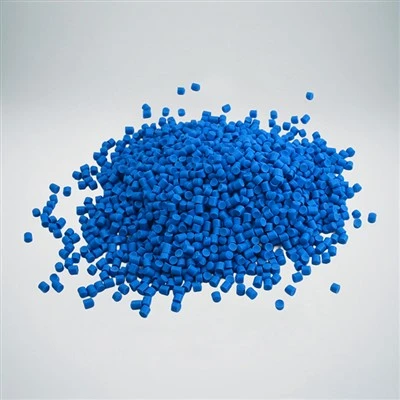
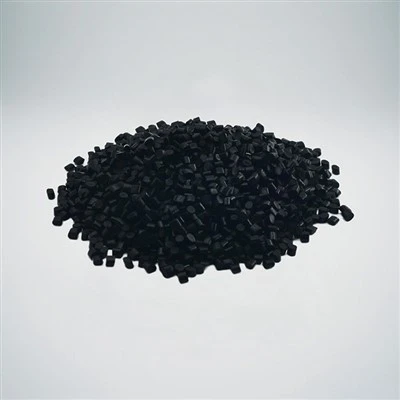
Pelletizing is a common step in the production of communication cable compounds. The continuous strand of the compound is cooled and then cut into small pellets. These pellets are more convenient for handling, storage, and transportation. They also provide a more consistent feedstock for subsequent cable extrusion processes.
Cross – linking is a process that can significantly improve the mechanical and thermal properties of the compound. In cross – linking, chemical bonds are formed between the polymer chains, creating a three – dimensional network structure. This can be achieved through different methods, such as chemical cross – linking using peroxides or silanes, or physical cross – linking using electron beams or gamma rays. Cross – linked compounds have better heat resistance, abrasion resistance, and mechanical strength, making them suitable for high – performance cable applications.
Quality Control
Quality control is an integral part of the production process of communication cable compounds. At every stage, from raw material inspection to the final product testing, strict quality standards are enforced to ensure that the compounds meet the requirements of the telecommunications industry.
Raw materials are tested for their purity, particle size, and other physical and chemical properties upon arrival at the production facility. During the mixing and compounding process, samples are taken regularly to monitor the consistency of the mixture, such as the density, melt flow index, and color.
The final pellets are subjected to a comprehensive set of tests. Electrical properties, such as the dielectric constant, dissipation factor, and insulation resistance, are measured to ensure that the compound provides adequate electrical insulation. Mechanical properties, including tensile strength, elongation at break, and hardness, are also tested to ensure that the cable can withstand the stresses during installation and use. Flame retardancy tests are carried out to evaluate the fire – resistant properties of the compound, especially important for indoor cable applications.
Packaging and Storage
Once the communication cable compounds have passed all the quality control tests, they are ready for packaging. The pellets are typically packed in polypropylene bags or cardboard boxes with proper labeling, indicating the product name, grade, batch number, and storage instructions.
Proper storage is crucial to maintain the quality of the compounds. The storage area should be dry, well – ventilated, and protected from direct sunlight and extreme temperatures. The recommended storage temperature is usually between 20°C and 30°C, and the relative humidity should be kept below 70%. Under these conditions, the compounds can be stored for up to one year without significant degradation of their properties.
Conclusion
The production process of communication cable compounds is a complex and precise operation that involves multiple steps, from raw material selection to final packaging. Each step is carefully controlled to ensure that the compounds meet the high – quality standards required by the telecommunications industry. As a supplier of communication cable compounds, we are committed to providing products that are not only of the highest quality but also tailored to the specific needs of our customers.
Marine Cable Compounds If you are in the market for communication cable compounds, whether you need standard grades or customized solutions, we invite you to contact us for a procurement discussion. Our team of experts will be more than happy to assist you in choosing the right products for your cable manufacturing projects.
References
- "Plastics in Cable Insulation" – John Wiley & Sons
- "Handbook of Polymer Science and Technology" – Marcel Dekker
- ASTM International Standards for Cable Compounds
Opta New Materials (Jiangsu) Co., Ltd.
As one of the most professional communication cable compounds manufacturers and suppliers in China, we also support customized service. We warmly welcome you to buy bulk durable communication cable compounds from our factory. If you have any enquiry about free sample, please feel free to email us.
Address: No.80, Jingang Avenue, Zhenjiang New Area, Zhenjiang City, Jiangsu Province, China.
E-mail: le.yin@optachem.com
WebSite: https://www.optanewmaterials.com/
